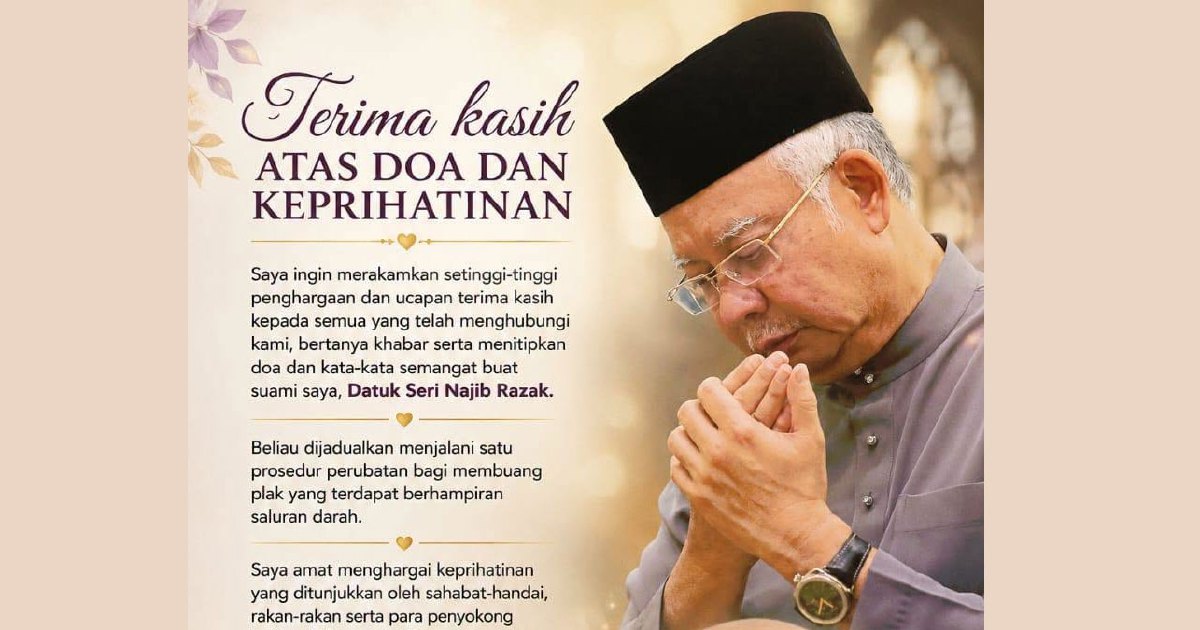
Datin Seri Rosmah Mansor has made a public appeal for prayers and well-wishes as her husband, former prime minister Datuk Seri Najib Razak, prepares for a cardiac procedure. The wife of the 71-year-old former leader expressed gratitude towards supporters who have stood by their family during a challenging period, while simultaneously requesting that the public keep Najib in their thoughts and prayers as he undergoes treatment aimed at removing plaque accumulation near a blood vessel.
The procedure represents a significant intervention in Najib's health management, undertaken to address arterial blockage that could pose risks if left untreated. Such interventions, typically involving angioplasty or related vascular techniques, are considered routine in modern cardiology but remain serious medical undertakings that warrant careful monitoring and professional medical oversight. The decision to proceed with the treatment suggests medical consultation has identified the blockage as substantial enough to warrant intervention rather than continued conservative management.
Rosmah's public acknowledgment of the health challenge comes at a time when the former Prime Minister's Office family faces continued scrutiny related to past governance matters. By framing the upcoming procedure in terms of family health and seeking public sympathy through spiritual entreaties, the family has chosen to separate this medical moment from ongoing political and legal complexities that have defined much of the post-2018 narrative surrounding their public profile. The appeal reflects a deliberate messaging strategy that emphasises the human dimension of their circumstances.
The former premier's health status carries broader implications for Malaysian political discourse. Najib Razak remains a central figure in debates surrounding government accountability, with various investigations and legal proceedings continuing to occupy public attention. Any extended absence due to medical recovery could affect his ability to participate in political activities or respond to ongoing matters requiring his attention. The transparency with which his family has announced the procedure suggests confidence in both the medical outcome and public receptiveness to information about his wellbeing.
Cardiac interventions targeting arterial plaque removal have become increasingly common as populations age and cardiovascular risk factors accumulate. Malaysia's healthcare infrastructure, particularly through its private medical sector, maintains standards comparable to developed nations for such procedures. The fact that Najib is undergoing treatment domestically rather than seeking medical care abroad indicates confidence in local cardiac specialists and facilities, which themselves represent significant advancement in Southeast Asian medical capabilities.
Rosmah's expression of gratitude towards supporters reflects awareness of the polarised nature of public opinion regarding her husband's legacy. The former Prime Minister's tenure from 2009 to 2018 remains contested, with supporters crediting him for economic initiatives and infrastructure development, while critics highlight governance concerns and alleged financial irregularities. By appealing to broader human sentiment regarding health and recovery, the family attempts to transcend these divisions and appeal to common values of compassion and concern for wellbeing.
The timing of the announcement, made publicly rather than kept private, suggests the family anticipated media coverage and sought to shape the narrative proactively. This approach contrasts with previous instances where their activities have attracted coverage they seemingly wished to avoid. By voluntarily disclosing the medical situation and requesting prayers, they position themselves as transparent and worthy of public sympathy, potentially influencing how subsequent developments regarding Najib's health or other matters are received by the broader public.
For Malaysian observers, the situation serves as a reminder of the human vulnerabilities that transcend political affiliations and public roles. Regardless of one's views on Najib's political record, the prospect of serious health challenges affecting any individual naturally invites reflection on mortality and the limitations of power and position. The public response to Rosmah's appeal will likely reflect broader attitudes towards the former administration, with some offering genuine concern and others maintaining critical distance.
The medical procedure also occurs within a context of evolving healthcare discussions in Malaysia, where cardiovascular disease remains among the leading causes of mortality. The prominence given to Najib's treatment highlights the prevalence of such conditions among Malaysia's ageing population and the importance of accessible cardiac care. The procedures his medical team will employ represent technological advances that have extended and improved lives across all demographic segments.
Looking forward, the success of the intervention and Najib's recovery trajectory will likely receive significant public attention. His health status may influence his ability to engage in various activities, legal proceedings, or public appearances. The family's preemptive communication strategy suggests they expect the procedure to proceed successfully, positioning recovery and resumption of normal activities as the anticipated outcome. Should complications arise, the public nature of the announcement means developments would inevitably attract widespread attention and speculation.

