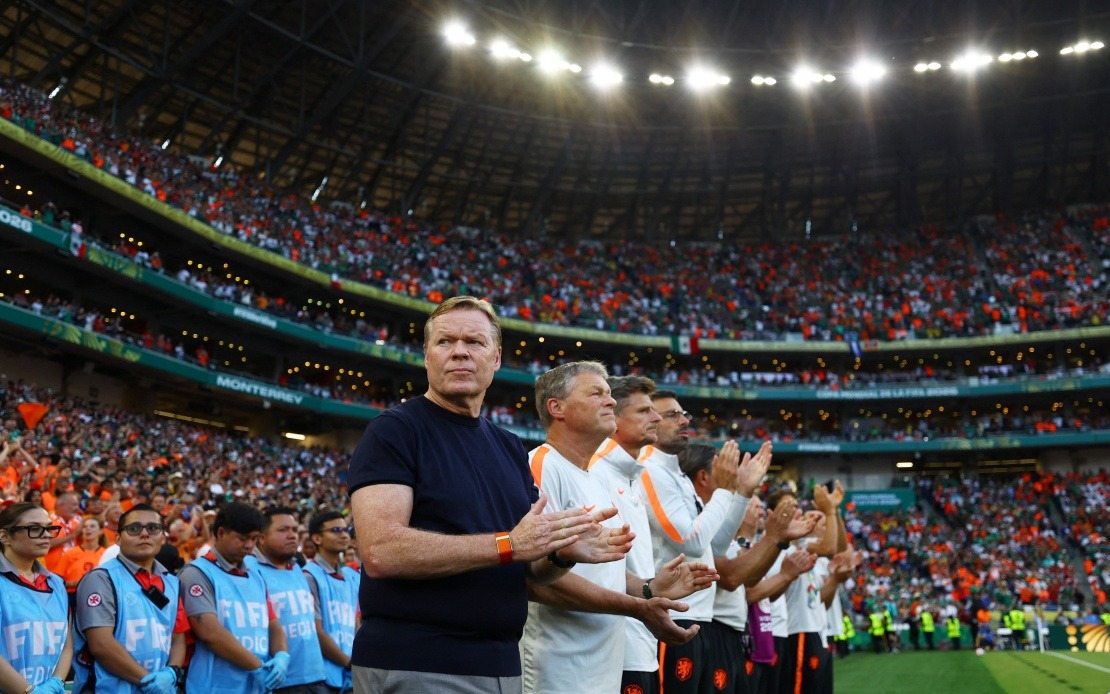
Ronald Koeman has announced his departure from the helm of the Netherlands national team following an agonising penalty shootout defeat to Morocco that ended their 2026 World Cup campaign. The decision marks the second time the 63-year-old has vacated the role, having previously managed the Dutch side from 2018 until 2020, when he departed to take charge at Barcelona. In a statement released through the Dutch Football Federation's official Instagram account, Koeman reflected on the difficulty of his choice while acknowledging the commitment he and his support structure had invested in the national programme.
The manager expressed his gratitude for the dedication displayed by staff and players throughout his tenure, emphasising the profound working relationships he had cultivated with both coaching personnel and the squad over an extended period. His decision to step aside comes at a moment when Koeman feels prioritising personal and family life has become increasingly important. The statement indicates that spending additional time with his wife, children, and grandchildren factored heavily into what he describes as a natural and fitting conclusion to his coaching chapter with Oranje.
The Netherlands had shown considerable promise throughout their qualifying campaign prior to the knockout stage disappointment. They topped Group F in the competition structure, demonstrating their competitive standing among European football nations. A particularly impressive 5-1 demolition of Sweden showcased the attacking prowess and control Koeman's team was capable of exerting against quality opposition, suggesting they possessed the credentials to progress much further in the tournament proper.
The exit itself proved cruelly dramatic, exemplifying the brutal nature of modern football. The Dutch appeared positioned to advance to the last 16 stage when they held their advantage against Morocco until virtually the final moment of regular play. An injury-time equaliser scored by Issa Diop forced the match into extra time, denying the Netherlands an automatic progression and forcing a penalty resolution instead. This heart-breaking turn of events—conceding in the 90th minute—would have tested the psychological resilience of any squad and coaching staff.
Koeman's dual spells with the national team reflect the cycling nature of international football management, where coaches often return to familiar environments after pursuing club opportunities. His initial departure in 2020 represented an ambitious move to one of world football's most prestigious clubs, though his Barcelona tenure ultimately proved less successful than anticipated. The subsequent return to the Netherlands position offered him the chance to build on the foundations established in his first period, yet the tournament's unexpected exit suggests the job had become an increasingly challenging proposition.
The 2026 World Cup was viewed as an opportunity for the Netherlands to establish themselves as serious contenders for major silverware. The tournament's expansion to 48 teams was expected to offer even more opportunities for progression, and reaching the knockout stages demonstrated the team's capability. However, the penalty exit represents a significant setback in terms of tournament progress and development of squad cohesion. For a nation with Holland's football heritage and recent tournament experience, early elimination carries particular significance.
Koeman's departure will necessitate a search for fresh leadership within Dutch football's hierarchy. The Dutch Football Federation must identify a coach capable of maintaining the progress achieved during qualification whilst steering the team toward stronger performances in major tournaments. The federation will be tasked with evaluating whether adjustments to playing philosophy, squad composition, or tactical approach are required to better compete at the highest level. The timeline for announcing a successor will be crucial to maintaining momentum and player development.
The resignation reflects broader questions about Dutch football's current standing relative to other established European powers. Despite boasting considerable technical quality and a rich football tradition, the Netherlands has struggled to convert tournament qualification into deep runs and trophy success in recent campaigns. Koeman's departure, whilst ostensibly motivated by personal considerations, occurs against this backdrop of inconsistent major tournament performance.
For Malaysian and Southeast Asian football observers, Koeman's resignation underscores the immense pressure placed on national team coaches to deliver immediate results on the world stage. International football management at the highest level demands not only tactical expertise and squad management skills but also resilience to withstand public scrutiny and intense media attention. The situation illustrates how swiftly fortunes can shift in competitive football, with a single match outcome capable of determining a coach's tenure despite overall positive campaign performance.

