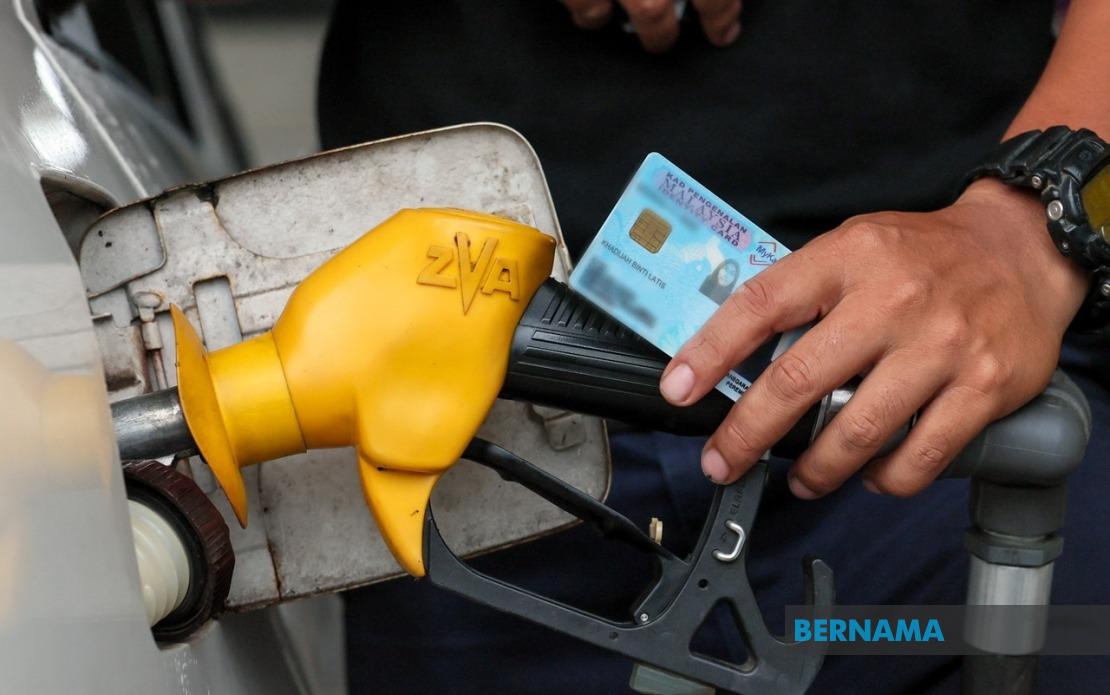
Prime Minister Datuk Seri Anwar Ibrahim has restored the basic monthly Budi MADANI RON95 subsidy quota to 300 litres per month, reversing a previous reduction to 200 litres that had constrained household transport budgets. The announcement during the 2026 National Day address in Putrajaya represents a significant policy reversal affecting more than 16 million subsidised fuel users nationwide. Simultaneously, the government will extend enhanced diesel support to over half a million eligible owners of diesel-powered pickup trucks and commercial jeeps, who will receive up to 400 litres of BUDI Diesel monthly from September 1. Together, these measures signal the government's attempt to balance fiscal sustainability with protecting consumer purchasing power as economic pressures persist across households.
For Malaysia's lower- and middle-income segments—the B40 and M40 groups—the restoration addresses a genuine hardship point that had emerged during the period of constraint. Herniza Roxanne Marcus, an economics lecturer at Universiti Teknologi MARA's Sabah campus, emphasises that fuel costs represent a proportionally larger share of disposable income for these groups than for wealthier households. The additional 100 litres monthly translates into meaningful breathing room for families whose economic survival depends on private vehicle use for work, schooling, and essential services. In states like Sabah, where vast distances and sparse public transportation networks characterise the geography, the expanded quota becomes particularly consequential for workers commuting between regional centres and those undertaking regular long-distance travel for employment or family obligations.
The economic logic underpinning the subsidy restoration reflects a nuanced policy calculus. Rather than viewing the measure as indicative of improved fiscal headroom, Marcus contextualises it within the government's reassessment of subsidy levels based on evolving global energy market conditions and domestic consumption realities. The previous quota reduction had coincided with heightened geopolitical tensions and volatile crude oil prices—circumstances that warranted temporary austerity. As international energy markets have stabilised and the government has gathered more comprehensive data on actual household consumption patterns and economic impacts, policymakers have determined that the 300-litre level represents a more appropriate calibration. This suggests a technocratic approach rather than a spending splurge, with officials continuously monitoring whether subsidy levels align with genuine public need and fiscal capacity.
The ripple effects of transport cost relief extend beyond fuel pump transactions. Marcus notes that households experiencing reduced pressure on fuel budgets gain psychological and practical flexibility to redirect constrained income toward other essential categories—nutritious food, children's educational materials, healthcare expenses, and emergency savings. In an inflationary environment where multiple household budget lines face upward pressure simultaneously, even modest relief in one category can prevent cascading deprivation in others. While the restoration is unlikely to directly reduce headline inflation rates, it functions as a stabiliser that prevents transportation costs from triggering secondary price increases in goods and services that depend on efficient logistics and distribution networks. By containing transport-cost pressures, the policy guards against spillover effects that could compound affordability challenges across the broader economy.
Real-world validation for the quota restoration comes from those whose work patterns generate outsized fuel consumption. Rozainah Abdul Rahim, a 36-year-old journalist, exemplifies the demographic groups most affected by the previous constraint. Her professional responsibilities require daily vehicle use for assignment coverage, while weekly travel linking Port Dickson, Negeri Sembilan and Kuala Lumpur for family obligations regularly exhausted her 200-litre monthly allocation. Under the previous regime, such usage patterns forced difficult choices—whether to purchase unsubsidised fuel at market rates, sacrifice professional commitments, or deprioritise family obligations. The restoration to 300 litres eliminates this artificial scarcity for workers whose income depends on transport flexibility. Her experience illustrates that subsidy impacts extend beyond abstract economic aggregates to shape concrete daily decisions affecting employment, family cohesion, and overall household functioning.
The decision also reflects demographic and geographic realities that centralised policy frameworks sometimes overlook. Malaysia's dispersed settlement patterns, the concentration of economic opportunities in specific urban clusters, and the often-inadequate public transportation infrastructure in non-metropolitan regions mean that reliance on private vehicles remains necessity rather than choice for significant population segments. Unlike densely populated urban areas where multiple transportation alternatives exist, workers in secondary cities and rural districts depend entirely on private vehicles for accessing employment, educational institutions, healthcare, and government services. The quota restoration acknowledges this structural reality and implicitly commits government resources to enabling participation in the formal economy by those whose geographical circumstances offer no alternative to motorised private transport.
From a fiscal governance perspective, the subsidy restoration demonstrates the government's willingness to employ targeted income support mechanisms rather than pursuing aggressive fiscal consolidation at the cost of household welfare. While fiscal discipline remains important, the policy signals recognition that excessive austerity during a cost-of-living crisis carries social and political risks that merit careful calibration. The government appears to view fuel subsidies for lower- and middle-income groups as a legitimate countercyclical policy tool during periods of economic pressure, rather than as unaffordable luxury that must be eliminated regardless of distributional consequences. This positioning contrasts with more ideologically rigid approaches that prioritise deficit reduction above all other policy objectives.
The specific targeting of both RON95 petrol and diesel support further demonstrates policy sophistication. While RON95 subsidies primarily benefit individual commuters and household transport, the expanded diesel quota supports commercial pickup trucks and jeeps used by small-scale entrepreneurs, traders, and rural business operators. These vehicle owners—often among Malaysia's aspirational middle class—depend on transport to sustain livelihoods ranging from agricultural distribution to construction services to commerce. By extending the subsidy increase to diesel users, the government supports not only household consumption but also productive economic activity conducted by small business operators whose operations depend on reliable, affordable fuel access. This dual approach acknowledges that transport costs influence both consumer welfare and supply-side economic productivity.
Regionally, the subsidy restoration carries implications for Malaysia's position within Southeast Asia's economic hierarchy and social stability. As regional peers including Thailand, Indonesia, and the Philippines wrestle with their own fuel subsidy challenges, Malaysia's decision to expand support—particularly to lower- and middle-income groups—demonstrates a political commitment to protecting household living standards. In an era when economic inequality and perceived unfairness drive political volatility across the region, visible government efforts to ease daily cost pressures can moderate social tensions and bolster legitimacy. The restoration thereby functions as both practical economic policy and political communication, signalling to ordinary citizens that their struggles with transport costs receive government acknowledgment and remedial action.
Looking forward, the sustainability of the expanded quota depends on maintaining discipline in other budget lines and continuing to monitor global energy market developments. Herniza's observation that the restoration does not necessarily indicate dramatically improved fiscal comfort suggests the government remains conscious of constraint and must avoid allowing subsidy expansion to become permanent entitlement regardless of future economic conditions. Periodic review mechanisms, transparent communication about the rationale underlying any future adjustments, and continued investment in alternative transport infrastructure that might eventually reduce subsidy dependence all represent important complementary measures. The 300-litre quota represents not permanent policy direction but rather the government's current calibration of how best to balance multiple competing objectives—fiscal responsibility, household welfare, regional economic productivity, and political stability—under prevailing economic circumstances.

