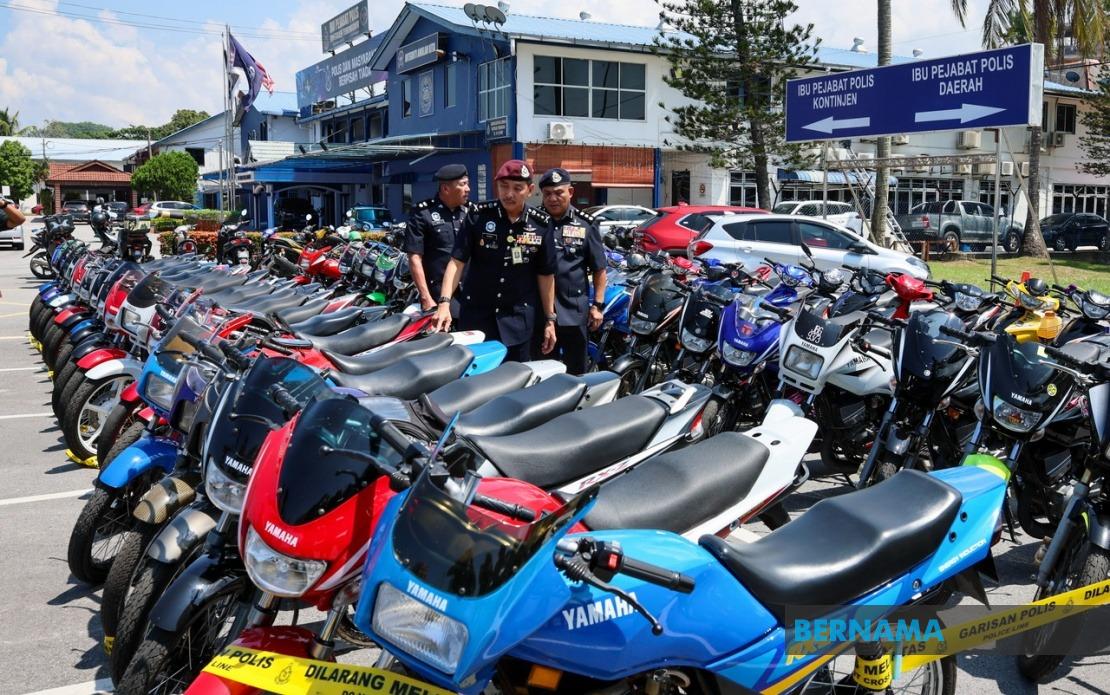
The escalating death toll at Malaysia's largest annual motorcycle gathering demands urgent intervention from government agencies and event organisers, according to road safety expert Shahrim Tamrin, who has drawn attention to a deeply concerning trajectory of fatalities that shows no sign of abating without decisive action.
Speaking from Kuala Terengganu on August 5, Shahrim, a former board member of the Malaysian Institute of Road Safety Research (MIROS), highlighted that the RXZ Members programme fatality figures have grown dramatically across three consecutive years: two deaths in 2024, five in 2025, and most alarmingly, 11 deaths in 2026. This progression reflects not random misfortune but a systemic failure to manage the inherent risks of assembling hundreds of thousands of motorcycle enthusiasts in one location over several days.
The most recent edition, RXZ Members 8.0, held at the Gong Badak Motor Racing Circuit in Kuala Nerus, attracted more than 200,000 participants—the largest attendance since the event's inception in 2017. During the four-day period from July 30 through August 2, authorities recorded 46 motorcycle-related road accidents in total. This comprised 11 fatal accidents accounting for 23.91 per cent of all incidents, five serious accidents representing 10.87 per cent, and 30 minor accidents making up the remaining 65.22 per cent. For Malaysian readers, these figures underscore how events of this magnitude create unique safety challenges that conventional traffic enforcement cannot adequately address.
Sharking this assessment, the Bukit Aman Traffic Investigation and Enforcement Department director, Datuk Seri Muhammed Hasbullah Ali, disclosed these statistics yesterday, confirming that the scale of accidents—particularly fatal ones—far exceeds normal traffic patterns. Shahrim argues that the time has come to recognise the RXZ Members programme not merely as a commercial gathering but as a large-scale public event requiring sophisticated planning frameworks.
To address these mounting concerns, Shahrim has proposed a comprehensive risk management architecture that extends far beyond traditional policing tactics. His recommendations include developing accurate participant projections, carefully designating primary and secondary entry-exit routes to prevent congestion-related incidents, establishing secure rest areas equipped with basic facilities, strategically positioning ambulances throughout the event perimeter, establishing a dedicated emergency response command centre, developing multi-channel communication protocols for participants, and conducting thorough pre-event hazard assessments. Each component targets specific vulnerability points where accidents occur and where rapid response can save lives.
Equally critical is Shahrim's call for systematic post-event analysis through a formal safety audit. This audit should examine the full spectrum of accident data—including specific locations where fatalities occurred, precise timing, underlying causes, rider demographics, motorcycle mechanical factors, and quantitative measures of enforcement effectiveness. Publishing these findings before the next edition would enable evidence-based improvements rather than reactive measures implemented only after further tragedies unfold. This represents a fundamental shift from ad-hoc crisis management to data-driven safety governance.
Beyond immediate event management, Shahrim has identified regulatory gaps affecting motorcycle safety on Malaysian roads. He urges enforcement authorities to strengthen implementation of noise and exhaust emission standards, addressing persistent complaints from Kuala Nerus residents about excessive noise and air pollution during the gathering. More significantly, he recommends that the Road Transport Department (JPJ) establish a streamlined re-registration pathway for older Yamaha RXZ motorcycles that remain mechanically sound but face administrative complications. Since most RXZ bikes still operating are between 20 and 35 years old, many have accumulated incomplete documentation through repeated sales or unsanctioned modifications, creating legal ambiguity about their road-worthiness status.
However, Shahrim's proposal on vehicle registration includes crucial safeguards: motorcycles modified in ways that compromise safety must either be restored to original factory specifications or denied registration entirely. This balance protects both the road-using public and legitimate riders, ensuring that every motorcycle on Malaysian highways carries valid road tax and insurance coverage. The approach acknowledges practical reality while maintaining safety standards that might otherwise be eroded by administrative convenience.
To prevent the dangerous convoy-riding practices frequently observed during RXZ gatherings, Shahrim recommends collaborative training programmes involving police, JPJ, motorcycle clubs, and event organisers to prepare group leaders and traffic marshals for safe mass-movement protocols. This reflects international best practices observed at major motorcycle rallies in other countries where trained coordinators significantly reduce accident rates during high-volume travel periods.
Additionally, Shahrim advocates implementing travel advisory systems modelled on frameworks already deployed by highway concessionaires during Malaysian festive seasons. Such systems would provide participants with real-time information about peak travel periods, alternative routes less congested than main highways, and recommended rest stops where riders can recover from fatigue—a major contributor to motorcycle accidents. Digital dissemination through event apps and social media could reach participants effectively and repeatedly.
The RXZ Members programme represents a unique phenomenon in Malaysian motorcycling culture, transforming an informal enthusiast gathering into what is now arguably Southeast Asia's largest annual motorcycle assembly. Yet its rapid growth has outpaced safety infrastructure development. Shahrim's recommendations, collectively implemented, would establish international-standard risk management practices while preserving the event's cultural significance. Without such intervention, the fatality trend suggests that future editions could produce even grimmer statistics, making action not merely prudent but morally imperative for all stakeholders involved.

