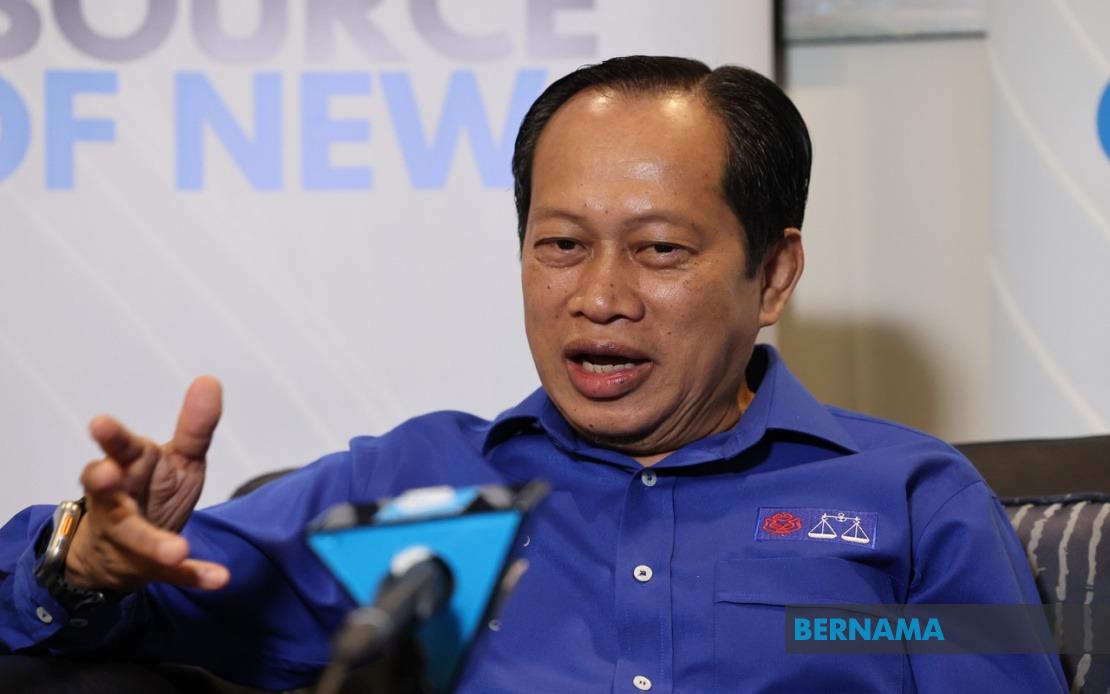
Effective road maintenance depends on collective commitment from government bodies, elected officials, and local authorities working in tandem, Deputy Works Minister Datuk Seri Dr Ahmad Maslan has stressed, addressing concerns over deteriorating road conditions that have drawn public attention and political scrutiny.
Speaking in Johor Bahru on July 2, Ahmad underscored that the Public Works Department has been directed to prioritize the repair of damaged road networks and called on all relevant stakeholders to fulfil their designated roles in sustaining infrastructure quality. He emphasized that when road deterioration is identified, state assemblypersons, Members of Parliament, and municipal authorities must act with urgency to rectify the situation promptly.
The Deputy Minister's remarks come in response to recent high-profile efforts by opposition politicians to highlight road maintenance failures. Pakatan Harapan candidate for the Puteri Wangsa state seat, Dr Maszlee Malik, recently conducted a documented inspection of Jalan Tebrau, one of Johor's busier thoroughfares, traversing the route from Kampung Melayu Majidi to Ulu Tiram on June 29 following mounting social media complaints about pavement quality and traffic flow problems.
During his inspection, Maszlee, a former Education Minister, experienced firsthand the poor condition of several road sections, with his vehicle encountering significant jolts and vibrations due to uneven surfaces. He additionally encountered congestion typical of peak traffic hours, documenting his findings in a public statement that amplified concerns about maintenance standards along this important corridor serving thousands of commuters daily.
Ahmad revealed that his ministry has systematized oversight of Johor's road network infrastructure, noting that the state operates ten district Public Works Department offices. He has personally conducted visits to each facility, receiving detailed briefings on development initiatives and ensuring that local management understands the urgency of responding swiftly whenever road conditions deteriorate beyond acceptable standards.
The funding architecture for road maintenance operations follows a structured pathway that channels resources through the State Economic Planning Unit and the state executive council. This mechanism allows development proposals and repair requests to undergo assessment, be ranked according to priority criteria, and receive formal approval before work commences. Such procedures aim to ensure that limited budgets are allocated strategically to areas of greatest need.
The issue of road maintenance has gained salience in Malaysian politics as demographic pressures and economic activity place increasing strain on existing infrastructure. Johor, as the country's southernmost peninsula state and a major economic hub, experiences particular pressure from its role as a transit corridor for regional trade and domestic commerce. The condition of roads directly impacts economic productivity, public safety, and citizen satisfaction with government service delivery.
The contrast between Ahmad's procedural explanations and the visual documentation provided by political opponents illustrates a recurring tension in governance: the tension between bureaucratic processes and public perception of responsiveness. While the Deputy Minister frames road maintenance through the lens of institutional coordination and budgetary channels, critics counter that such mechanisms may delay urgently needed interventions when citizens observe visible deterioration affecting their daily lives.
From a regional perspective, Malaysia's road infrastructure challenges mirror broader Southeast Asian concerns about aging transportation networks struggling to cope with urbanization and increased vehicular volume. Countries throughout the region face similar questions about maintenance funding, institutional coordination, and the political economy of public works delivery, making Ahmad's emphasis on stakeholder cooperation a theme with resonance beyond Johor's borders.
The Deputy Minister's call for unified action implicitly acknowledges that road maintenance cannot be resolved through top-down mandates alone but requires sustained engagement from district administrators, elected representatives responsive to constituent concerns, and departmental staff equipped with adequate resources and decision-making authority. This collaborative model depends on effective information flow, mutual accountability, and alignment of incentives across multiple organizational hierarchies.
Moving forward, the effectiveness of road maintenance initiatives will likely be measured not merely by government announcements but by observable improvements in road conditions and reduced citizen complaints. The political attention now focused on routes like Jalan Tebrau means that performance will be monitored closely by both ordinary commuters and opposition politicians seeking to hold authorities accountable for infrastructure quality.

