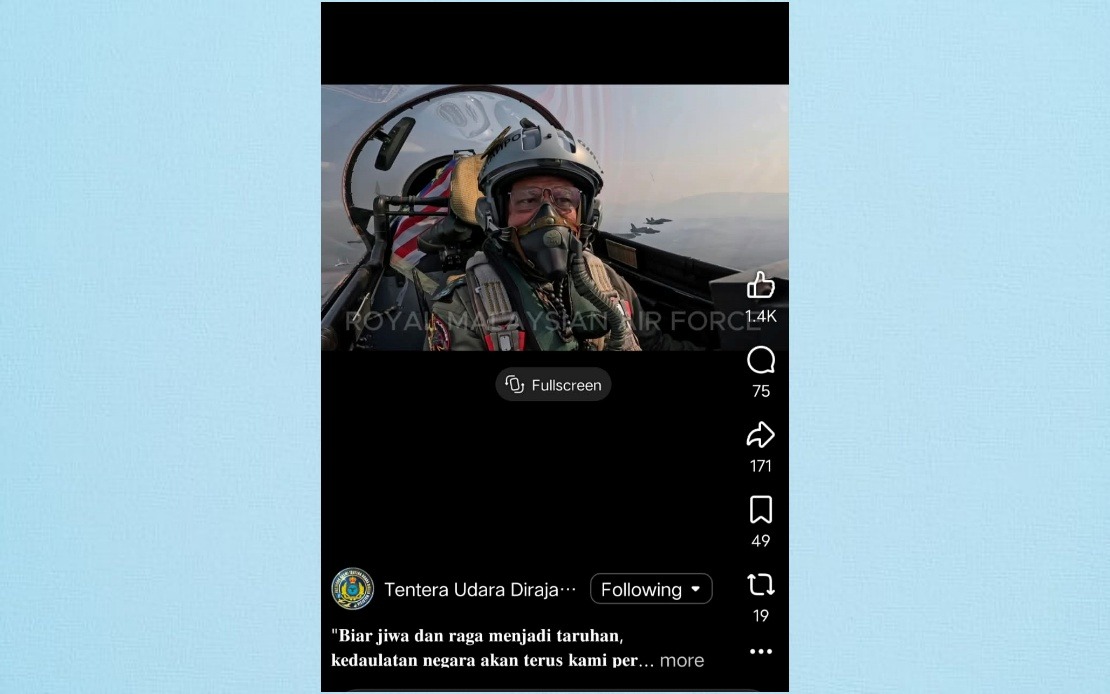
The skies above Putrajaya erupted with the sound of high-performance jet engines on August 31st as the Royal Malaysian Air Force (RMAF) delivered a commanding aerial spectacle to mark the nation's 69th National Day celebration. The impressive pyrotechnics of modern military aviation lit up the federal administrative centre, drawing thousands of spectators to Dataran Putrajaya and reminding Malaysians of the sophisticated air assets defending the country's sovereignty. The display, lasting precisely ten minutes from 9.30 am, represented one of the centrepiece attractions of the day's festivities, blending patriotic fervour with a serious demonstration of operational capability.
Leading the charge from the cockpit was General Tan Sri Muhamad Norazlan Aris, the RMAF chief, who once again chose to personally pilot a Sukhoi Su-30MKM fighter jet at the head of the formation. This marked the second consecutive year that the service's top uniformed officer has taken the controls for the National Day air show, underscoring the symbolic importance of such displays within Malaysia's defence establishment. The decision to have the chief of air staff actively participate rather than observe from the ground sends a powerful message about leadership and the operational standards to which the RMAF holds itself, even during ceremonial occasions.
The composition of the aerial formation reflected the breadth of the RMAF's combat inventory. Four Sukhoi Su-30MKM multi-role fighters, regarded as the service's most advanced air superiority platforms, dominated the display alongside four F/A-18D Hornets, veteran strike fighters that remain potent contributors to Malaysia's air defence network. Three BAE Hawk 208 advanced trainer jets, which serve dual roles in both pilot development and light combat missions, completed the fighter contingent. The carefully orchestrated flight of eleven combat aircraft across Putrajaya's skies showcased not merely the physical presence of these platforms but their integration into coherent tactical formations, a demanding manoeuvre that requires exceptional pilot skill and ground coordination.
The choreography of the display demonstrated sophisticated aerial coordination through a succession of precisely executed formations that observers would recognise from international air shows. The Kite, Diamond, Delta and Victory Combine formations require pilots to maintain exact spacing and altitude relationships while executing synchronized turns and altitude changes. These are not merely aesthetic flourishes but represent the kind of disciplined flying that underpins combat effectiveness. For Malaysian audiences, witnessing their air force execute such manoeuvres provides tangible reassurance about the professionalism and technical capability embedded within the defence establishment.
The narration throughout the ten-minute performance proved crucial in translating the visual spectacle into educational content for the gathered crowd. Major Patrick Dinnesh, Major Neny Suhaida Ab Suki and Captain Muhammad Iqbal Nasrudin provided real-time commentary, explaining each aircraft type, describing the significance of particular formations, and detailing the manoeuvres being performed. This narrative layer transformed the event from pure entertainment into a teaching moment, allowing spectators to understand the sophistication of the equipment and the complexity of modern air operations. Such public communication about defence capabilities serves the broader strategic goal of building informed civilian support for military investment.
The display pivoted toward transport and logistics capabilities following the fighter jet sequence, highlighting the multifaceted role the RMAF plays beyond air superiority. The C-130H Hercules, a veteran tactical airlift platform that has served Malaysian operations for decades, appeared alongside the more modern A400M Atlas and the CN235 transport aircraft. These machines represent the backbone of the RMAF's ability to project power across the archipelago, delivering humanitarian assistance, conducting disaster relief, and sustaining forward operations. By showcasing transport aircraft alongside fighters, the RMAF emphasised that modern air forces must balance combat power with the logistical reach necessary to support national objectives across the vast Malaysian maritime domain.
Rotary-wing assets further diversified the display, with EC725 and AW139 helicopters operated by the RMAF executing coordinated flight patterns. The inclusion of helicopters acknowledged their irreplaceable role in search and rescue, transport, and maritime patrol missions that directly affect civilian safety. Notably, the RMAF aircraft flew in formation with assets from the Malaysian Army, Royal Malaysian Navy, Fire and Rescue Department of Malaysia and Royal Malaysia Police, creating a visual representation of inter-agency cooperation. This integrated approach reflects the reality of modern crisis response, where air assets must work seamlessly with other services to address natural disasters, security emergencies, and other contingencies that demand rapid, coordinated action.
The reaction from the spectators gathered across Dataran Putrajaya underscored the enduring appeal of military air displays within Malaysian culture. Thousands maintained their gaze skyward throughout the performance, punctuating each formation pass and precision manoeuvre with audible enthusiasm. The visceral impact of high-performance aircraft transiting overhead at relatively low altitude creates an immediate, unmissable impression that static displays cannot replicate. For younger Malaysians in particular, such moments often spark lasting interest in aviation and defence technology, potentially influencing future career trajectories within the air force and related sectors.
The transformation of Putrajaya's airspace into a controlled performance venue required meticulous coordination between the RMAF, air traffic control authorities, and the broader National Day celebration organisers. The precision and safety achieved across the ten-minute display reflected months of planning, rehearsal, and risk assessment. Each aircraft's positioning, altitude, and timing had been calculated and practised repeatedly to ensure that the dramatic impact achieved on the day could be delivered without compromising safety. Such invisible infrastructure—the planning, coordination, and technical oversight—remains essential to translating ambition into successful execution.
Within the regional context, Malaysia's ability to conduct such sophisticated air displays reflects its standing as one of Southeast Asia's more technologically advanced air forces. The regular demonstration of capabilities like the Sukhoi Su-30MKM and F/A-18D formations, combined with the transport and rotary-wing elements, communicates to regional observers and potential security partners the operational sophistication the RMAF has achieved. As competition for influence intensifies across Southeast Asia and the maritime domains become increasingly contested, such public demonstrations of air capability contribute to the broader strategic messaging about Malaysia's determination to defend its interests and maintain deterrent posture.
The integration of the air display into National Day festivities also served deeper symbolic purposes beyond military messaging. The celebration of national independence inherently encompasses appreciation for the institutions and individuals who defend that independence. By positioning the RMAF's capabilities prominently within the commemoration, Malaysia's leadership reinforced the connection between patriotic pride and support for defence establishments. The personal participation of General Tan Sri Muhamad Norazlan Aris in the cockpit added human dimension to institutional capability, suggesting that the RMAF's operational readiness derives not merely from advanced equipment but from dedicated leaders willing to model the highest standards of professionalism and courage.
Looking forward, such displays will likely remain fixtures of Malaysia's National Day celebrations, providing regular opportunities to showcase defence capabilities while building public connection to security institutions. The 69th National Day air display achieved multiple objectives simultaneously—delivering entertainment, demonstrating operational capability, showcasing inter-agency cooperation, and reinforcing patriotic sentiment. As regional security dynamics evolve and new defence platforms enter service, these annual spectacles will continue adapting to incorporate Malaysia's expanding capabilities while maintaining the celebration's role in uniting diverse communities around shared national identity and collective security.

