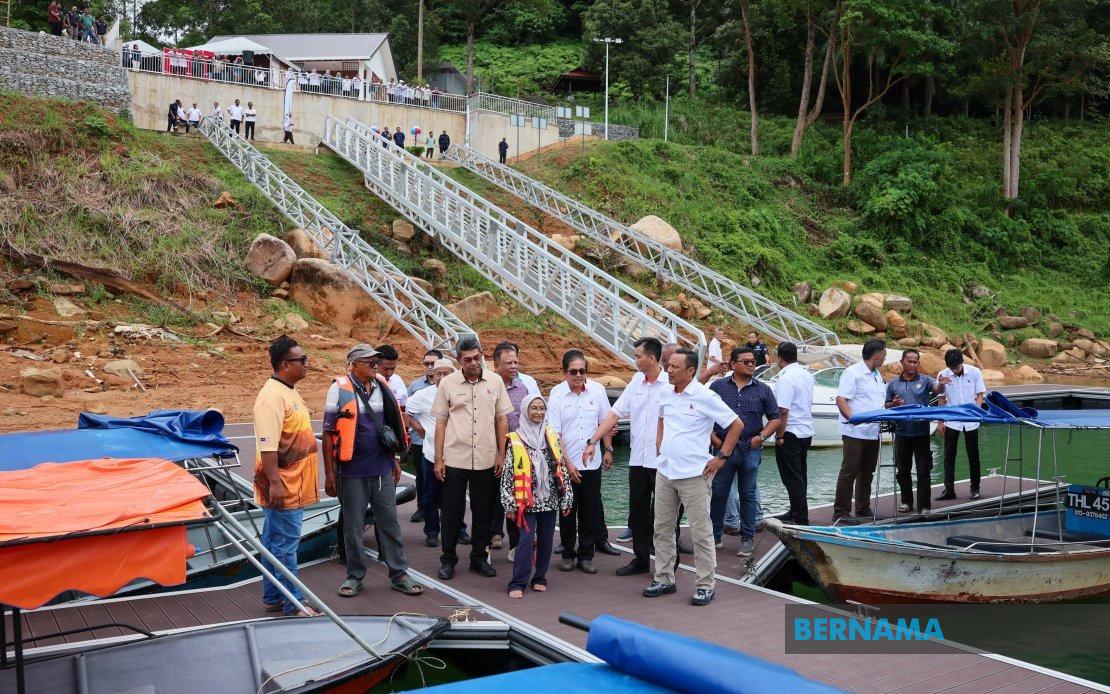
A major infrastructure project aimed at repositioning Tasik Kenyir as a premier Southeast Asian ecotourism destination has reached completion, with the opening of a RM8.7 million modern jetty facility designed to accommodate the lake's growing fleet of commercial vessels. The project, which broke ground in 2023 and concluded on July 6 this year, represents a significant investment in upgrading one of Malaysia's most distinctive natural attractions and reflects broader regional efforts to professionalise tourism infrastructure across the country's inland waterway systems.
According to Datuk Rozi Mamat, chairman of the Terengganu Tengah Development Authority (KETENGAH), the facility was conceived within the framework of the Third Rolling Plan of the 11th Malaysia Plan (RMK-11) and directly addresses longstanding operational challenges that have constrained the lake's tourism potential. The jetty infrastructure can service more than 80 houseboats and speedboats simultaneously, fundamentally reshaping how operators manage their vessels and interact with visitors arriving at this major attraction. The expansion of capacity reflects confidence in sustained tourism growth at Tasik Kenyir, which continues to draw both domestic and international visitors seeking authentic nature-based experiences.
Beyond mere berthing capacity, the new facility incorporates comprehensive amenities designed to elevate operational standards across the entire tourism ecosystem. The jetty includes a pedestrian walkway extending approximately 600 metres, provision for 86 parking spaces, public toilet facilities, security infrastructure including a staffed guard post, dedicated electrical distribution systems, water pumping facilities, and waste management infrastructure. These complementary services address the practical needs of both boat operators and their passengers, creating an integrated experience rather than isolated docking points. The inclusion of electricity and water supply directly to berthing stations represents a shift towards permanent, professionally managed infrastructure compared to the ad hoc arrangements that previously characterised much of Tasik Kenyir's waterfront operations.
Rozi emphasised that Tasik Kenyir occupies a unique position within Malaysia's tourism portfolio, offering ecotourism experiences that differentiate the country in competitive regional markets. The man-made lake, created by damming the Terengganu River, provides opportunities for wildlife observation, cultural encounters, and water-based recreation that appeal to travellers increasingly seeking alternatives to conventional beach destinations. However, realising this potential has been constrained by infrastructure limitations and operational inefficiencies that undermined visitor satisfaction and professional standing. The newly completed jetty directly addresses what Rozi identified as the persistent problem of unorganised boat berthing around Pengkalan Gawi, an issue that had accumulated gradually and created safety, aesthetic, and operational challenges.
The project represents part of a broader KETENGAH development strategy concentrated across its three jurisdictional areas: Dungun, Hulu Terengganu, and Kemaman. The authority received RM48.36 million in development allocations during the current fiscal year, supporting 28 separate programmes and initiatives spanning these regions. This funding distribution reflects the state government's commitment to dispersed development that strengthens multiple economic zones rather than concentrating investment in single urban centres. The allocation demonstrates recognition that tourism and rural development projects demand sustained capital injection to achieve international competitiveness.
Within Tasik Kenyir specifically, the jetty development represents one component of six concurrent projects designed to comprehensively upgrade the lake's tourism infrastructure. Complementary initiatives include restoration work at the Sungai Petang Kelah Sanctuary Complex, which protects endangered fish species and provides educational tourism opportunities; slope stabilisation and safety enhancements at established tourist attractions; comprehensive redevelopment of visitor facilities at Pulau Petang; construction of a public mini park at Gawi Point to expand recreational space; and refurbishment of facilities at the Herbal Park, which combines botanical tourism with traditional medicine education. These interconnected projects suggest a coordinated strategy to enhance multiple dimensions of the Tasik Kenyir experience simultaneously.
The significance of this investment extends beyond Terengganu's provincial boundaries, positioning the state as a centre for nature-based tourism within the broader Malaysian and Southeast Asian context. Regional competitors including Thailand's northern lakes and Indonesia's Bandung highlands have developed sophisticated ecotourism infrastructure that attracts substantial visitor spending. By upgrading Tasik Kenyir's facilities to international standards, Terengganu enhances its ability to capture regional tourism flows and compete for high-value nature tourism segments that prioritise quality infrastructure alongside environmental authenticity. The professional presentation of facilities influences visitor perceptions and repeat visitation patterns, factors critical to long-term tourism sustainability.
The project also carries implications for the broader Malaysian tourism economy, which has prioritised diversification beyond conventional beach and urban heritage destinations. Government policy increasingly emphasises inland and nature-based tourism as mechanisms for regional economic development and employment generation, particularly in rural areas where alternative economic opportunities may be limited. The Tasik Kenyir investment signals commitment to this strategic direction and provides a template for infrastructure development at other inland attractions across the country that face similar challenges regarding capacity constraints and operational professionalisation.
From an operational perspective, the modern berthing facility should reduce transaction costs for houseboat and speedboat operators by providing permanent infrastructure rather than requiring them to negotiate daily anchorage arrangements. This formalisation of berthing systems typically leads to improved safety compliance, enhanced visitor security, more systematic ticketing and booking arrangements, and reduced conflicts over waterfront access. The supply of electricity and water directly to berthing stations addresses practical operational requirements that previously forced operators to develop improvised solutions, often at considerable inefficiency. These structural improvements should gradually transform Tasik Kenyir's image from a somewhat ad hoc tourism destination into a professionally managed facility comparable to international standards.
The completion of this infrastructure also creates employment opportunities across multiple dimensions, from permanent positions managing the facility and providing security to indirect employment through expanded boat operations and supporting services. As capacity increases and operational efficiency improves, operators can manage more vessels and passengers, creating scope for business expansion and recruitment. The parallel development of complementary attractions, including enhanced facilities at Pulau Petang and the Herbal Park, disperses economic benefits across multiple locations within the Tasik Kenyir area rather than concentrating activity at single points.
Looking forward, the success of this jetty investment will likely influence future tourism infrastructure planning across Terengganu and potentially other states. If the facility achieves its objectives of improving visitor experience, enabling operational efficiency gains, and supporting sustainable tourism growth, it may encourage similar investments in other inland attractions requiring infrastructure modernisation. The project demonstrates that deliberate investment in foundational tourism infrastructure can effectively unlock economic potential at underutilised natural attractions, a principle applicable throughout Southeast Asia where numerous lakes, rivers, and natural areas possess tourism potential constrained primarily by infrastructure limitations rather than inherent appeal.

