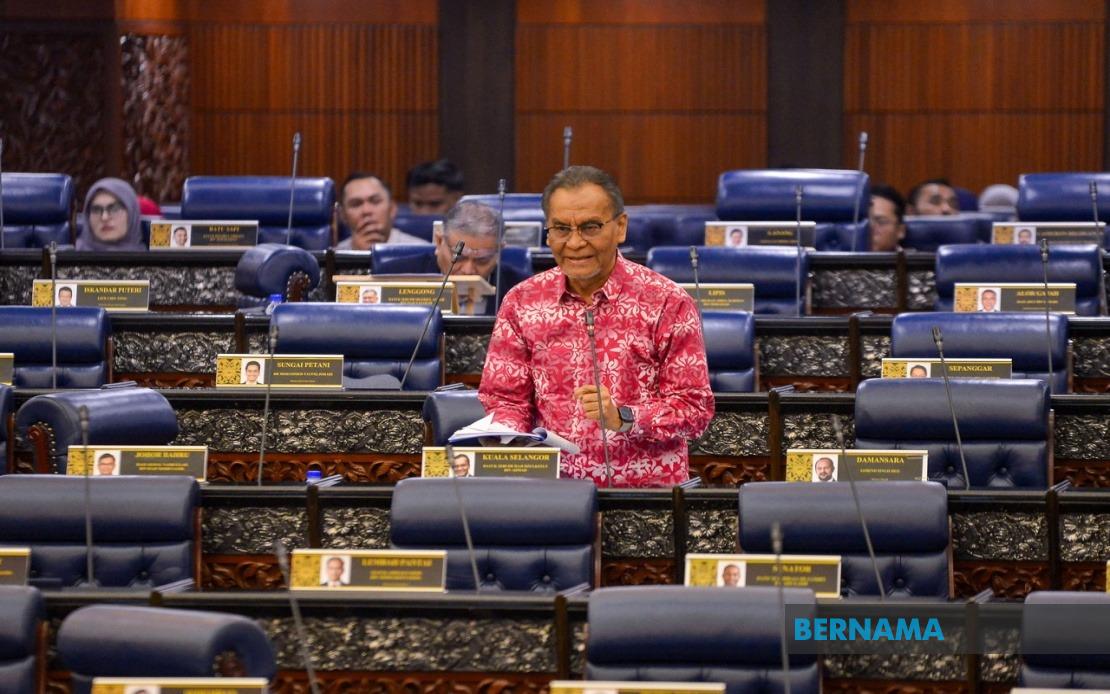
Health Minister Datuk Seri Dr Dzulkefly Ahmad moved to address parliamentary concern over a RM500 million expenditure warrant imposed on the Ministry of Health, characterising the measure as a routine financial adjustment that poses no threat to healthcare service delivery or operational capacity. Speaking during question-and-answer proceedings in the Dewan Rakyat on July 2, the minister provided clarification following inquiries from backbenchers worried that fiscal restraint would compromise hospital services, particularly in underserved rural regions.
The restriction warrant, issued by the Finance Ministry on June 5, represents approximately 1.07 per cent of the MOH's total annual allocation of nearly RM46.52 billion. However, Dzulkefly characterised the adjustment as fundamentally different from an operational cut, arguing instead that it reflected prudent financial management of budgetary allocations that could not be utilised due to staffing constraints. The ministry, he explained, had received approval from the Public Service Department for 18,641 positions this financial year, yet remained unable to recruit sufficient personnel to fill the approved establishment, thereby creating surplus allocation that could be redirected.
The minister's characterisation of the adjustment as technical rather than substantive hinges on this staffing reality. According to Dzulkefly, the RM500 million saving was achieved entirely through re-planning of expenditure in areas where positions remained vacant, without touching allocations designated for hospital operations, development projects, staff remuneration, training initiatives, or procurement of medical equipment and assets. This distinction carries significant weight for healthcare workers and patients alike, as it suggests that funding for frontline services, infrastructure investment, and workforce development remains intact despite the overall reduction in the ministry's budget envelope.
Questioning from Datuk Shahelmey Yahya, the BN representative for Putatan, and supplementary queries from Abdul Latiff Abdul Rahman, the PN member for Kuala Krai, reflected genuine apprehension within Parliament regarding the potential ripple effects of budget constraints on healthcare accessibility and quality. Rural healthcare facilities in particular drew attention, with legislators expressing concern that fiscal adjustments could diminish service standards or delay critical infrastructure projects in less densely populated areas. Dzulkefly's response attempted to provide categorical reassurance on these specific concerns, asserting that all basic healthcare services and planned health development projects would proceed uninterrupted.
The minister's explanation reflects broader challenges facing the Malaysian public health system as it manages workforce recruitment alongside fiscal discipline. The fact that the ministry cannot fill nearly all of its approved positions points to structural recruitment difficulties—whether rooted in geographic isolation of postings, competitive salary disadvantages relative to private sector alternatives, or limitations in available qualified personnel—that transcend budgetary controls. This staffing shortfall, rather than ministerial penny-pinching, appears to be the primary driver of the RM500 million adjustment, a distinction that carries implications for understanding resource pressures within the healthcare system.
Beyond the immediate budget matter, Dzulkefly used the parliamentary platform to announce expansion of private healthcare affordability initiatives. The Ministry of Health, operating through the Joint Committee on Private Healthcare Costs (GBMKKS), intends to introduce a basic health protection plan denominated as Base Medical and Health Insurance/Takaful (MHIT) at selected hospitals during July, with nationwide rollout scheduled for January 2027. The scheme targets the growing proportion of Malaysians relying on private medical services, addressing persistent complaints about escalating treatment costs and the rising premiums associated with private health insurance products.
The MHIT initiative represents a policy response to a documented trend affecting middle-income Malaysian households: the transition of healthcare spending from public to private facilities, driven partly by perceived quality advantages but also constrained by affordability challenges. By offering basic coverage that is less expensive and more straightforward than conventional private insurance products, the government aims to expand financial protection for consumers while potentially moderating demand pressures on the already-stretched public healthcare infrastructure. This addresses a key vulnerability in the Malaysian health system, where private and public sectors serve complementary but divergent patient populations.
Simultaneously, Dzulkefly announced implementation of a Diagnosis Related Groups (DRG) payment system designed to standardise hospital charges and payment mechanisms across public, private, university, and military hospital networks nationwide. This benchmarking initiative seeks to eliminate the current fragmentation in healthcare pricing, which creates confusion for patients and inhibits comparison shopping between facilities. By establishing consistent standards for reimbursement based on clinical diagnoses and treatment protocols rather than institutional differences, the DRG system may improve transparency and predictability in healthcare costs for both individual patients and insurance providers.
The DRG implementation signals recognition within the health ministry that pricing inconsistencies represent a substantive barrier to healthcare access and equity. Malaysian patients currently face widely divergent charges for identical procedures depending on institutional location and profit orientation, a situation that disadvantages lower-income groups unable to navigate the private healthcare marketplace effectively. The standardisation initiative, while administratively complex to execute, aligns with international best practice in health financing and could yield productivity improvements through benchmarking and competition based on quality rather than opaque pricing.
For Malaysian healthcare stakeholders—patients, providers, insurers, and policymakers—the minister's parliamentary statements offer both reassurance and forward-looking policy direction. The RM500 million adjustment, while numerically significant, appears designed to manage a staffing-driven surplus rather than to impose operational constraints on service delivery. Simultaneously, the government's articulated expansion of affordable private health insurance options and move toward standardised pricing suggests policy recognition that public healthcare capacity constraints necessitate complementary private sector engagement and consumer protection mechanisms to ensure equitable access across income groups.
The health ministry's ability to execute these initiatives while managing the adjusted budget will depend substantially on whether recruitment constraints can be addressed and whether the MHIT and DRG implementations proceed on schedule. For Malaysian regions outside major urban centres, where public healthcare dependency remains high and private options limited, Dzulkefly's commitment that rural service delivery will continue unimpeded carries particular importance. The intersection of budget management, workforce challenges, and healthcare financing reform represents a complex policy terrain that will shape patient experiences and healthcare system sustainability in coming years.

