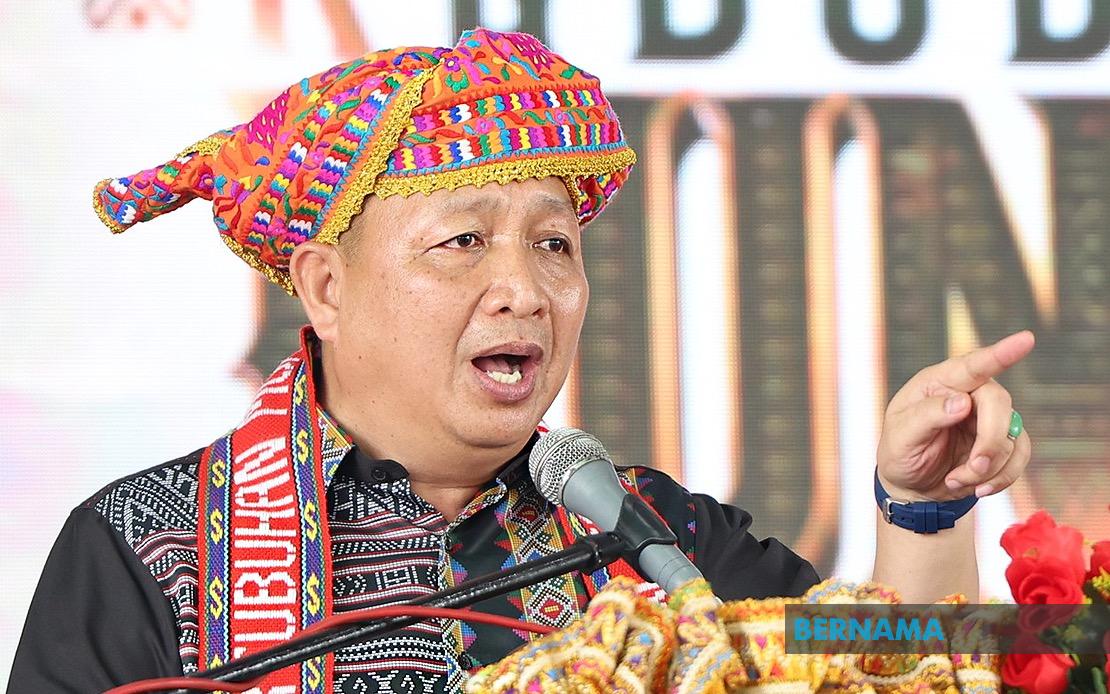
Deputy Prime Minister Datuk Seri Dr Ahmad Zahid Hamidi unveiled a substantial RM4.06 billion allocation for rural water supply infrastructure across Sabah during the Rungus Cultural Festival in Kudat on August 8, signalling federal commitment to addressing longstanding water access disparities in the state's interior regions. The announcement represents a meaningful step forward for communities that have historically struggled with reliable clean water provision, a challenge that has constrained both quality of life and economic development across Sabah's more isolated districts.
Kota Marudu Member of Parliament Datuk Wetrom Bahanda, who attended the festival, emphasised that the Rural Water Supply (BALB) initiative reflects deeper federal intentions to prioritise basic infrastructure development with renewed emphasis on efficiency and effectiveness. For Malaysian readers tracking infrastructure spending patterns, this allocation demonstrates sustained government attention to the rural-urban infrastructure gap, a persistent development challenge across the country that has long disadvantaged communities beyond major population centres.
A critical component of this initiative lies in its administrative structure. Rather than maintaining traditional central management from the Ministry of Rural and Regional Development in Putrajaya, the Federal government has opted to channel the RM4.06 billion directly to the Sabah state government. This decentralisation approach potentially enables more responsive, locally-informed planning that can address regional water challenges with greater contextual understanding than distant federal administration might permit. Wetrom highlighted how this delegation acknowledges the state government's superior capacity to assess and respond to actual community needs, a pragmatic recognition that remote infrastructure challenges often require on-ground familiarity.
The water supply initiative arrives alongside complementary rural connectivity projects that together constitute a broader regional development strategy. Multiple road construction and upgrading schemes are simultaneously advancing through ministry funding, including the Sonsogon-Megandai and Mangin routes, alongside critical road networks designated as Jalan Rendemon, Jalan Teringai, Jalan Sembayan, and the route connecting Jalan Raditiden to Pampang Poring. These infrastructure investments operate synergistically—improved water access becomes far more valuable when transportation networks simultaneously enable market access and service delivery to previously isolated settlements.
For Kota Marudu and Kudat districts, which Wetrom identified among Malaysia's persistently lower-income regions, this convergence of water and transport infrastructure carries transformative potential. Communities unable to rely on clean water supply face significant constraints on agricultural productivity, health outcomes, and attracting skilled workers or investment. Similarly, isolation from road networks perpetuates economic marginalisation. The coordinated infrastructure push attempts to address these compounding disadvantages through integrated development, moving beyond single-sector interventions toward more comprehensive regional transformation.
Wetrom also articulated federal support for elevating Matunggong subdistrict to full district status, another administrative reconfiguration designed to unlock development benefits. In Malaysian governance, district-level status typically confers enhanced administrative authority, improved capacity for accessing development allocations, and greater institutional prominence within state planning frameworks. This elevation, combined with water infrastructure and road improvements, indicates an intentional strategy to systematically boost development capacity across the Kota Marudu parliamentary constituency.
The RM4.06 billion investment must be contextualised within Sabah's broader development trajectory. The state remains comparatively resource-rich yet historically experienced significant development disparities between coastal commercial centres and interior regions where indigenous communities predominate. Rural water access represents a fundamental development indicator—the World Health Organisation and development agencies universally recognise clean water as foundational to health, education, and economic opportunity. Sabah's interior communities have historically reported water challenges ranging from seasonal scarcity to contamination, constraining possibilities for health, agricultural advancement, and quality of life.
From a regional Southeast Asian perspective, Sabah's experience reflects broader challenges confronting developing regions across the continent. Malaysia, positioned among middle-income economies, possesses the capacity to address such infrastructure deficits that persist in lower-income neighbours. The commitment to directed investment in remote water supply demonstrates political will to narrow internal development disparities, reinforcing Malaysia's positioning as a relatively advanced developing economy while acknowledging ongoing inequality requiring targeted intervention.
The implementation timeline and execution mechanisms remain important variables determining whether this allocation translates into functional water systems reaching target communities. Malaysian readers familiar with infrastructure project histories understand that funding announcements and actual service delivery sometimes diverge significantly, particularly in geographically challenging regions where construction costs escalate and maintenance complexities multiply. State-level implementation may enhance local responsiveness but requires adequate technical capacity and transparent oversight mechanisms ensuring funds reach intended communities rather than becoming absorbed through administrative channels.
For Southeast Asian observers monitoring Malaysia's federal-state governance dynamics, this water allocation represents instructive evolution in infrastructure delivery models. Decentralisation of implementation authority reflects growing recognition that remote development challenges demand locally-rooted solutions while maintaining federal resourcing. This approach potentially offers lessons for other regional governments attempting to balance central coordination with responsive local administration, particularly relevant as developing economies increasingly confront infrastructure access disparities as significant governance challenges.
The broader significance extends beyond immediate water supply expansion. Sabah's development aspiration faces persistent constraints from geographical isolation and historical underinvestment. Coordinated federal initiatives addressing water, connectivity, and administrative elevation simultaneously signal recognition of compound development disadvantages requiring multi-sectoral responses. Whether these investments catalyse sustained transformation or represent periodic allocations without sustained commitment will substantially influence whether interior Sabah communities achieve meaningful convergence with more developed regions, and what this portends for Malaysia's inclusive development trajectory.

