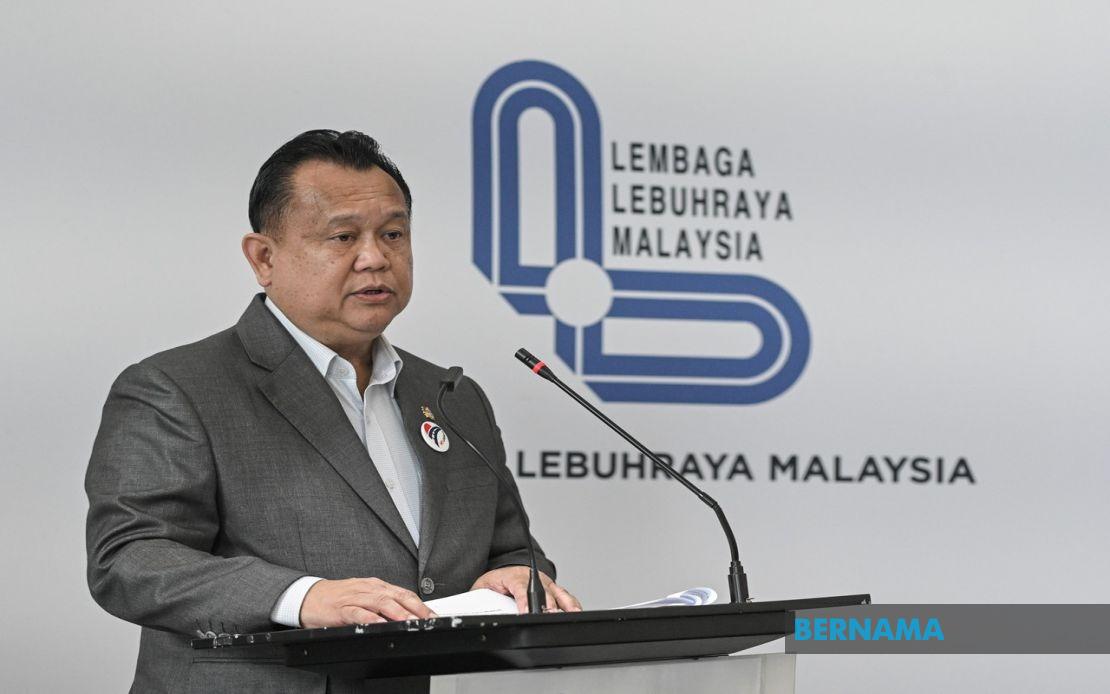
Malaysia's government has committed RM25.2 million towards a targeted safety enhancement programme, rolling out solar-powered LED street lighting infrastructure at 32 identified accident-prone stretches along the country's highway network. The initiative represents the first phase of a broader investment framework, with Works Minister Datuk Seri Alexander Nanta Linggi announcing that construction work can now commence following the formal handover of contracts to the selected contractor.
The project sits squarely within the MADANI Monitoring framework, a strategic government programme aimed at systematically addressing infrastructure gaps that contribute to road casualties. By concentrating resources on the most dangerous highway segments rather than attempting blanket coverage, this approach reflects evidence-based safety planning — a methodology increasingly adopted by transport authorities across Southeast Asia grappling with rising vehicular accident rates. The selection of high-risk locations follows documented accident data and traffic pattern analysis, ensuring funds are deployed where they are likely to yield the greatest returns in terms of lives saved and injuries prevented.
The comprehensive scope involves the installation of 3,000 individual light poles across these 32 locations, a substantial undertaking that requires coordination between multiple government agencies. Beyond the Works Ministry's direct involvement, both the Finance Ministry and the Malaysian Highway Authority (LLM) have been brought into the partnership, reflecting the cross-agency approach needed for infrastructure projects of this scale. This multi-stakeholder coordination framework is essential for addressing the complex logistics and funding mechanisms required to execute highway improvements efficiently.
The decision to use solar-powered LED technology carries significant implications beyond immediate safety gains. Solar lighting eliminates ongoing electricity costs while reducing Malaysia's dependence on grid power for highway infrastructure, aligning with the government's broader sustainability commitments. LED technology itself is energy-efficient and durable, requiring less frequent maintenance and replacement than conventional street lighting systems. For remote or rural highway stretches that may lack reliable grid infrastructure, solar solutions offer particular advantages by removing the need for costly electrical connection work.
The financial architecture of the project reveals pragmatic planning within budget constraints. Prime Minister Datuk Seri Anwar Ibrahim had originally announced a RM30 million allocation in the 2026 Budget last October, yet only RM25.2 million is being deployed in this initial phase. Rather than viewing this as a shortfall, the Works Ministry frames it as a staged approach, with remaining funds allocated contingently based on future assessments of requirements and performance metrics. This flexibility allows for adjustments as the project progresses and lessons learned can be applied to subsequent phases.
The timeline for completion by end-November this year places considerable demands on the executing contractor and project management teams. Highway lighting installation projects typically face challenges including traffic management during installation, weather-related delays, and the need to coordinate work during night hours to minimise traffic disruption. The aggressive schedule suggests that planning has already advanced significantly, with site surveys and design work presumably completed before the Letter of Acceptance was handed over.
For Malaysian road users, the immediate beneficiaries will be those traversing these 32 identified high-risk zones. Improved visibility at night substantially reduces accident risks caused by driver fatigue, difficulty spotting hazards, and visibility-related misjudgements. Research consistently demonstrates that poor lighting contributes to a disproportionate share of night-time accidents relative to day-time incidents, making street lighting investment a high-impact safety intervention with relatively straightforward implementation.
The project's timing is particularly relevant given Malaysia's road safety statistics, which have drawn ongoing attention from policymakers and safety advocates. Highway accidents represent a significant public health burden, with fatalities and severe injuries carrying substantial economic and social costs. While lighting alone cannot eliminate accidents—driver behaviour, vehicle condition, and road design all play critical roles—it addresses one modifiable environmental factor that tends to be underinvested in developing and middle-income nations.
Regionally, Malaysia's approach aligns with growing recognition across Southeast Asia that targeted infrastructure improvements can yield meaningful safety gains. Neighbouring countries facing similar highway safety challenges have increasingly focused on high-risk corridor identification and selective investment, recognising that comprehensive solutions are constrained by budget limitations. Malaysia's emphasis on data-driven site selection positions it as a model for efficient road safety spending in the regional context.
The solar LED initiative also carries implications for future highway infrastructure policy. If this pilot demonstrates measurable accident reduction at the 32 selected locations, it will strengthen the case for phasing expansion into additional high-risk zones. The documented performance data will prove invaluable for securing future budget allocations and for evaluating competing infrastructure priorities. Establishing clear metrics for success—whether measured in accident reduction rates, severity reduction, or cost-benefit analysis—will be essential for demonstrating programme effectiveness to policymakers and the public.
Looking forward, the completion deadline of November this year will be closely monitored not only for on-time delivery but also for the quality of implementation and initial safety outcomes. The project's success will likely influence government willingness to pursue similar targeted safety infrastructure investments. More broadly, it exemplifies how strategic, evidence-based spending on relatively straightforward infrastructure improvements can address a persistent public safety challenge without requiring systemic overhauls or major policy shifts—an approach that resonates particularly well in resource-constrained environments across the region.