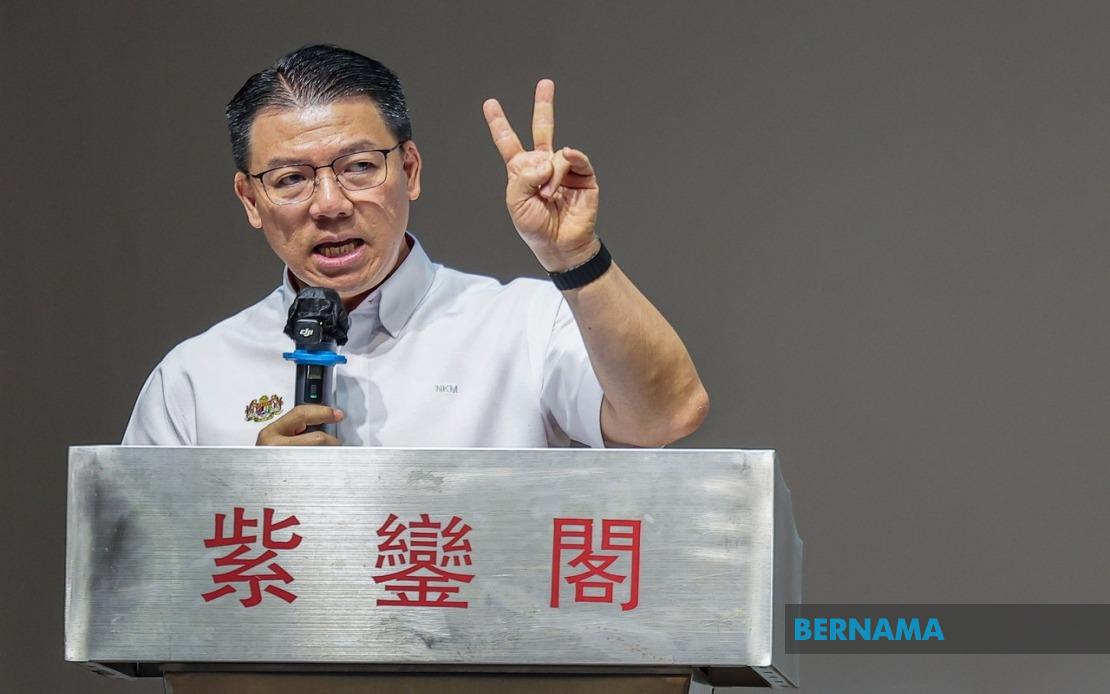
Malaysia's Housing and Local Government Ministry (KPKT) has committed RM200 million across a four-year span from 2023 onwards to support the maintenance of non-Muslim houses of worship nationwide, according to Minister Nga Kor Ming. The initiative, formally known as the Non-Muslim Houses of Worship (RIBI) Maintenance Initiative, encompasses repair and upkeep work on churches, gurdwaras, Hindu temples, Buddhist temples, and affiliated religious organisations throughout the country. Nga presented this investment as evidence of the MADANI government's commitment to equitable treatment across Malaysia's diverse religious and ethnic communities.
The scale of community engagement with this programme underscores genuine demand for infrastructure support among religious minorities. The e-RIBI System has processed 1,478 applications since launch, with the total value of requests reaching more than RM279 million. This figure substantially exceeds the available budget, indicating that many qualifying institutions face deferred maintenance needs and that the current allocation covers only a portion of pressing repairs across the nation's non-Muslim religious establishments.
During the Johor State RIBI Maintenance Initiative Allocation Handover Ceremony at the Che Luan Khor Morality Uplifting Society in Kluang, Nga announced a targeted injection of RM3.14 million specifically for 27 religious institutions in Johor during the current financial year. This state-level allocation supports renovation projects, maintenance activities, structural repairs, and emergency interventions designed to preserve operational functionality across Johor's religious infrastructure. The funding aims to guarantee that these community facilities maintain acceptable standards of safety and comfort for their congregations.
Johor's cumulative allocation since the programme's inception demonstrates steady expansion of government support for religious minority infrastructure. From 2023 through May 2026, the state received RM18.75 million that benefited 154 separate religious institutions. This trajectory reflects both the government's sustained commitment to the initiative and the systematic processing of applications through the formal e-RIBI approval mechanism. For Malaysian readers, this represents tangible federal investment in constituencies where religious minorities represent significant population segments.
Nga framed the maintenance initiative within broader governance philosophy centred on inclusive development. He articulated that the MADANI government approaches nation-building through a lens emphasising equity across Malaysia's multi-ethnic, multi-religious society rather than limiting benefits along communal lines. By explicitly stating that Malays, Chinese, Indians, Ibans, and Kadazan-Dusun communities merit collective investment, Nga positioned religious infrastructure maintenance as integral to social cohesion and inter-community respect.
The minister's emphasis on unity construction carries particular significance in Southeast Asia's contemporary political environment. Malaysia's constitutional framework guarantees Islam's constitutional position while simultaneously protecting minority religious practice. Allocation of substantial government resources toward non-Muslim religious facilities represents an operational manifestation of this constitutional guarantee. For regional observers, such targeted spending demonstrates how a Bumiputera-majority Muslim nation can operationalise religious pluralism through concrete budget commitments rather than rhetorical assertion alone.
Transparency mechanisms form a critical component of programme credibility. KPKT has committed to professional, efficient, and transparent monitoring of all approved projects to ensure allocations genuinely reach deserving organisations. This institutional accountability framework addresses potential concerns regarding resource allocation among competing applicants and provides assurance that disbursed funds serve legitimate maintenance purposes. For Malaysian constituencies dependent on these allocations, such oversight structures offer recourse pathways should implementation falter.
The maintenance initiative intersects with Malaysia's broader economic and social stability agenda. Nga explicitly connected infrastructure investment in religious institutions to currency strength, investor confidence, and employment generation. His framing suggests that inter-community harmony and equitable resource distribution constitute prerequisites for macroeconomic resilience. This linkage positions minority religious infrastructure maintenance not as a discretionary welfare expenditure but as foundational investment in social stability enabling economic growth benefiting all Malaysians.
The programme's existence and scale reflect measured policy responses to documented infrastructure gaps among non-Muslim religious communities. That 1,478 applications requesting nearly RM280 million support have been submitted against a RM200 million envelope indicates rationing across competing claims. Future programme expansion would require legislative or budgetary decisions to increase allocations, representing potential political flashpoints or opportunities for expanded resource commitment depending on government priorities and fiscal capacity.
For Southeast Asian religious minorities more broadly, Malaysia's RIBI initiative offers a model demonstrating how constitutional protections can translate into material resource flows. While the RM200 million allocation across four years remains modest relative to broader development spending, its targeted, needs-based approach and transparent application framework establish operational precedent. Other regional nations with significant religious minority populations may reference this initiative when designing comparable support mechanisms within their own institutional contexts.

