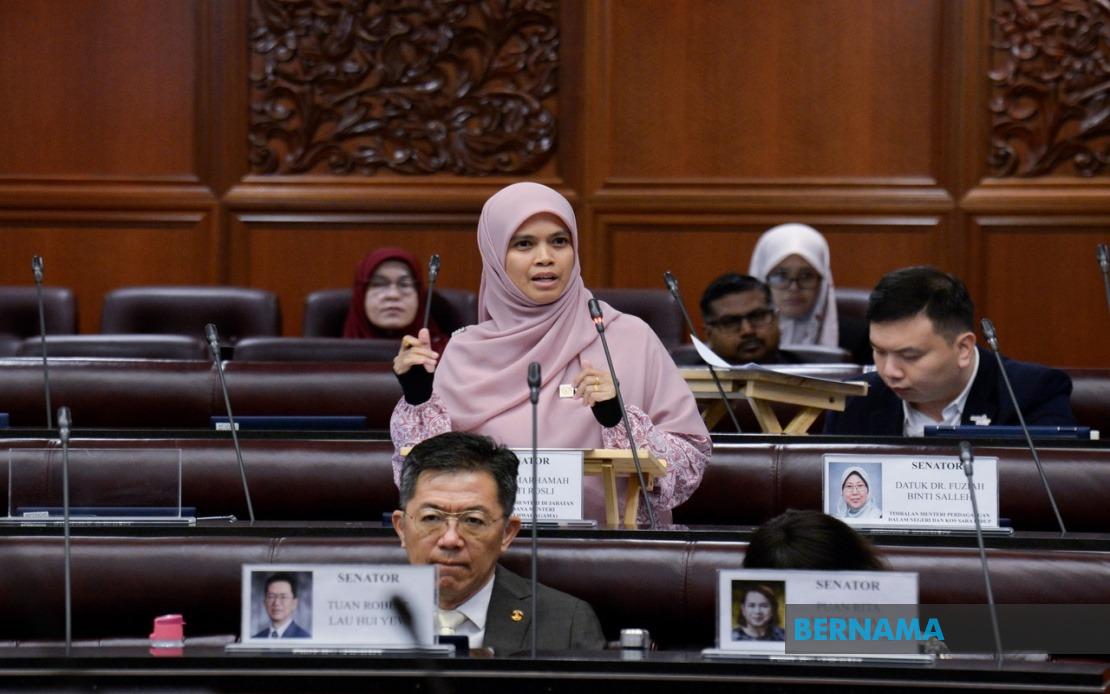
The MADANI government has sanctioned 92 mosque construction projects valued at RM160.82 million across Malaysia between 2023 and June this year, Deputy Minister Marhamah Rosli disclosed in Parliament. Of these approved undertakings, 54 have reached completion while another 16 remain actively under construction, reflecting steady progress in expanding religious infrastructure nationwide. The remaining 22 projects are still in preparatory phases, with some advancing through procurement procedures before full implementation commences.
Marhamah, speaking in her capacity as Deputy Minister in the Prime Minister's Department (Religious Affairs), provided the breakdown during a response in the Dewan Negara to Senator Mohd Hasbie Muda, who had raised questions about the pace and adequacy of new mosque development during the current administration. The completion rate of approximately 59 percent within the first 18 months suggests a deliberate effort to expand places of worship across the country, though the phased nature of remaining projects indicates continued medium-term engagement with infrastructure delivery.
The approval framework for these construction initiatives operates through a structured consultation mechanism that prioritises local expertise and contextual understanding. State religious authorities conduct initial assessments and forward recommendations to federal decision-makers, ensuring that new mosque placements reflect genuine community needs rather than arbitrary development patterns. This collaborative approach between federal and state bodies recognises that religious infrastructure decisions cannot be made in isolation from local demographic realities and existing facilities.
Multiple criteria inform the selection process for mosque sites and construction priorities. Decision-makers evaluate population growth and concentration patterns within municipalities and districts, examining whether existing mosques possess adequate capacity to serve expanding Muslim communities. Geographic distance between existing facilities and proposed sites receives careful consideration, preventing wasteful duplication while ensuring accessibility for congregants across diverse terrain. Land availability and tenure status form practical prerequisites, while demonstration of state government financial commitment ensures sustainable partnerships rather than one-sided federal burden.
The allocation structure represents a significant shift in how Malaysia approaches religious infrastructure financing. Following a June 2022 decision by the 139th Meeting of Menteri Besar and Chief Ministers, the federal government moved toward shared responsibility with state administrations in bearing construction costs. This cost-sharing arrangement strengthens sub-national ownership of projects and encourages coordinated planning that aligns religious facility development with broader state development strategies and priorities.
Beyond their primary function as places of worship, mosques increasingly serve as anchors for broader social welfare initiatives. Marhamah emphasised that these facilities act as distribution centres and coordination hubs for assistance directed toward vulnerable populations, including the homeless, urban poor, and low-income households. This expanded social role reflects contemporary understanding that religious institutions can meaningfully address structural inequalities when provided with adequate resources and operational coordination.
The Department of Islamic Development Malaysia (JAKIM) collaborates extensively with state religious departments and local councils to operationalise welfare programmes through mosque networks. These initiatives target specific vulnerable groups designated as asnaf under Islamic jurisprudence, distributing targeted financial assistance while maintaining dignity and cultural sensitivity. Food basket distribution and community kitchen programmes address immediate nutritional needs, particularly during periods of financial hardship or seasonal economic disruption affecting household budgets.
Educational support forms another critical component of mosque-centred welfare delivery. Emergency financial assistance helps children from low-income families remain enrolled in school despite familial economic constraints, while dedicated counselling services address psychological and social challenges that often accompany poverty. This preventive approach recognises that poverty creates cascading difficulties beyond material deprivation, affecting mental health and family stability in ways that financial assistance alone cannot fully remedy.
Funeral management assistance represents a culturally significant service that reflects Islamic principles regarding death and bereavement. For poor families facing unexpected loss, funeral expenses create acute financial crises that mosque-based programmes help mitigate, ensuring dignified funeral rites regardless of family economic circumstances. Similarly, temporary shelter facilities provide emergency accommodation for displaced individuals and families facing housing insecurity, though the adequacy and scale of such provision remains an ongoing challenge in rapidly urbanising areas.
The coordination between JAKIM, state religious departments, local councils, and non-governmental organisations demonstrates a multi-stakeholder approach to welfare delivery that leverages institutional comparative advantages. Religious departments possess community trust and legitimacy in Muslim communities, government bodies control significant resources and regulatory authority, while NGOs often maintain direct relationships with vulnerable populations and possess specialised expertise in social service delivery. This collaborative model has potential application beyond religious institutions, though scaling and sustainability remain concerns requiring ongoing attention.
For Malaysian readers, these mosque construction projects carry implications extending well beyond religious observance. They represent targeted infrastructure investment in communities nationwide, signal government commitment to religious institution development, and constitute attempts to ensure religious spaces serve broader social cohesion functions. The emphasis on mosque-based welfare programmes reflects recognition that poverty alleviation requires institutional partnerships and community engagement rather than purely centralised or market-driven approaches.
The 92-project portfolio also reflects demographic realities across Malaysia's diverse geography, with Muslim population growth patterns in urban and emerging suburban areas creating new infrastructure demand. Completion of over half these projects within 18 months suggests operational efficiency, though the remaining pipeline indicates medium-term sustained investment. For state governments and local communities, these projects represent both opportunity and responsibility—opportunity to develop community facilities aligned with local needs, and responsibility to ensure completed mosques function effectively as both worship spaces and social service delivery points.

