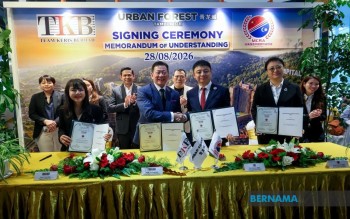
An 84-acre urban forest development worth over RM1 billion in Tambun, Ipoh, is poised to catalyse Perak's economic transformation by creating an integrated tourism and hospitality destination that extends far beyond conventional real estate projects. Team Keris Bhd (TKB), in partnership with RJJ Hotels Sdn Bhd and the Malaysian Chinese Restaurant Association (MCRA), is positioning the three-year project as a comprehensive ecosystem designed to anchor Perak's position on international tourism maps. The initiative represents a strategic shift in how Malaysia's states approach tourism development, moving beyond isolated attractions toward interconnected experiences that span accommodation, cuisine, retail, and experiential offerings.
Peaker's tourism authorities view the project as a crucial piece in a broader economic puzzle. Perak Tourism, Industry, Investment and Corridor Development Committee chairman Loh Sze Yee emphasised that the urban forest will complement existing attractions such as the Lost World of Tambun and other hospitality ventures, effectively clustering these assets into a cohesive tourism destination. This synergy is particularly significant for Perak, a state that has historically attracted primarily domestic visitors despite possessing considerable cultural and natural assets. By anchoring international-class hotel facilities within a carefully curated environment featuring premium dining and retail experiences, planners believe the region can capture high-value tourism segments currently flowing toward established destinations like Penang and the Klang Valley.
The food and beverage component demonstrates sophisticated thinking about Malaysia's competitive advantages in regional tourism. The project allocates 40 per cent of F&B operations to MCRA-affiliated establishments, ensuring that renowned Perak and Ipoh food operators gain international exposure while maintaining local authenticity. The remaining 60 per cent is reserved for Malaysian operators, creating opportunities for regional culinary entrepreneurs beyond traditional Chinese restaurants. This balanced approach addresses a critical insight: international tourists increasingly seek authentic local dining experiences rather than international chains, yet require the professional standards and reliability that established hospitality networks provide.
Muslim-friendly dining represents another strategic layer within the F&B ecosystem. TKB's commitment to ensuring 30 per cent of food offerings meet halal standards, with MCRA specifically developing Muslim-friendly selections including halal dim sum, acknowledges both domestic tourism patterns and growing demand from Middle Eastern and Southeast Asian markets. This inclusivity expands the project's appeal beyond Chinese dining traditions, positioning Perak as welcoming to diverse visitor profiles. The emphasis on halal certification and compliance extends beyond individual restaurants; it creates infrastructure and supply chain opportunities that could position Perak as a regional halal food production hub, potentially attracting investment from manufacturers seeking to establish operations in Malaysia.
TKB group executive chairman Datuk Lee Seng Hee articulated a philosophy that elevates the project beyond commercial real estate toward creating meaningful visitor experiences. The establishment of TKB Tours & Hospitality reflects recognition that international tourism success depends on seamlessly connecting accommodation, dining, transportation, and activity planning into cohesive packages. Rather than expecting visitors to independently navigate getting from Kuala Lumpur or Penang to Ipoh and then assemble tourism experiences, the integrated approach removes logistical friction. This end-to-end visitor journey perspective mirrors successful tourism models in established destinations, where hospitality companies function as curators rather than mere service providers.
RJJ Hotels' integration into the project brings significant connectivity advantages through its affiliation with Jin Jiang Hotels, a network spanning more than 50 countries with over 200 million members and 40 distinct hotel brands. This global distribution network provides Ipoh with direct marketing channels to source markets including Australia, Britain, and the United States—regions with strong tourism spending patterns and relatively long holiday cycles. RJJ Hotels chief executive officer Yap Lip Seng's emphasis on package deals and extended-stay programming indicates a strategic focus on visitor dwell time, transforming Ipoh from a day-trip destination into a multi-day hub where tourists experience multiple meals, activities, and cultural exposures. This shift fundamentally changes the economics of local tourism, allowing more businesses to capture visitor spending.
The supply chain development dimension adds significance for Perak's broader economic trajectory. MCRA president Gao Houyun highlighted plans to encourage Chinese manufacturers of sauces, spices, and specialty food ingredients to establish production facilities in Perak, leveraging the urban forest as a demonstration and marketing platform. Such backward integration creates manufacturing employment beyond hospitality roles while building regional food production capabilities. These facilities could export throughout Southeast Asia, capitalizing on Malaysia's well-established halal certification reputation. For Perak, historically dependent on tin mining and agriculture, transitioning toward food manufacturing and tourism services represents important economic diversification.
The halal certification advantage extends beyond individual business licensing. Malaysia's internationally recognized halal framework provides a substantial competitive edge in markets where certification carries both religious and quality-assurance significance. Products and restaurant concepts developed and tested in Perak can leverage this certification to expand throughout Malaysia's diverse Muslim population and into Southeast Asian markets where halal compliance increasingly represents table stakes for food businesses. Gao's vision of Perak as an incubator for regional food brands reflects sophisticated understanding of how local competitive advantages can be weaponized for regional expansion.
Training and skills development constitute often-overlooked elements of sustainable tourism development. MCRA's commitment to upgrading local operators and workers toward international hospitality standards addresses a persistent challenge in Southeast Asian tourism: service quality gaps that prevent destinations from capturing premium market segments. By embedding training within the project infrastructure rather than treating it as an afterthought, the partnership creates systematic capability building. This approach contrasts with developments that simply transplant international standards through imported management while leaving local workforces unchanged. Instead, the model builds local human capital, creating sustainable competitive advantages that strengthen retention of tourism revenues within Perak.
The broader regional context for this development extends beyond Perak's borders. Southeast Asia faces intensifying competition for international tourism dollars as Thailand, Vietnam, and Indonesia invest heavily in tourism infrastructure. Malaysia's traditional appeal—political stability, English-language prevalence, halal ecosystem, multicultural society—risks commodification unless states like Perak differentiate through distinctive experiences. By positioning Ipoh as a culinary and hospitality destination rather than a generic resort area, the project taps into global tourism trends favoring experiential travel and authentic cultural engagement. This positioning acknowledges that international visitors increasingly seek places that feel distinctly themselves rather than replicated formulae.
The three-year development timeline reflects confidence in both market demand and implementation capacity, though such timelines in Malaysian property development merit careful monitoring. Successfully executing an 84-acre, RM1 billion project while maintaining quality standards and community integration represents substantial operational complexity. The partnership structure involving TKB, RJJ Hotels, and MCRA distributes risk and expertise across stakeholders with complementary competencies, though coordination challenges may emerge during construction and operational transition phases.
For Malaysia's broader tourism strategy, the Tambun urban forest represents a template for how integrated development can leverage existing assets while building new attractions. Rather than competing primarily on resort amenities or beach access, the model emphasizes authentic food, hospitality, and cultural experiences anchored within professional infrastructure. As Perak transitions from domestic to international tourism orientation, success in this project could establish the state as a meaningful destination for extended stays rather than quick stopovers, fundamentally reshaping visitor spending patterns and economic multiplier effects throughout the region.

