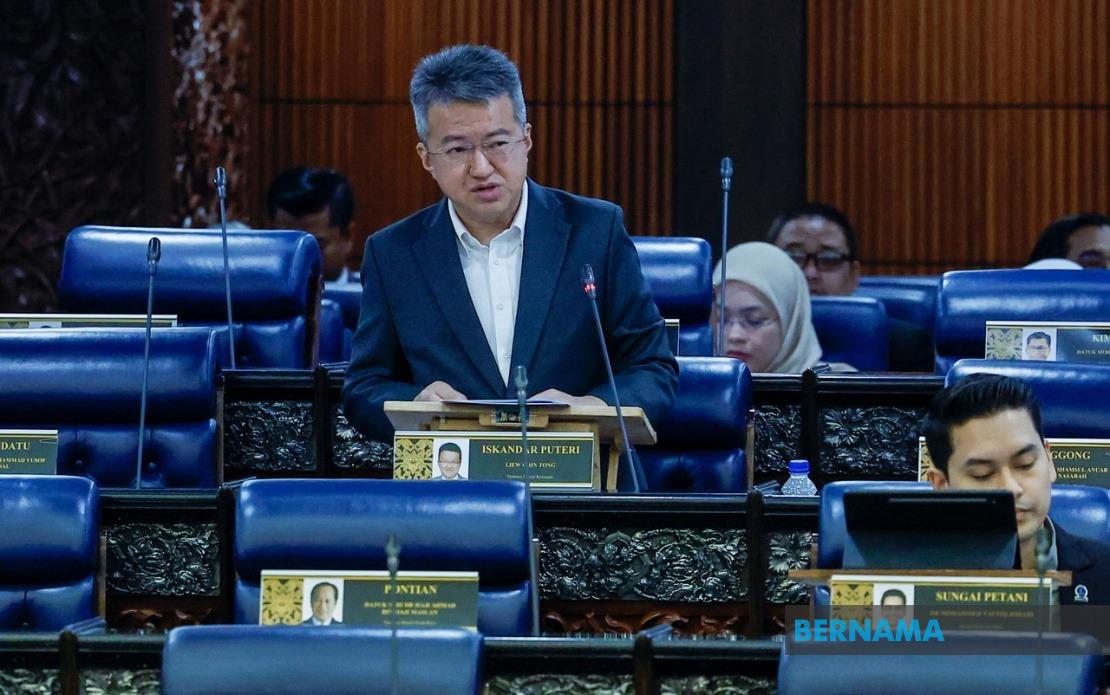
The federal government has moved to reassure Sabah that its increased interim special grant will preserve the state's existing budgetary commitments for infrastructure and public services. Deputy Finance Minister Liew Chin Tong made the clarification during parliamentary proceedings on July 14, stating that the RM1.5 billion supplement announced by Prime Minister Datuk Seri Anwar Ibrahim in May would operate independently of Sabah's development and operating allocation ceilings set out in this year's federal budget.
This distinction carries particular importance for Sabah, historically one of Malaysia's less developed states relative to Peninsular Malaysia. By guaranteeing that the special grant functions as an addition rather than a redistribution of funds, the federal government addresses longstanding concerns about whether additional payments might simply shuffle resources rather than genuinely expand the state's fiscal capacity. The assurance reflects broader tensions around how federal resources are allocated among Malaysia's 13 states, with Sabah and Sarawak maintaining constitutionally protected positions on special grants dating back to the formation of Malaysia in 1963.
Liew outlined an expanded development allocation for Sabah, which has grown from RM6.7 billion to RM6.9 billion in the current fiscal year. This increased allocation supports major infrastructure initiatives including the Pan Borneo Highway, a flagship project intended to improve connectivity across the island of Borneo. The funding also extends to rural road networks, electrification of remote communities, water supply systems, and substantial improvements to health and education facilities. Hospital construction and upgrading, clinic development, rehabilitation of deteriorating school buildings, and police station improvements all fall within this enhanced allocation. These projects address persistent gaps in service delivery across Sabah's vast and geographically challenging terrain.
Beyond capital works, the federal government has committed to continuing electricity subsidies for Sabah despite having transferred regulatory oversight of power supply to the state in 2024. This ongoing financial support demonstrates recognition that Sabah's power generation costs exceed those in more developed regions, making subsidies necessary to keep tariffs affordable. The electricity subsidy allocation for 2026 is projected to reach RM880 million, maintaining government commitment to keeping utility costs manageable across the state.
Water supply infrastructure has also received heightened attention, with allocations rising substantially. The rural water supply budget has increased from RM103.5 million in 2025 to RM143 million in 2026, reflecting government acknowledgment that clean water access remains incomplete in many rural communities across Sabah. This expansion addresses a critical gap in basic services that affects quality of life and economic productivity across agricultural and non-urban areas.
Cost-of-living support programs form another key component of federal assistance to Sabah residents. The Sumbangan Tunai Rahmah (STR) and Sumbangan Asas Rahmah (SARA) schemes collectively provide approximately RM1.2 billion in direct cash assistance to eligible Sabah households. These welfare transfers help offset inflationary pressures affecting residents' purchasing power and represent a direct channel of federal resources to vulnerable populations across the state.
The administration of the new special grant must follow constitutional procedures outlined in Article 112D of the Federal Constitution, the same framework applied when grants were distributed in 2022, 2023, and 2025. These established processes require coordination between federal and state authorities, ensuring that disbursement occurs through agreed mechanisms rather than unilateral action. This procedural requirement reflects the constitutional position of Sabah as a state with specific protections and privileges enshrined in the Malaysian federation.
Liew emphasized that the federal government respects the constitutional principle protecting Sabah's entitlement to special grants under Article 112C, even as the government pursues legal remedies through the court system. The government has filed an appeal contesting some aspects of the Kota Kinabalu High Court's ruling on the matter, indicating ongoing disagreement over interpretation or implementation. However, this legal challenge does not negate the government's commitment to honoring the constitutional right itself.
Looking forward, the federal government has signaled its intention to negotiate a new framework with the Sabah state government for calculating future special grant amounts in accordance with constitutional provisions. These discussions would establish a more predictable methodology for determining grant levels, moving away from annual announcements and ad hoc increases toward a systematic approach aligned with constitutional requirements. Such a framework could reduce uncertainty and allow both governments to plan medium-term fiscal strategies more effectively.
For Malaysian observers beyond Sabah, this commitment holds broader significance. It demonstrates federal acknowledgment that constitutional protections for certain states remain operative and cannot be circumvented through budgetary mechanisms. The approach taken toward Sabah's grant structure could establish precedents affecting how the federal government manages its relationship with other constitutionally privileged jurisdictions, particularly Sarawak, which enjoys comparable constitutional protections. The outcome of negotiations between Kuala Lumpur and Kota Kinabalu may therefore shape intergovernmental fiscal arrangements across the federation for years ahead.
The timing of these reassurances also reflects political considerations. Sabah's position within federal coalition structures has fluctuated, and maintaining strong financial commitments helps ensure the state's continued political alignment with the national government. By explicitly guaranteeing that development allocations remain unaffected and even increasing in absolute terms, the federal government sends signals about its commitment to Sabah's development trajectory and its willingness to invest in infrastructure improvements across the eastern Malaysia region.

