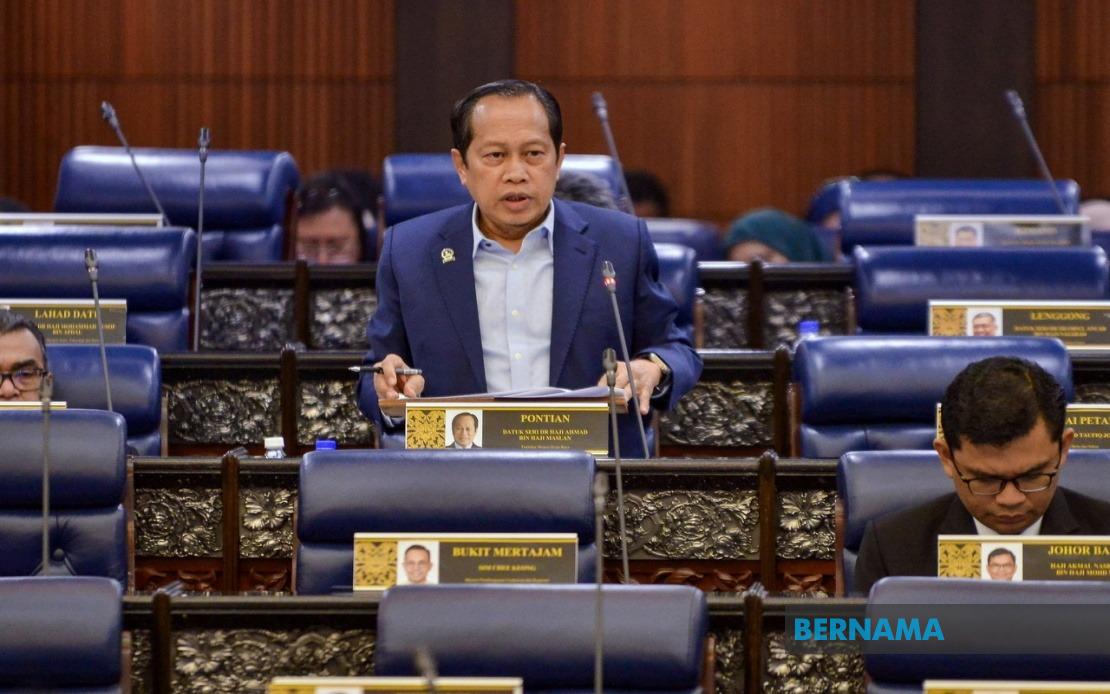
The federal government has disbursed RM1.2 billion in compensation to landowners whose property was acquired for the Sabah Pan Borneo Highway Phase 1 Project, Deputy Minister of Works Datuk Seri Ahmad Maslan announced in parliament. The significant outlay underscores the scale of land acquisition required for the major infrastructure initiative, with the government explicitly absorbing all compensation costs to shield property owners from financial hardship. In parallel, the Sarawak segment of the Pan Borneo Highway programme has generated RM737 million in compensation payments, reflecting the cross-border scope of this critical transport corridor development.
The compensation commitments come amid persistent scrutiny over the Sabah project's ballooning budget. Parliamentary member Isnaraissah Munirah Majilis, representing the WARISAN party in Kota Belud, pressed Ahmad Maslan to justify why the Phase 1 cost projection has nearly doubled from an initial RM12.86 billion estimate in 2015 to the current RM24.889 billion figure. This represents a substantial increase that has drawn attention from legislators concerned about fiscal prudence and value for money in major capital works.
Ahmad attributed the dramatic cost escalation to a fundamental shift in project governance and delivery methodology. Originally structured around a Project Delivery Partner model, the initiative encountered difficulties that prompted its termination in 2019 on grounds of national interest. The transition to the Federal Conventional Contractor approach necessitated a complete technical reassessment of remaining works five years into the original planning timeline, introducing fresh scope definitions and revised cost structures that substantially exceeded earlier projections.
The recalibrated project architecture splits Phase 1 into two constituent sections. Phase 1A encompasses 16 work packages valued at RM10.9 billion, whilst Phase 1B comprises 19 packages totalling RM13.989 billion. This disaggregated structure allows for phased implementation and staged budget allocation, though the combined envelope reveals the expanded ambitions of the revised project conception compared to the 2015 baseline estimates.
Technical factors have materially contributed to cost pressures. Ahmad explained that modifications to project scope and engineering design specifications, coupled with unanticipated geotechnical complications requiring extensive soil stabilisation work, have driven expenditure upward. Large-scale utility relocation operations—necessary to accommodate the highway alignment—represent additional technical complexity that was either underestimated or not fully anticipated during the original feasibility assessment phase.
Macroeconomic conditions have compounded the technical cost drivers. Global and domestic inflation cycles, combined with sharp increases in construction material prices including iron, bitumen and cement, have eroded the purchasing power embedded in the 2015 budget allocation. These commodity price movements reflect broader supply-chain disruptions and demand surges in regional construction markets, effects beyond the direct control of project management but materially impacting final delivery costs.
Labour market tightening and machinery cost inflation have further pressurised project finances. The sustained period between initial budgeting and active construction execution has coincided with rising wages in the construction sector and higher equipment hire and purchase costs. These labour and capital input costs represent structural shifts in Malaysia's construction economy rather than temporary aberrations, suggesting that future major infrastructure projects will operate within this more elevated cost environment.
The government's approach of guaranteeing full compensation coverage carries significant policy implications for landowner relations in major development corridors. By insulating affected property owners from losses and administrative burdens, the federal authorities signal commitment to minimising local disruption from national infrastructure priorities. This approach reduces community opposition and facilitates smoother land acquisition processes, though it necessarily inflates the total project cost burden borne by the public sector.
For Malaysian and Southeast Asian observers, the Pan Borneo Highway project exemplifies the complex dynamics shaping contemporary infrastructure development across the region. Cost overruns, delivery model shifts, and macroeconomic pressures represent common challenges facing ambitious transport networks designed to improve connectivity in geographically dispersed areas. The Sabah and Sarawak highway initiatives serve as test cases for how Malaysia manages large-scale cross-state development in a federal context, with implications for future regional infrastructure partnerships.
The substantial compensation outlays also highlight the substantial human and property dimensions embedded within technical infrastructure projects. Beyond engineering specifications and budget allocation, major highways necessitate displacement of existing economic activities and land uses, each transaction representing individual property owner negotiations. The RM1.9 billion combined compensation commitment across both Sabah and Sarawak reflects the magnitude of these cumulative individual transactions aggregated into public expenditure figures.
Moving forward, the Pan Borneo Highway project will serve as a critical arterial route enhancing overland commerce and logistics flows across Borneo's interior regions. Once fully operational, the combined phases will substantially reduce transport times and costs for cargo movement between Sabah and Sarawak, with potential spillover effects for cross-border trade and supply chain integration. However, the budget trajectory warrants continued parliamentary oversight to ensure that subsequent project phases do not encounter similar cost acceleration patterns.

