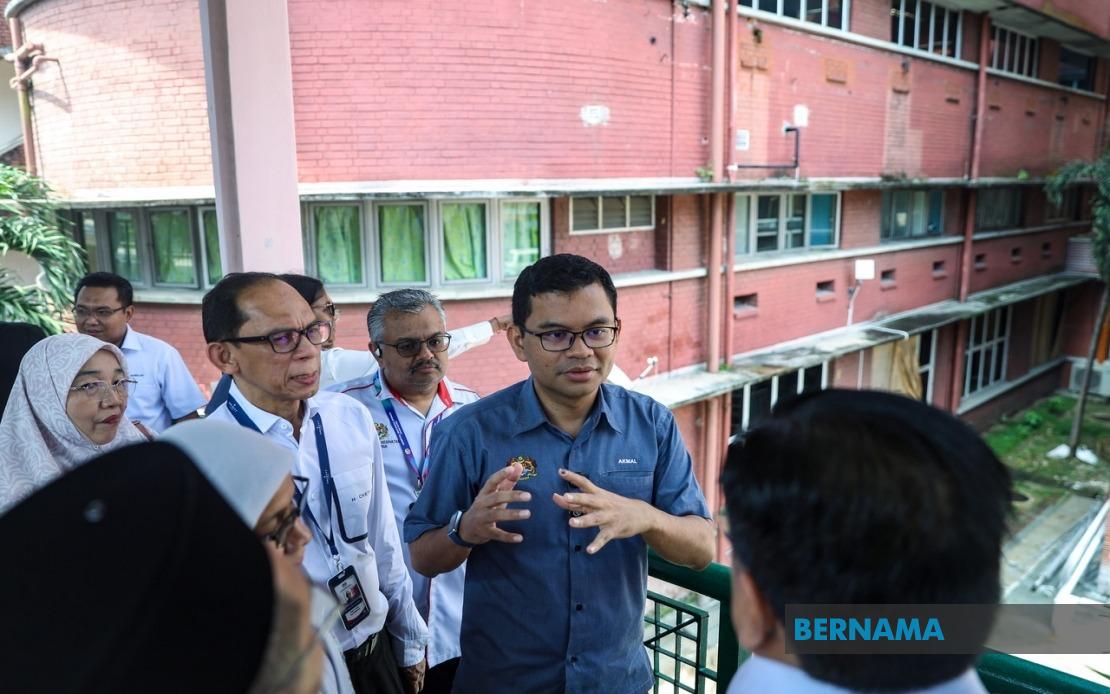
Malaysia's healthcare infrastructure is receiving substantial investment as Sultanah Aminah Hospital (HSA) in Johor Bahru embarks on an ambitious RM1.139 billion modernisation programme spanning seven distinct development projects. The multi-year initiative, which Economy Minister Akmal Nasrullah Mohd Nasir detailed during an inspection visit this week, represents a significant commitment to strengthening medical services in one of the nation's key tertiary care facilities serving both Johor and the broader southern region.
The centrepiece of the upgrade involves reimagining the hospital's core infrastructure and service capacity. A major electrical systems overhaul, budgeted at RM159 million, is already well advanced with 76.49 per cent physical completion. This project addresses critical upgrades to the main electricity supply alongside electrical and mechanical systems throughout the facility—work essential for ensuring reliable operations in a modern hospital environment where equipment and life-support systems depend entirely on uninterrupted power supply. Such foundational investments often receive less public attention than new buildings but are equally vital to hospital functionality.
The most substantial component of the development programme involves construction of a new Ambulatory Care Centre (ACC) featuring integrated multi-storey parking, together with the Specialist Clinic Complex in two phases. These initiatives carry a combined estimated value of RM877.54 million and will substantially expand HSA's ability to manage outpatient and specialist services. As healthcare demand continues rising across Malaysia, particularly in growing urban and suburban populations, alleviating congestion at specialist clinics represents a critical operational objective. The parking integration addresses a practical challenge at many Malaysian hospitals where patient and staff parking shortages create accessibility issues.
Akmal Nasrullah emphasised that the specialist complex and ambulatory care centre would meaningfully increase overall service capacity, though he acknowledged the inherent complexity of executing such projects within an active healthcare environment. Managing construction disruption while maintaining continuous hospital operations demands meticulous coordination between contractors, facility management, and clinical teams. This balancing act frequently extends project timelines and complicates budgeting, yet remains essential to ensuring patients receive uninterrupted care throughout renovation periods.
The hospital's surgical capabilities will expand substantially through the addition of three new operating rooms, raising the total from twelve to fifteen theatres. This expansion carries particular significance given that operating room availability often functions as a constraint on hospital throughput in Malaysian public institutions. Additional surgical capacity enables reduced waiting times for procedures, improved efficiency in managing emergency cases, and better ability to accommodate elective surgery demand. For a tertiary hospital serving a large catchment area including Johor Bahru's growing population, this increase represents meaningful progress toward meeting contemporary surgical demand.
Contractor appointment for the ACC, parking, and specialist clinic complex phases is targeted for February next year, indicating that detailed project planning and tender processes are currently underway. This timeline suggests the ministry intends to maintain momentum and avoid extended periods of uncertainty that can inflate costs and delay benefits. Transparent scheduling of such milestones is valuable for stakeholders including patients, referring physicians, and hospital management who need to plan around construction impacts.
Beyond HSA's specific projects, Akmal Nasrullah's working visit to Johor underscores the broader development agenda across the state. Since 2000, a total of 613 development programmes and projects valued at RM56.12 billion have been implemented or are under implementation throughout Johor, comprising both newly initiated and extended projects. This substantial portfolio reflects sustained federal and state investment in Johor's infrastructure, economic facilities, and public services over more than two decades.
Execution pace during the current financial year demonstrates reasonable progress, with RM2.5 billion expended from the RM4.95 billion annual allocation as of late July—representing 50.51 per cent expenditure rate. This trajectory suggests projects remain broadly on schedule, though maintaining consistent spending velocity throughout the remainder of the fiscal year will require sustained coordination between multiple implementing agencies and contractors. Uneven spending patterns across the financial year often characterise large development portfolios as contract awards, material procurement, and site mobilisation affect cash flow timing.
The HSA expansion reflects broader trends in Malaysian healthcare policy prioritising tertiary centre capacity enhancement and specialist service development. Southern Malaysia, anchored by Johor Bahru as a major urban centre, increasingly requires expanded medical facilities to serve not only resident populations but also patients drawn from surrounding regions and cross-border medical tourism. Investment in modern specialist infrastructure positions HSA competitively within Southeast Asia's healthcare marketplace while ensuring Malaysian citizens have access to contemporary care standards.
For Johor residents and patients, these projects translate into tangible improvements likely realised progressively over the coming years. Expanded specialist clinics reduce waiting periods for consultations, improved electrical infrastructure enhances operational reliability, and additional surgical capacity addresses a frequently cited pain point in public healthcare access. The parking integration additionally addresses a practical frustration many Malaysian hospital visitors experience during treatment-seeking journeys.
Coordination challenges inherent in executing multiple simultaneous projects within an active hospital remain formidable, requiring meticulous project management and stakeholder communication. Akmal Nasrullah's emphasis on minimising service disruption acknowledges this complexity and signals awareness that infrastructure investment, while essential, must never compromise the hospital's primary mission of delivering continuous patient care. Successful execution of this RM1.139 billion programme will require sustained commitment across multiple financial years, skilled project leadership, and flexibility to address inevitable complications that emerge during construction.

