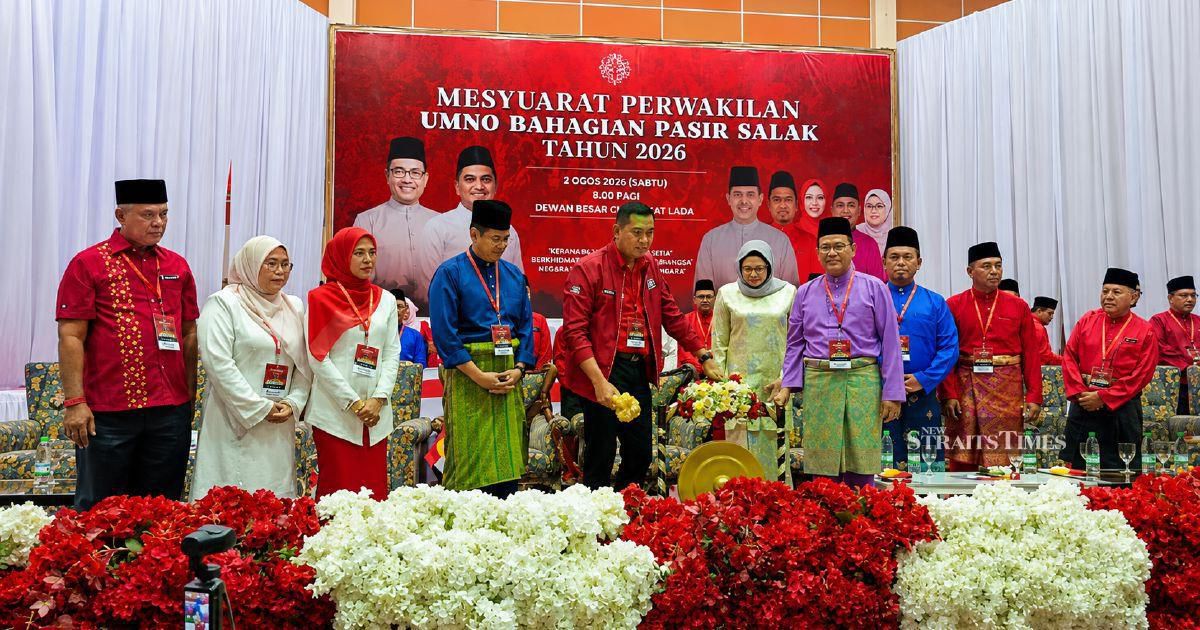
As Umno navigates its evolving political alliance with Perikatan Nasional, the party's youth wing chief Datuk Dr Muhamad Akmal Saleh has underscored the importance of heeding grassroots sentiment on forthcoming electoral arrangements, particularly around seat distributions that will shape the coalition's electoral viability. Speaking in Pasir Salak, Akmal emphasized that division-level leaders—who serve as crucial intermediaries between party headquarters and ordinary members—must have their positions on parliamentary and state assembly seat allocations given due consideration.
The statement carries particular weight given Umno's fractious internal dynamics. Malaysia's largest Malay-Muslim political party has historically grappled with tensions between its central leadership and entrenched divisional power brokers, who command substantial local influence and often jealously guard territorial claims to contested constituencies. By publicly championing the standing of division leaders, Akmal positioned himself as an advocate for democratic consultation within party structures, a posture that could be significant for understanding how Umno intends to navigate seat-sharing negotiations with its Perikatan allies.
The BN-PN political understanding itself represents one of Malaysian politics' most consequential recent realignments. This coordination framework between the Barisan Nasional coalition—traditionally anchored by Umno, MCA, and MIC—and Perikatan Nasional, dominated by PAS and Bersatu, was formalized to consolidate Malay-Muslim political support and present a unified electoral challenge to rival coalitions. However, the practical implementation of such understandings invariably triggers complex negotiations over seat allocations, as each party seeks to maximize its electoral footprint while maintaining coalition cohesion.
For Umno specifically, this dynamic poses distinctive complications. The party must accommodate its own factional interests, respect traditional fiefdoms at the divisional level, manage expectations within the broader BN framework involving MCA and MIC, and simultaneously negotiate space-sharing arrangements with Perikatan components, particularly PAS, which has traditionally competed fiercely with Umno in Malay-majority constituencies. Division leaders wield considerable discretionary power in mobilizing ground machinery during campaigns, meaning their cooperation and enthusiasm are materially consequential for electoral success.
Akmal's intervention suggests that some divisional constituencies may harbour reservations about surrendering winnable seats to Perikatan partners, a concern that transcends mere organizational formality. If Umno divisions perceive that unfavourable seat allocations might compromise their electoral prospects or diminish their organizational relevance, member morale and campaign effectiveness could suffer measurably. This is particularly acute in constituencies where PAS contests against Umno incumbents or in areas where competition between the two parties has historically been intense and personal grievances run deep.
The emphasis on respecting division-level views also reflects evolving thinking about party democracy within Umno. Historically, major decisions were often handed down from the top, but recent years have witnessed growing demands for consultation with grassroots structures. By validating divisional leaders' perspectives, Akmal appealed to sentiment within the party organization that strategic decisions affecting their electoral fortunes warrant substantive deliberation rather than unilateral imposition.
For Malaysian voters and political observers, this repositioning carries implications extending beyond internal Umno mechanics. The substance of any BN-PN seat arrangement will fundamentally shape electoral competition across multiple constituencies and potentially influence the overall balance of parliamentary representation. If Umno's grassroots prove dissatisfied with negotiated outcomes, their reduced enthusiasm could cascade into weakened campaign performance in critical marginal seats, potentially altering national electoral results. Conversely, divisions that perceive themselves treated fairly may deliver enhanced ground mobilization and turnout efforts.
Peikatan Nasional components, particularly PAS, will undoubtedly monitor these internal Umno dynamics closely. The effectiveness of the broader coalition framework depends substantially on Umno's ability to deliver both parliamentary votes and organizational capacity in constituencies where it remains dominant. If internal divisions create friction or reduced enthusiasm, Perikatan's strategic interests could be undermined, even where formal seat-sharing agreements have been concluded. This interdependence underscores why Akmal's public acknowledgment of divisional prerogatives may serve as tacit communication that Umno will not lightly override local concerns in pursuit of higher-level political compromises.
Looking ahead, the practical resolution of these tensions will significantly influence whether the BN-PN political understanding translates into sustained electoral coordination or gradually erodes into transactional convenience. Success requires not merely top-level accord but genuine buy-in from organizational constituencies whose activation determines electoral reality on the ground. Akmal's comments suggest that Umno leadership recognizes this fundamental truth and is positioning the party to pursue coalition objectives while respecting the democratic voice of its divisional structures.

