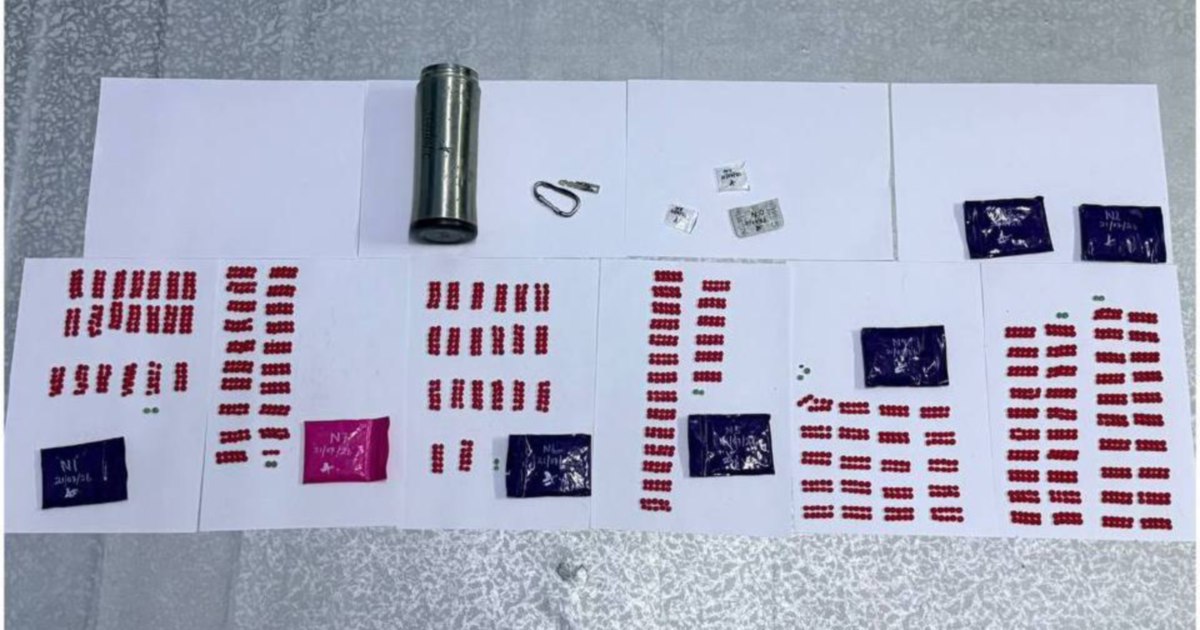
Malaysian law enforcement has apprehended a suspect with an established pattern of drug-related criminal behaviour during a sweep of coordinated raids, signalling renewed focus on dismantling repeat offender networks. The individual, who carries six previous drug convictions on his record, was among multiple arrests made during what authorities refer to as GOF operations—enforcement activity typically targeting high-impact drug distribution and trafficking activities across the country.
The inclusion of a suspect with such an extensive history of prior offences highlights a persistent problem within Malaysia's drug enforcement landscape: the recycling of known offenders through the justice system. Despite previous arrests, court proceedings, and rehabilitation efforts, individuals with multiple convictions continue to surface in fresh investigations. This pattern raises important questions about the effectiveness of current sentencing structures, rehabilitation programmes, and post-release supervision mechanisms in breaking cycles of drug-related criminality.
Government enforcement agencies have intensified operations in recent years, deploying coordinated, multi-agency approaches to dismantle drug networks at various levels. The GOF raids represent part of this broader strategy, combining intelligence-gathering with rapid-response field operations designed to catch suspects off-guard and disrupt supply chains before contraband reaches street level. These operations typically involve officers from multiple departments working in tandem to maximize impact and prevent suspects from slipping away.
For Malaysian citizens and communities, the persistence of known offenders in active criminal networks carries significant implications. Drug-related crime creates cascading social problems—from petty crime driven by addiction to violent disputes over territorial control and profit distribution. When repeat offenders cycle back into criminal activity, they often bring established connections and operational experience, making them more capable of evading detection and scaling operations. The arrest of someone with six prior convictions suggests law enforcement's intelligence capabilities have successfully tracked and located an individual known to authorities.
The broader context of drug enforcement in Malaysia involves sustained pressure from transnational trafficking organizations, particularly those operating across the Malaysia-Thailand border and through maritime routes in the Straits of Malacca. Despite aggressive action, synthetic drugs—especially methamphetamine in crystal form—continue to flood Southeast Asian markets. Local dealers and street-level distributors, many with criminal histories, form the visible front lines of these networks. Arresting recidivist offenders removes experienced operators from circulation, though the economic incentives of drug trafficking often ensure quick replacement from waiting pools of recruits.
The judicial and correctional system faces a delicate balancing act in handling repeat offenders. First-time drug users or small-time dealers may qualify for rehabilitation programmes or reduced sentences, but individuals with multiple convictions typically face increasingly severe penalties. However, Malaysia's prisons are notoriously overcrowded, and post-release reintegration programmes remain limited. Without adequate support systems, formerly incarcerated individuals frequently return to familiar criminal networks simply because legitimate economic opportunities remain inaccessible to those with drug records.
During GOF operations, officers typically execute search warrants targeting residences, vehicles, and commercial properties linked to suspect networks. Arrests may follow discoveries of drugs, paraphernalia, cash, or communications suggesting involvement in distribution. The variety of charges filed—possession, trafficking, conspiracy—depends on quantity, nature of evidence, and individual circumstances. When suspects have prior convictions, prosecutors can leverage this history both to establish patterns of behaviour and, in sentencing recommendations, to argue for enhanced penalties reflecting chronic criminal engagement.
The arrest of this particular individual alongside others arrested during the same operations suggests a coordinated network rather than isolated criminal activity. Criminal networks typically involve hierarchies: suppliers, mid-level distributors, and street-level dealers. A suspect with six previous convictions likely occupied a mid-tier role or possessed sufficient operational experience that enforcement agencies identified him as a priority target. Dismantling these networks requires removing multiple participants simultaneously—a key reason why GOF operations typically involve multiple arrests in a compressed timeframe.
For Southeast Asia more broadly, Malaysia's enforcement efforts represent one component of a regional struggle against organized drug trafficking. The region's geographic positioning, maritime complexity, and development disparities create ideal conditions for drug operations. Malaysian authorities participate in international intelligence-sharing frameworks and bilateral operations with neighbouring countries, though success remains inconsistent. Individual arrests, while tactically significant, rarely address underlying supply dynamics driven by demand in developed markets and production capacity in source regions.
Moving forward, the sustainability of enforcement efforts depends on addressing root factors driving recidivism. This requires investment in post-incarceration employment support, mental health and addiction services for those genuinely seeking recovery, and meaningful diversion programmes for first-time offenders. The arrest of experienced repeat offenders demonstrates that law enforcement can identify and locate known criminals, yet the ultimate question remains whether the justice system, taken as a whole, can prevent their return to criminal activity. Without comprehensive approaches combining enforcement with prevention and rehabilitation, the pattern of arrest-incarceration-re-offence is likely to persist.

