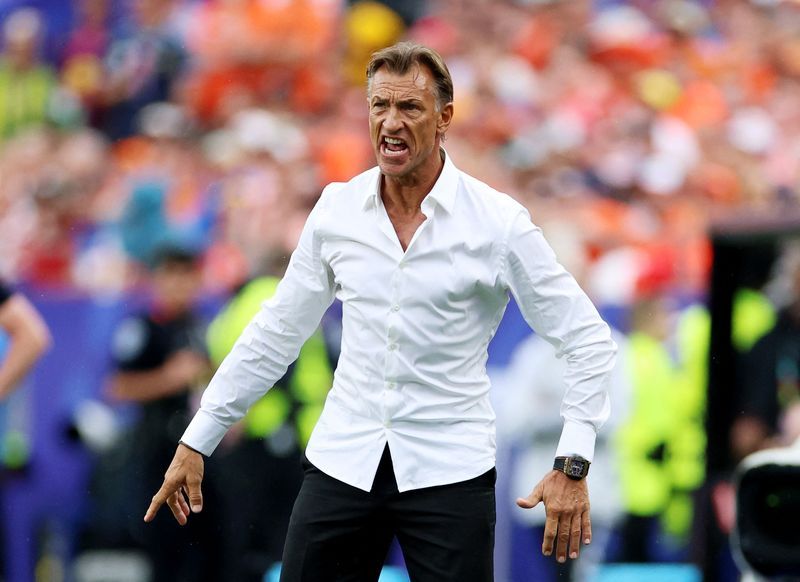
Hervé Renard's tenure as Tunisia's national football coach has concluded in disappointing circumstances, with the 57-year-old French manager announcing his departure on Saturday following the team's World Cup group-stage elimination. The coach used Instagram to confirm the end of what proved to be a short and troubled assignment, expressing gratitude toward the Tunisian Football Federation for the opportunity to lead the North African nation at football's biggest tournament while describing the role as having been "an honour" that would remain memorable.
Tunisia arrived in Qatar with considerable optimism, having completed their qualifying campaign with a remarkable defensive record—they had not conceded a single goal throughout the entire qualification phase. This strong foundation suggested the squad possessed the defensive resilience necessary to compete effectively at the World Cup. However, the tournament itself exposed fundamental weaknesses that qualifying matches had somehow concealed, triggering a catastrophic unravelling that left the football federation scrambling for answers.
The catastrophe began immediately with a devastating 5-1 hammering by Sweden in Tunisia's opening match. This result was so severe and revealed such glaring defensive vulnerabilities that the federation moved swiftly to replace head coach Sabri Lamouchi after just a single game. The decision to bring in Renard mid-tournament reflected desperation more than confidence, as the federation sought an experienced hand to steady the ship. Yet the change of leadership could not reverse the team's downward trajectory.
Renard's first match in charge against Japan proved equally demoralising, with Tunisia suffering a 4-0 defeat that left the coach acknowledging feelings of shame at the result. Rather than stabilising the squad, the coaching change seemed powerless to halt the deterioration in performance and discipline. The final group-stage fixture against the Netherlands brought further humiliation, a 3-1 loss that confirmed Tunisia's exit without securing even a single victory across their three matches.
The statistical record tells a grimmer story still. Tunisia conceded an astonishing 12 goals during the group stage of the expanded 48-team format, establishing a new unwanted World Cup record. This demolished the previous record of 11 goals conceded, which Costa Rica had set just four years earlier at the 2022 tournament. Such a defensive collapse was particularly shocking for a team that had shut out opponents throughout qualifying, suggesting the tournament exposed either a sudden tactical vulnerability or issues with mental resilience under pressure.
For Malaysian and Southeast Asian observers, Tunisia's collapse serves as a cautionary tale about the fragility of international football campaigns, particularly for nations outside Europe and South America that arrive at World Cups with limited preparation or tactical refinement. The dramatic reversal from a qualifying campaign of defensive solidity to wholesale breakdown at the tournament itself raises questions about whether Tunisia's qualifying route involved relatively weak opposition or whether the expanded World Cup format itself created difficulties for less-established footballing nations.
Renard's departure leaves Tunisia needing to rebuild both tactically and psychologically. The federation now faces decisions about whether to retain interim stability or pursue another managerial overhaul. For a nation with genuine football aspirations in North Africa—where Morocco and Algeria maintain competitive programmes—Tunisia must address whether the issues revealed in Qatar stemmed from individual player form, tactical inflexibility, or deeper structural problems within the federation's development pathway.
The episode also highlights the pressures facing established international coaches when called upon to salvage damaged campaigns mid-tournament. Renard, a manager with previous World Cup experience, could not manufacture the required improvement in time, suggesting that mid-tournament coaching changes, while sometimes necessary for morale purposes, rarely reverse fundamental squad deficiencies. The defensive weaknesses exposed could not be cured through tactical adjustments alone.
Looking forward, Tunisia's federation must conduct thorough analysis of whether qualifying success masked genuine competitive shortcomings or whether unexpected tournament circumstances created psychological fragility. Rebuilding credibility will require addressing whether the squad's quality matches their ambitions for future tournaments, including the 2026 World Cup. For now, Renard's exit concludes one of the World Cup's most dramatic coaching interventions, one that failed to achieve its intended purpose despite bringing significant experience to the role.

