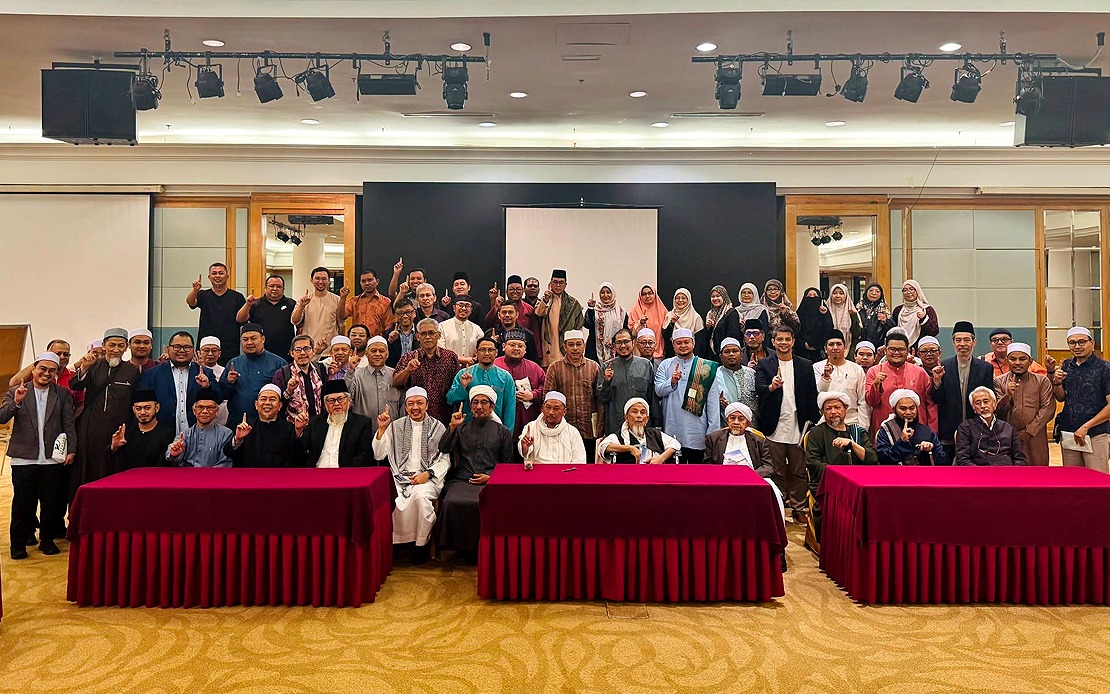
Religious leaders and Islamic scholars across Malaysia are preparing to take a comprehensive public education drive on the Royal Commission of Inquiry's findings into Lembaga Tabung Haji, seeking to restore public confidence in the institution that manages savings for nearly 10 million Muslim Malaysians. The initiative, announced by Datuk Seri Dr Mujahid Yusof Rawa, a former Minister in the Prime Minister's Department responsible for religious affairs, represents a structured effort to disseminate complex financial and governance information through community channels most trusted by ordinary Malaysians.
The nationwide campaign will harness the authority and reach of religious institutions as vehicles for public communication. Islamic scholars and religious figures will present the RCI findings through a variety of platforms, including mosques and surau, educational institutions ranging from schools to universities, government departments, and community learning centres. This multi-layered approach acknowledges that effective public understanding requires meeting people within their established social and spiritual networks rather than relying solely on official government announcements or media coverage. The choice of venues carries symbolic weight—by explaining the findings in houses of worship and educational spaces, organisers aim to frame the matter as one of shared religious and ethical responsibility rather than narrow bureaucratic accountability.
The initiative emerged from a special conference titled Hifz al-Mal, held in Ampang, which convened more than 100 Islamic scholars and religious leaders to collectively examine the RCI's conclusions and discuss their implications for faith-based stewardship. The conference, organised by the Malaysian Ulama Secretariat in partnership with Malaysian Ulama Council Spiritual Leader Abdul Rahim Abdul Rahman, deliberately assembled participants from multiple professional backgrounds. The attendee list reflected an intentionally broad coalition, bringing together not only religious scholars and pondok educators but also chartered accountants, economic commentators, legal practitioners, and financial experts. This inter-disciplinary gathering created space for comprehensive discussion addressing religious governance principles, financial accountability, economic consequences, accounting standards, legal frameworks, and institutional oversight mechanisms.
Tabung Haji's role as custodian of savings destined for the haj pilgrimage—one of Islam's five pillars—gives the RCI inquiry particular religious and cultural significance. The institution holds deposits from approximately 9.7 million Malaysians, many of whom have contributed modest sums over years or decades to fulfil their religious obligation. The breach of public trust revealed by the inquiry extends beyond mere financial loss; it touches the sanctity of a religious commitment. Mujahid's framing of the matter as one involving Hifz al-Mal, an Islamic principle centred on protecting and preserving wealth entrusted to institutions, provides a theological foundation for the nationwide campaign. By anchoring the discussion in Islamic jurisprudential concepts, organisers seek to move public discourse beyond scandal coverage into the realm of collective religious responsibility and spiritual accountability.
The RCI's investigation into Tabung Haji's management practices uncovered significant misuse of depositors' funds, a revelation that shocked many Malaysians who had regarded the institution as a secure, faith-governed entity. The commission's findings documented how institutional assets were deployed in ways inconsistent with prudent management and fiduciary duty. For millions of depositors—many from modest socioeconomic backgrounds saving to undertake the pilgrimage—these discoveries raised urgent questions about whether their life savings remained adequately protected and whether institutional governance would be reformed. The nationwide awareness campaign addresses a legitimate public information deficit, seeking to ensure that Malaysians understand both what went wrong and what safeguards are being implemented.
Mujahid's emphasis on three interconnected objectives—explaining the facts, upholding trust, and preventing future misuse—establishes the campaign's normative framework. These objectives move beyond passive information provision to active restoration of institutional legitimacy and public confidence. The explicit reference to preventing recurrence addresses stakeholder anxiety that without meaningful reform and vigilant oversight, similar breaches might occur again. By mobilising religious scholars to articulate these concerns, the campaign leverages moral authority and communal credibility that religious leaders hold within Muslim-majority Malaysian society. The approach implicitly recognises that public trust in financial institutions depends not only on technical competence but also on ethical commitment and spiritual accountability.
The nationwide scope of the campaign reflects awareness that public understanding of complex institutional failures requires sustained, ground-level engagement. Many Malaysians, particularly those in smaller towns and rural areas, may lack regular exposure to detailed financial or governance analysis through mainstream media. By bringing the discussion into mosques, schools, and community centres, organisers ensure broader demographic reach and enable interactive dialogue suited to diverse educational backgrounds. The presence of both religious and professional experts permits audiences to ask questions across multiple domains—spiritual, financial, legal—and receive authoritative responses that integrate rather than compartmentalise different forms of knowledge.
For Malaysian policymakers and institutional overseers, the campaign signals recognition that public institutions managing sensitive communal assets—particularly those tied to religious obligations—require not only technical reform but also sustained public communication and engagement. The emphasis on involving religious scholars indicates an understanding that rebuilding trust in faith-based institutions must involve voices from within the religious community itself. The breadth of the expert coalition assembled at the Hifz al-Mal conference suggests that effective institutional accountability requires cross-sectoral collaboration bringing together lawyers, accountants, economists, and religious educators in common purpose.
The campaign's regional significance extends beyond Malaysia's borders. Other Southeast Asian nations with substantial Muslim populations managing hajj-related financial services may observe how Malaysia's experience—and its response—unfolds. The approach of engaging religious scholars in public institutional accountability represents a potential model for how faith-based and secular forms of authority can collaborate in protecting public assets without compromising either secular governance standards or religious integrity. As Malaysia navigates post-inquiry institutional reconstruction at Tabung Haji, the effectiveness of this nationwide public education initiative will substantially influence whether depositors' confidence can be restored and whether similar institutional breaches might be prevented in future.

