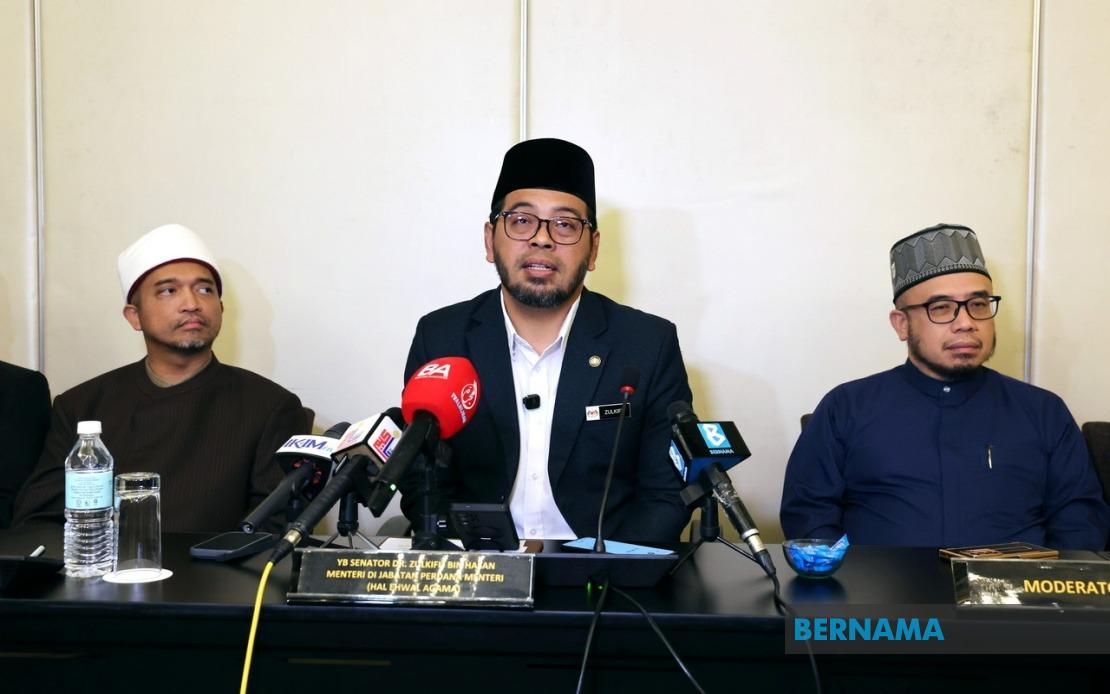
Malaysia's Minister in the Prime Minister's Department (Religious Affairs) Dr Zulkifli Hasan has made a definitive statement rejecting the application of the Islamic term 'kafir harbi' within the Malaysian context, arguing that such labelling contradicts the fundamental principles of citizenship and constitutional governance. Speaking in Putrajaya on August 10, Zulkifli articulated a position that underscores the incompatibility between sectarian religious classifications and the inclusive framework of the Federal Constitution, which binds all inhabitants regardless of faith.
The pronouncement emerged from a structured roundtable discussion specifically convened to examine the implications and appropriateness of deploying 'kafir harbi'—a classical Islamic juridical term denoting non-Muslims in a state of hostility toward Islam—in modern Malaysian society. The gathering brought together stakeholders to deliberate on how such terminology intersects with Malaysia's multi-religious demographic composition and constitutional architecture. The discussions, presentations, and subsequent exchange of perspectives culminated in a consensus that the term fundamentally misaligns with Malaysian national identity and governance structures.
Zulkifli elaborated on the rationale underpinning this conclusion, emphasising that all Malaysian citizens occupy a shared constitutional space and bear collective obligations toward national development and defence. His characterisation of Malaysia as a unified society where citizens transcend sectarian boundaries reflects an official interpretation that prioritises constitutional citizenship over religious classification. This framing implicitly rejects any framework that might categorise Malaysians into hierarchical religious statuses, which could undermine social cohesion and the principle of equal citizenship enshrined in foundational governance documents.
The minister's intervention carries significant implications for ongoing national discourse around religious expression and communal relations. By positioning the government against the application of 'kafir harbi' to Malaysian citizens, Zulkifli has signalled that the state will not tolerate theological framings that effectively delegitimise fellow citizens on religious grounds. This stance becomes increasingly relevant given Malaysia's history of occasional tensions around religious speech and the delicate equilibrium required to maintain harmony among its diverse population.
To operationalise this position and prevent future misuse of such terminology, Zulkifli indicated that the Department of Islamic Development Malaysia (JAKIM) would spearhead collaborative initiatives across government agencies and ministries. These efforts will focus on disseminating information, providing scholarly clarification, and conducting public awareness campaigns addressing the issue. The multi-agency approach reflects an understanding that managing religious discourse effectively requires coordination beyond the religious affairs apparatus, necessitating input from education, communications, and community engagement sectors.
The government's deliberate emphasis on collaboration across institutional boundaries suggests recognition that strengthening national integration demands comprehensive engagement rather than siloed religious pronouncements. By positioning this initiative as a whole-of-government endeavour, Zulkifli underscored that safeguarding social cohesion transcends religious administration and requires coordinated messaging from diverse state institutions. This methodology acknowledges that public understanding of complex religious and constitutional matters benefits from authoritative guidance delivered through multiple trusted channels.
For Malaysia's diverse population, this official declaration provides important reassurance that the government actively monitors and counters attempts to apply exclusionary religious categorisations within the national context. Non-Muslim citizens and religious minorities gain clarity that state institutions reject frameworks potentially implying their status as hostile or foreign within the Malaysian polity. Similarly, Muslim Malaysians receive guidance that theological concepts rooted in classical Islamic jurisprudence require careful contextualisation when applied to modern plural societies with constitutional safeguards for multiple religions.
The timing of this initiative reflects broader concerns about religious rhetoric in the public sphere. Malaysia has periodically witnessed incidents where inflammatory language—including occasional invocations of concepts like 'kafir harbi'—has circulated in online forums and public discourse. By proactively addressing the issue through formal government discussion and subsequent awareness campaigns, the authorities aim to establish clearer boundaries around acceptable religious speech while demonstrating that constitutional values take precedence over sectarian categorisations.
Zulkifli's concluding remarks encapsulate the government's aspirational vision for national relations, calling upon all Malaysians to actively cultivate unity, strengthen brotherhood across communities, and develop mutual respect for cultural and religious differences. This appeal extends beyond mere tolerance toward active engagement in nation-building, positioning pluralism not as a constraint on religious identity but as a foundational feature of Malaysian citizenship. The minister's language emphasises that national strength derives from embracing shared constitutional commitments rather than pursuing sectarian advantage.
Looking forward, the effectiveness of this initiative will depend on sustained implementation by JAKIM and partner agencies, as well as reception from diverse communities and religious scholars. The government's willingness to engage substantively with terminology that has occasionally generated controversy demonstrates commitment to proactive governance of religious matters. For Malaysia's multicultural society, such official clarifications help establish shared norms regarding how religious concepts and terminology should be deployed in public discourse, ultimately contributing to the stable pluralism upon which the nation's stability depends.

