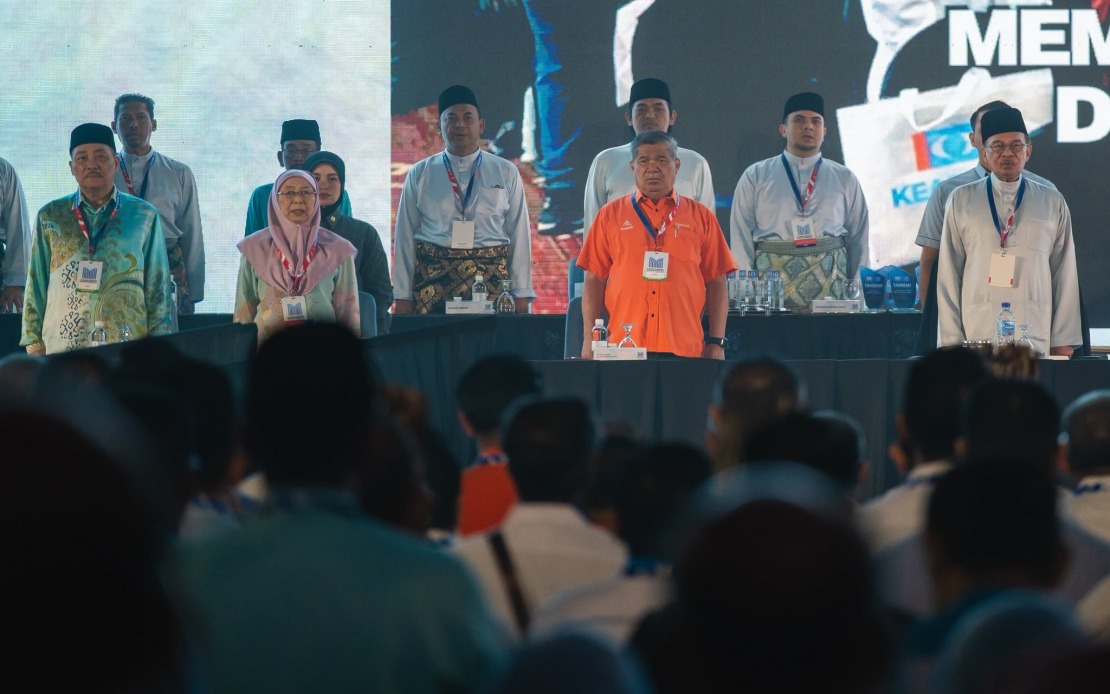
Parti Amanah Negara president Datuk Seri Mohamad Sabu has underscored the necessity of maintaining momentum on institutional reforms regardless of which coalition holds office, warning that the current administration cannot afford complacency once power is consolidated. Speaking at the Melaka International Trade Centre during the Parti Keadilan Rakyat's 2026 National Congress, the Agriculture and Food Security Minister articulated a vision where reform transcends the realm of campaign rhetoric to become an embedded practice within daily governance.
The Amanah leader's remarks come at a critical juncture when Malaysia's ruling coalition faces mounting pressure to demonstrate tangible progress on pledges made during electoral contests. Mohamad Sabu's intervention reflects broader apprehensions within component parties of the government coalition that reform commitments risk becoming diluted once the immediate imperatives of securing power fade. His emphasis on accountability mechanisms and anti-corruption vigilance suggests awareness that public trust, painstakingly rebuilt through successive electoral cycles, remains fragile and contingent on consistent follow-through.
Amanah's positioning as a reform-oriented partner within the broader coalition underscores the ideological tensions that persist within Malaysia's current political arrangement. By articulating reform as non-negotiable and institution-agnostic—insisting that no individual or position should shield wrongdoing from scrutiny—Mohamad Sabu carves out distinct political space for his party while signalling solidarity with the government's broader agenda. This balancing act reflects the delicate equilibrium that smaller coalition partners must maintain to retain relevance and influence.
The minister's insistence that material improvements in living standards constitute the litmus test for reform success addresses one of the most consequential governance challenges facing contemporary Malaysia. Economic growth metrics, he argued, mean little to households struggling with escalating food prices, transportation costs, and housing affordability. This reframing redirects the conversation from macroeconomic indicators to household-level experiences, a rhetorical move that resonates particularly strongly among urban working-class and lower-middle-income voters who have witnessed decades of GDP growth coexist with stagnant wage levels and compressed disposable incomes.
The administration's commitment to implementing the Malaysia Agreement 1963 constitutes another dimension of the reform agenda that Mohamad Sabu prioritizes. The resurrection of this constitutional instrument after decades of incomplete application represents a substantive policy initiative with profound implications for federal-state relations and resource distribution. For Sabah and Sarawak, renewed emphasis on MA63 implementation signals potential shifts in oil royalty arrangements, infrastructure investment priorities, and the scope of state autonomy in crucial sectors. Yet questions persist regarding whether commitment translates into concrete legislative and budgetary action.
PKR president Datuk Seri Anwar Ibrahim's address at the same congress, which similarly emphasized reform continuity, suggests alignment across coalition leadership on maintaining this narrative thrust. However, the repetition of reform rhetoric by multiple senior figures also invites scrutiny regarding implementation bottlenecks. Between campaign promises and legislative reality lies the machinery of bureaucracy, entrenched interests, and competing fiscal priorities that frequently dilute ambitious reform programmes. Observers will be watching whether subsequent budgetary allocations and policy announcements reflect the rhetorical commitment demonstrated at party congresses.
The government's repeal of the Universities and University Colleges Act 1971, which Mohamad Sabu welcomed as expanding institutional autonomy and student freedoms, exemplifies a reform category distinct from anti-corruption or economic redistribution initiatives. Yet AUKU's repeal carries significant symbolic weight within Malaysian political discourse, representing acknowledgement that restrictive regulatory frameworks developed during different historical circumstances require modernization. University autonomy and student political participation have catalyzed generational political shifts elsewhere in the region, making this reform consequential for Malaysia's trajectory.
However, the risk exists that reform rhetoric masks deeper structural continuities. Institutional independence, fought-for over decades by civil society movements, remains vulnerable to informal political pressure even absent formal legal restrictions. The repeal of statutory prohibitions does not automatically translate into substantive freedom if political incentive structures discourage independent institutional action. Malaysian observers harbour legitimate skepticism about whether regulatory reform alone produces the pluralism and accountability its architects envision.
The challenge confronting Malaysia's current government involves sustaining reform momentum across multiple fronts simultaneously while managing governance demands and satisfying diverse coalition constituencies. Amanah's particular contribution involves articulating reform as non-partisan principle rather than factional advantage, a difficult rhetorical position given Malaysia's intensely partisan political climate. Whether this principled stance can withstand the centrifugal pressures of coalition politics will significantly shape whether reform becomes institutionalized or progressively compromised through successive government cycles.
Moving forward, the substantive measures accompanying renewed reform rhetoric will determine credibility. Budgetary reallocation toward cost-of-living relief, demonstration of anti-corruption prosecutions cutting across party lines, concrete advancement on MA63 implementation, and protection of newfound institutional autonomies at universities will constitute the visible markers by which citizens judge government performance. Mohamad Sabu's insistence that reform represents ongoing commitment rather than concluded task appropriately frames the work ahead, though implementation will ultimately determine whether such statements inspire genuine transformation or merely provide comfortable talking points at party gatherings.

