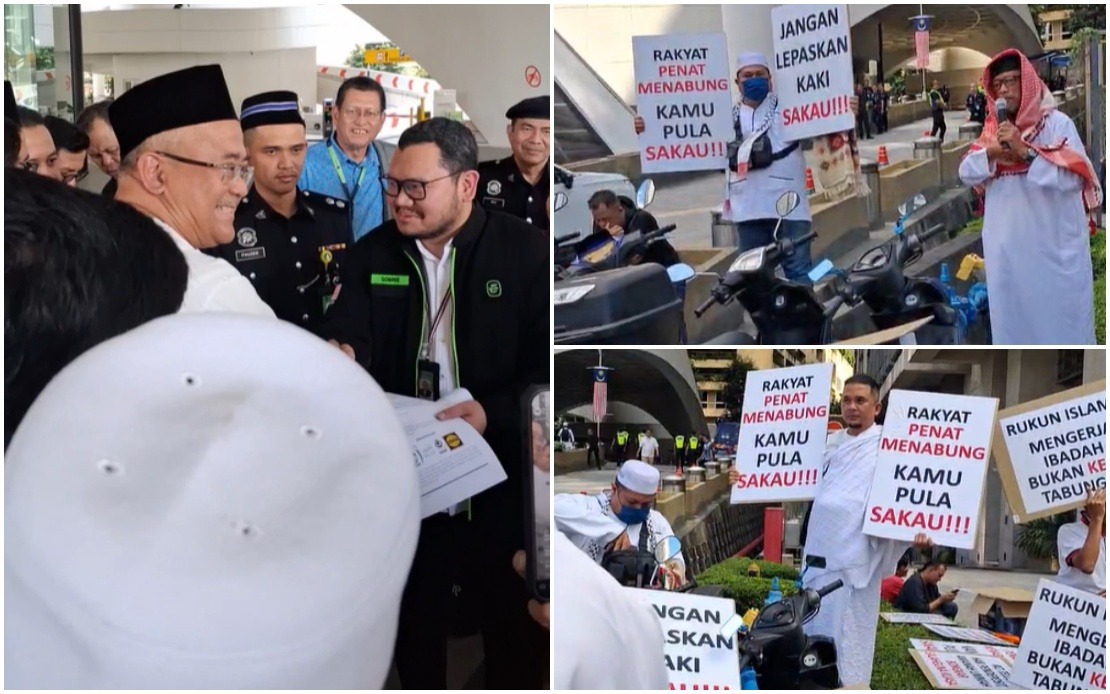
The MADANI coalition has issued a forceful call for investigations stemming from the Royal Commission of Inquiry into Lembaga Tabung Haji to proceed with full transparency and complete insulation from political pressure, signalling growing concern that the high-profile scandal affecting millions of Muslim depositors could become mired in partisan manoeuvring. Speaking at a solidarity gathering in Kuala Lumpur, MADANI chairman Amir Zuhair Abdull Khalid stressed that the integrity of Malaysia's financial institutions and public trust in fund management depend on investigations being conducted with rigour and independence, free from any attempt at obstruction or manipulation.
The Royal Commission of Inquiry has completed its examination of Tabung Haji's management spanning the 2014 to 2020 period, a critical timeframe during which Malaysia's hajj pilgrimage savings body faced serious governance challenges and allegations of mismanagement. The commission's findings have identified potential wrongdoing that now requires proper investigation and, where warranted, prosecution through the courts. However, Amir Zuhair's comments reflect anxieties within the MADANI coalition that political actors might seek to weaponise the investigation for partisan advantage or shield certain individuals from accountability.
In a direct appeal to Prime Minister Anwar Ibrahim's administration, Amir Zuhair urged the government to allow the Malaysian Anti-Corruption Commission to conduct its work without interference from any quarter. His statement, "Let this investigation take place and continue to proceed. Whoever is at fault, bring them to court," underscores the fundamental principle that justice must be pursued through established legal mechanisms rather than negotiated in smoke-filled political backrooms. This emphasis on institutional independence resonates deeply in Malaysia, where concerns about selective prosecution and political manipulation of enforcement agencies have periodically undermined public confidence in the rule of law.
The scale of the Tabung Haji issue extends far beyond conventional financial scandal. The institution manages savings accumulated by millions of Malaysian Muslims preparing for the Hajj pilgrimage, one of Islam's five pillars. Any misappropriation or mismanagement strikes at the heart of religious obligation and personal sacrifice, making this not merely a matter of economic loss but one touching on faith and community trust. Amir Zuhair articulated this dimension, emphasising that the investigation transcends political dispute to engage fundamental questions of institutional integrity and the sacred obligation to safeguard depositors' funds.
The RCI's findings have highlighted troubling patterns, including allegations that political considerations influenced governance decisions and board appointments during the period under review. These revelations point to a broader systemic problem: the penetration of party politics into institutions that should operate according to professional and fiduciary standards. If the subsequent investigation fails to address this political dimension comprehensively, it risks leaving the structural vulnerabilities unresolved, potentially exposing other government-linked institutions to similar pressures.
Amir Zuhair explicitly rejected the anticipated defence strategy that is likely to emerge from those implicated in the RCI findings. "Of course they will say they are not guilty," he acknowledged, recognising that individuals under scrutiny will invariably deny wrongdoing and may attempt to reframe the investigation as politically motivated. However, he insisted that only the courts, operating within established legal procedures and judging evidence presented under the rules of evidence, possess the authority to determine guilt or innocence. This judicial determination must supersede political narratives from either government or opposition quarters.
The coalition of Islamic non-governmental organisations, comprising groups such as WADAH, IKRAM, HALUAN, and ABIM, has articulated ten specific demands flowing from the RCI report. These demands extend beyond mere prosecution to encompass asset recovery, implementation of the commission's recommendations, and sustained governance reform. This approach recognises that accountability involves multiple dimensions: individual criminal responsibility, institutional repair, and systemic prevention of recurrence. The breadth of these demands reflects sophistication about how institutions fail and how restoration of integrity requires sustained effort across multiple domains.
Malaysia's experience with high-profile inquiries and commissions has sometimes resulted in reports gathering dust on shelves while political calculations determine whether recommendations receive implementation. The MADANI coalition's emphasis on translating RCI findings into concrete action signals determination to break this pattern. For Malaysian readers and regional observers, the handling of the Tabung Haji investigation will provide a crucial test of whether the Anwar administration possesses genuine commitment to institutional independence and whether it can resist pressure—whether from within government, from business interests, or from political allies—to compromise investigative integrity.
The implications extend throughout Southeast Asia's financial sector and Islamic banking institutions. If Malaysia demonstrates that politically sensitive investigations can be conducted fairly and transparently, with appropriate consequences for wrongdoing, it strengthens confidence in regional financial systems. Conversely, if the investigation becomes embroiled in partisan manoeuvring or produces outcomes perceived as predetermined by political considerations, it will reinforce scepticism about institutional independence across the region.
Amir Zuhair's repeated appeals for non-interference also implicitly acknowledge that pressure points exist where such interference could occur. The Malaysian Anti-Corruption Commission, while formally independent, operates within political contexts that can influence resource allocation, investigative priorities, and prosecutorial decisions. Police investigations into financial crimes similarly require sustained commitment and protection from competing institutional pressures. By publicly calling for non-interference, MADANI leaders are attempting to establish a political cost for any attempt to obstruct or derail investigations, creating accountability through transparency and public awareness.
The path forward requires sustained attention from civil society, media scrutiny, and ongoing monitoring by religious and community organisations. Islamic non-governmental organisations possess particular standing to demand accountability, given that Tabung Haji's deposits represent the accumulated religious devotion and financial sacrifice of millions of Muslim Malaysians. Their involvement in demanding implementation of reforms and recovery of losses provides a powerful counterweight to potential political pressure.
Ultimately, the RCI Tabung Haji investigation represents more than a discrete financial scandal. It constitutes a test of whether Malaysia's institutions can function according to professional standards and legal principles, or whether political considerations will continue to corrupt governance across sectors. The MADANI coalition's forceful call for transparent, interference-free investigation signals recognition that institutional legitimacy depends on demonstrable commitment to these principles. The coming months will reveal whether such commitment can be sustained when prosecutions implicate politically connected individuals or when investigation results threaten established power arrangements.

