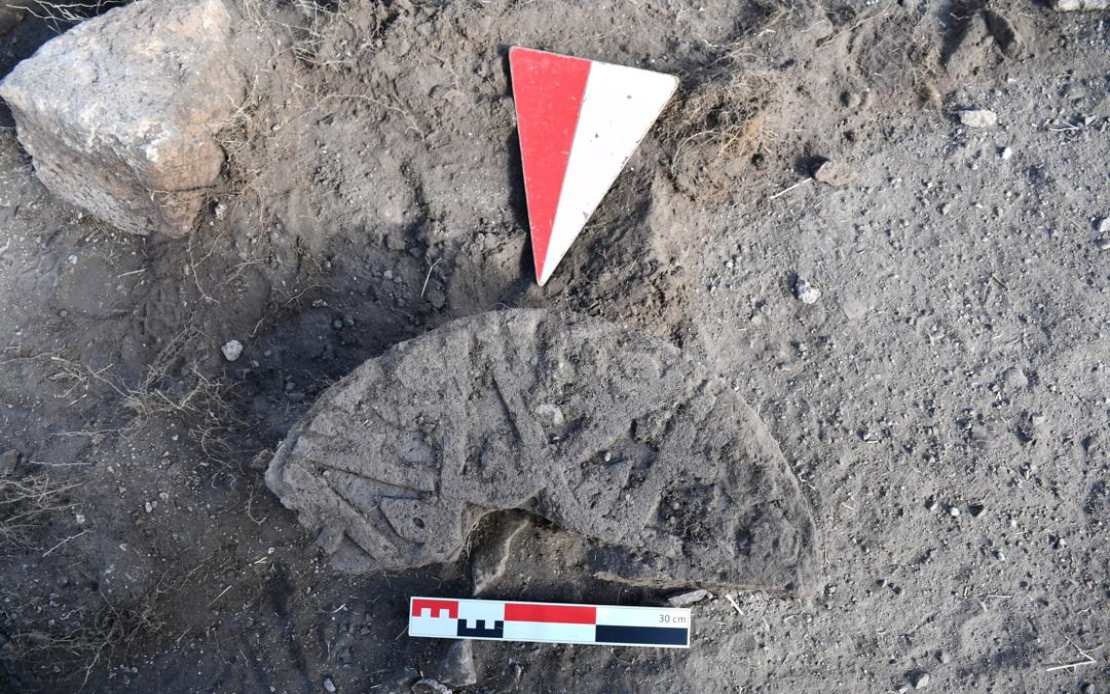
Archaeological excavations at Türkiye's historic Ani site have yielded a significant discovery: a stone artefact inscribed with the name of Prophet Muhammad in Kufic script, according to announcements by Turkish authorities this week. The find, made public through statements by Turkish Culture and Tourism Minister Mehmet Nuri Ersoy, provides fresh evidence of the region's rich Islamic heritage and the sophisticated artistic traditions that flourished during the medieval period in Anatolia.
The stone appears to originate from a Seljuk-era tomb tower, judging from its stylistic and architectural characteristics. What makes this discovery particularly notable is the craftsmanship evident in its execution: the Prophet's name has been carefully inscribed across the surface no fewer than six times, demonstrating the religious devotion and artistic skill of Seljuk artisans. The inscriptions utilise Kufic script, an early form of Arabic calligraphy that reached its zenith during the medieval Islamic world and remains a hallmark of sophisticated religious ornamentation from that era.
Minister Ersoy highlighted the visual splendour of the artefact through social media posts, drawing attention to three of the six inscriptions that form part of an ornamental band encircling an eight-pointed star motif. This geometric and calligraphic combination exemplifies the integration of Islamic artistic principles with architectural elements, a characteristic feature of Seljuk design. The eight-pointed star itself carries symbolic significance in Islamic art, often representing cosmic order and divine geometry, making this discovery a window into the spiritual and aesthetic worldview of medieval Seljuk society.
The stone emerged during ongoing excavations at a Seljuk cemetery that researchers have been systematically studying since 2021. This extended archaeological programme demonstrates the commitment to uncovering the layers of history embedded at the site, with each discovery contributing to a more complete understanding of the region's past. The fact that such artefacts continue to surface after years of careful excavation underscores both the richness of the site and the importance of sustained, methodical archaeological work.
The location of this discovery holds considerable historical weight. Ani, situated in Kars province along the Turkish-Armenian border, functioned as a crucial junction point along the ancient Silk Road trade routes that connected East and West. This strategic position ensured that the city served as a melting pot of cultures, religions, and commercial interests for centuries. The site's significance transcends any single period, having served as the capital of the Bagratid Armenian kingdom during the prosperous 10th and 11th centuries, when it was one of the most important cities in the Armenian world.
Ani's subsequent history reflects the broader geopolitical transformations of the medieval Mediterranean and Middle Eastern regions. Following the Bagratid period, the city fell under successive dominions: first Byzantine, then Seljuk, and eventually Ottoman administration. Each ruling power left its mark on the physical landscape and cultural character of Ani, creating a palimpsest of architectural and artistic styles. The discovery of this inscribed stone bearing Prophet Muhammad's name likely dates to the Seljuk period, when Islamic religious expression and monumental art reached sophisticated heights in Anatolia.
The international recognition of Ani's importance culminated in its inscription as a UNESCO World Heritage Site in 2016, a designation that acknowledges both the site's exceptional universal value and the need for its preservation for future generations. This status brings both scholarly attention and conservation responsibilities, making projects like the Seljuk cemetery excavations part of a broader commitment to understanding and safeguarding the site. For Malaysia and other nations with diverse religious and cultural heritage, Ani serves as an instructive example of how archaeological work can illuminate the shared history of multiple civilisations and religions across time and geography.
The discovery also carries implications for understanding Islamic art and religious practice during the medieval period. The prominence given to the Prophet Muhammad's name through multiple inscriptions and elaborate calligraphic treatment reflects the veneration traditions of Seljuk Islam. Such religious inscriptions on funerary monuments served both spiritual and commemorative functions, marking sacred spaces and reaffirming faith commitments. The fact that this stone comes from a cemetery context suggests it may have been part of a tomb structure, where such inscriptions would have been viewed by mourners and visitors, functioning as both memorial and spiritual statement.
From a regional perspective, this archaeological discovery reinforces the deep historical connections between Anatolia, the broader Islamic world, and the eastern Mediterranean. For Southeast Asian observers, particularly in Malaysia where Islamic civilisation and heritage remain central to national identity, discoveries like this underscore the universality of Islamic artistic and architectural traditions across different periods and geographies. The Seljuk contribution to Islamic civilisation—evident in this inscribed stone—demonstrates how diverse regions adopted and adapted Islamic principles to create distinctive local expressions of faith and culture.
The continued excavation programme at Ani promises further discoveries that will illuminate the daily lives, religious practices, and artistic achievements of medieval inhabitants. Each artefact recovered from the Seljuk cemetery contributes pieces to a larger historical puzzle, gradually revealing how communities in this border region navigated the complexities of religious identity, cultural exchange, and political change. As researchers persist in their systematic documentation and analysis, Ani's role as a UNESCO World Heritage Site ensures that these findings will contribute to global understanding of medieval Islamic and Armenian civilisations.

