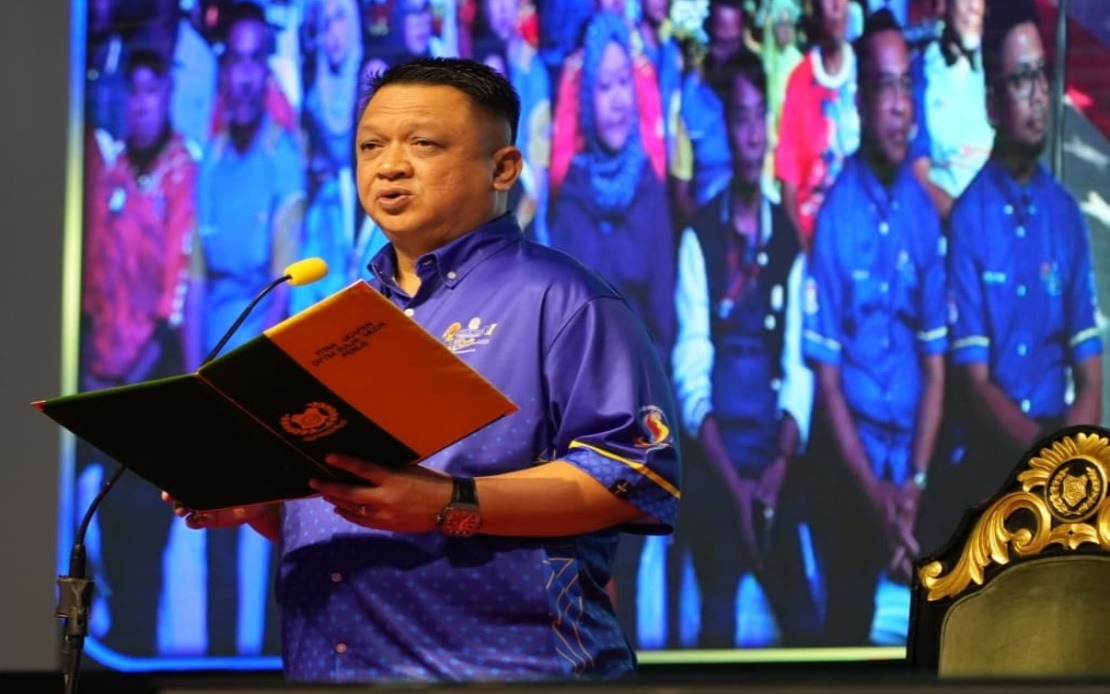
In an address at Kangar on August 30, Tuanku Syed Faizuddin Putra, Raja Muda of Perlis, unveiled a comprehensive roadmap for Majlis Amanah Rakyat (MARA) centred on three interconnected strategic pillars designed to position the agency as a catalyst for national economic and social progress. Speaking during the opening of the 11th Sukan MARA Se-Malaysia (SUKMAS) at Dewan 2020, His Royal Highness articulated a vision that balances technological advancement with human capital development, reflecting the complex demands facing Malaysia's premier indigenous development institution in an increasingly competitive global landscape.
The first strategic thrust emphasises aggressive adoption of cutting-edge technologies, particularly artificial intelligence, to fundamentally reshape how MARA operates and delivers value. Rather than positioning the agency as a passive recipient of technological change, Tuanku Syed Faizuddin Putra challenged MARA's leadership and staff to become pioneers in digital transformation, leveraging AI and related innovations to unlock new efficiencies, drive creative problem-solving, and enhance institutional capability. This forward-looking stance acknowledges that Malaysia's development agencies must remain technologically relevant to serve bumiputera entrepreneurs and the broader economy effectively. By embedding AI into MARA's operational framework—from grant processing to business advisory services—the agency can reduce administrative bottlenecks, personalise support for entrepreneurs, and generate data-driven insights that inform policy decisions.
The entrepreneurship agenda constitutes the second pillar, with particular emphasis on cultivating a generation of business leaders equipped to compete and thrive beyond Malaysia's borders. Tuanku Syed Faizuddin Putra stressed that MARA must move beyond nurturing domestic entrepreneurs to actively developing enterprises with genuine international potential. This reflects a critical challenge facing Malaysia's bumiputera business community: while several prominent conglomerates have achieved regional significance, many small and medium-sized enterprises struggle to transition from domestic to export-oriented operations. By focusing on innovation, resilience, and strategic market positioning, MARA can help close this gap and contribute meaningfully to Malaysia's export competitiveness and job creation goals. Such an emphasis also signals recognition that economic empowerment of indigenous communities cannot be sustained through domestic markets alone; sustained prosperity requires participation in regional and global supply chains.
The third strategic dimension concerns leadership development and institutional mindset transformation. Rather than cultivating managers who execute existing frameworks, MARA should invest in developing bold decision-makers and strategic thinkers capable of anticipating and shaping market trends. This leadership philosophy extends beyond MARA's top echelon to encompass middle management and supervisory levels, where tactical decisions profoundly influence agency effectiveness. By fostering a culture of proactive leadership—where personnel at all levels are empowered to initiate change and drive innovation—MARA can become more responsive to emerging opportunities and challenges in the entrepreneurial ecosystem it serves.
The ceremonial launch of SUKMAS during this address underscores the interconnection between strategic vision and institutional culture. Tuanku Syed Faizuddin Putra characterised the biennial sports tournament not merely as a recreational gathering but as a deliberate platform for reinforcing organisational cohesion and values. By assembling MARA personnel from diverse states, roles, and backgrounds through competitive athletics, the agency strengthens internal bonds and cultivates collective identity around shared institutional purpose. This cultural dimension proves essential when implementing strategic transformation; personnel who feel genuinely connected to their organisation and each other become more invested in executing strategic priorities with commitment and creativity.
The 11th edition of SUKMAS, running from August 30 to September 3, reflects the scale of MARA's institutional reach and human capital. Drawing approximately 3,000 athletes and officials representing 14 MARA teams from across Malaysia, and incorporating 15 different sporting disciplines ranging from football and volleyball to sepak takraw and tennis, the event demonstrates both the geographic dispersal of MARA's operations and the diversity of expertise within the organisation. According to MARA Director-General Datuk Seri Zulfikri Osman, the tournament serves a dual purpose: it provides an internal bonding mechanism while simultaneously offering personnel opportunities to engage directly with local communities, particularly Perlis residents. This community engagement dimension adds legitimacy to MARA's development mission and reinforces its role as an institution genuinely embedded within the communities it serves.
The strategic articulation from the Raja Muda carries particular significance given his vice-regal status within Perlis's governance structure and his platforms within Malaysia's broader institutional framework. His embrace of technological innovation, entrepreneurial ambition, and transformational leadership reflects contemporary thinking within progressive quarters of Malaysia's establishment regarding how development agencies must evolve. The emphasis on AI and global competitiveness suggests recognition that Malaysia cannot sustain its development trajectory through conventional approaches; instead, indigenous entrepreneurs and development institutions must embrace modernisation and internationalisation.
From a regional perspective, MARA's strategic evolution carries implications for how Southeast Asian nations approach indigenisation and affirmative action programmes. As Malaysia navigates changing global economic patterns—including digital transformation, supply chain reorganisation, and heightened competition from within the region—MARA's ability to effectively equip bumiputera entrepreneurs with both technological capability and global business acumen will significantly influence Malaysia's inclusive growth trajectory. Similarly, other Southeast Asian nations with comparable affirmative action frameworks may reference MARA's strategic direction as they contemplate their own institutional adaptations to contemporary economic realities.
The Raja Muda's strategic guidance also implicitly addresses contemporary debates regarding the relevance of ethnic-based development institutions in increasingly multicultural and globally integrated economies. Rather than retreating from such institutions' original mandates, his framework suggests they should evolve their operational approach, embrace modernisation, and generate tangible economic outcomes that justify continued institutional prominence and resource allocation. By positioning MARA as a technology-enabled, globally competitive institution focused on producing world-class entrepreneurs rather than merely distributing benefits to a defined constituency, the strategic vision attempts to reconcile traditional affirmative action objectives with meritocratic and efficiency-based imperatives.

