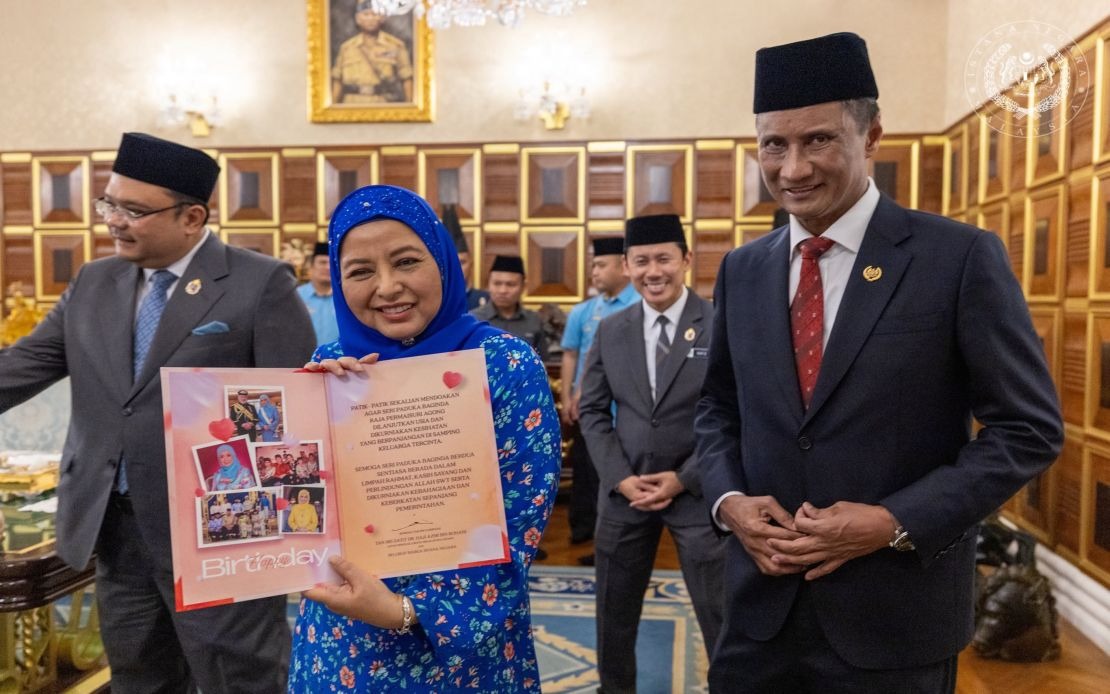
Her Majesty Queen Raja Zarith Sofiah, Queen of Malaysia, received a formal courtesy call from Istana Negara's senior administrative personnel on her birthday, reinforcing the ceremonial traditions that punctuate the royal calendar. The delegation, led by Comptroller of the Royal Household Tan Sri Dr Azmi Rohani and accompanied by Datuk Paduka Maharaja Lela (Grand Chamberlain) Datuk Azuan Effendy Zairakithnaini, visited Her Majesty at Istana Bukit Serene in Johor to observe the occasion with customary protocol and grace.
The bilateral meeting, which was documented and shared through an official announcement on Sultan Ibrahim Sultan Iskandar's Facebook page, represents a continuation of institutional respect between the palace's administrative ranks and the monarchy's senior figures. Such formal receptions serve not merely as ceremonial gestures but as important symbolic moments that underscore the hierarchical yet intertwined relationships within Malaysia's royal structure and the broader governmental apparatus that supports it.
Joining the Comptroller in extending the palace's acknowledgement was Puan Sri Dr Noor Azizah Abdul Latif, the wife of Azmi Rohani. Her presence reflected the inclusive nature of such state occasions, where family members of key officials participate in recognising significant moments within the royal household. This multi-generational approach to celebrating milestones demonstrates how Malaysia's institutional culture weaves together formal duty with personal warmth.
The centrepiece of the gathering involved the presentation of symbolic offerings prepared expressly for the Queen's celebration. Istana Negara's senior management and staff collaborated to prepare a specially crafted cake alongside yellow glutinous rice, a traditionally significant dish in Malaysian cultural observance. These gifts were presented by the delegation and graciously received by Her Majesty, transforming a formal courtesy call into a moment of shared appreciation and acknowledgement.
Yellow glutinous rice carries particular resonance in Malaysian festivities and formal occasions, often featuring prominently in state ceremonies and celebrations. The selection of this traditional preparation alongside a contemporary cake reflects a deliberate blending of heritage and modernity, signalling how Malaysia's royal institutions maintain continuity with cultural practices while remaining rooted in contemporary practice. Such thoughtful choices in ceremonial gift-giving communicate respect and understanding of the cultural context within which the monarchy operates.
The remarks conveyed during the meeting underscored the personal dimension underlying these institutional observances. On behalf of the entire management structure and workforce of Istana Negara, Azmi articulated collective sentiments encompassing prayers for Her Majesty's sustained good health, comprehensive well-being, and enduring happiness. These wishes, formally delivered through the Comptroller, carry weight beyond mere pleasantries—they represent the collective voice of the palace administration expressing loyalty and goodwill toward the Queen.
The decision to host this gathering at Istana Bukit Serene rather than a federal location signals an intentional recognition of the Johor connection to Malaysia's monarchical institution. Johor holds particular significance in Malaysian history and constitutional governance, given the state's historical prominence and its role in the federation's founding narrative. By receiving the delegation at this venue, Her Majesty anchored the celebration within a location laden with historical and dynastic significance.
The documentation and public sharing of this courtesy call through official royal social media channels reflect a contemporary approach to monarchy, where transparency and public awareness of ceremonial occasions serve to strengthen institutional legitimacy and public connection. Rather than shrouding such events in complete privacy, the deliberate disclosure allows Malaysian citizens to appreciate the functioning of their royal institutions and the careful attention to protocol that characterises official life.
Such birthday observances within the royal household function as important rhythms in Malaysia's constitutional calendar. These ceremonies provide opportunities for various arms of government and state institutions to demonstrate their respect for the constitutional role the monarchy plays. For Istana Negara personnel specifically, these occasions afford moments to affirm their commitment to serving the royal establishment with appropriate deference and professionalism.
The significance of such courtesies extends beyond individual celebration to encompass broader questions of institutional stability and continuity. By maintaining traditional observances of milestones within the royal calendar, Malaysia's state apparatus reaffirms its connection to constitutional norms and historical precedent. For a nation navigating complex political dynamics and evolving governance structures, these ceremonial moments provide anchoring points of consistency and institutional memory.
The participation of high-ranking palace officials in this birthday reception underscores the careful attention paid to matters of protocol and hierarchical propriety within Malaysia's royal establishments. The Comptroller's role as conveyor of collective sentiments places him at a critical juncture between the palace's administrative machinery and the monarch herself, making his participation particularly symbolically weighted. These layered interactions within the royal hierarchy, though often invisible to public observation, form the sinews connecting Malaysia's state institutions.
Looking forward, such celebrations within the royal household continue to serve as important ceremonial markers that distinguish Malaysia's constitutional monarchy from purely republican or purely autocratic systems. The balance between formal protocol and genuine warmth evident in these gatherings demonstrates how institutional frameworks can accommodate both reverence for traditional authority and authentic human connection, a tension that modern monarchies worldwide continually navigate.

