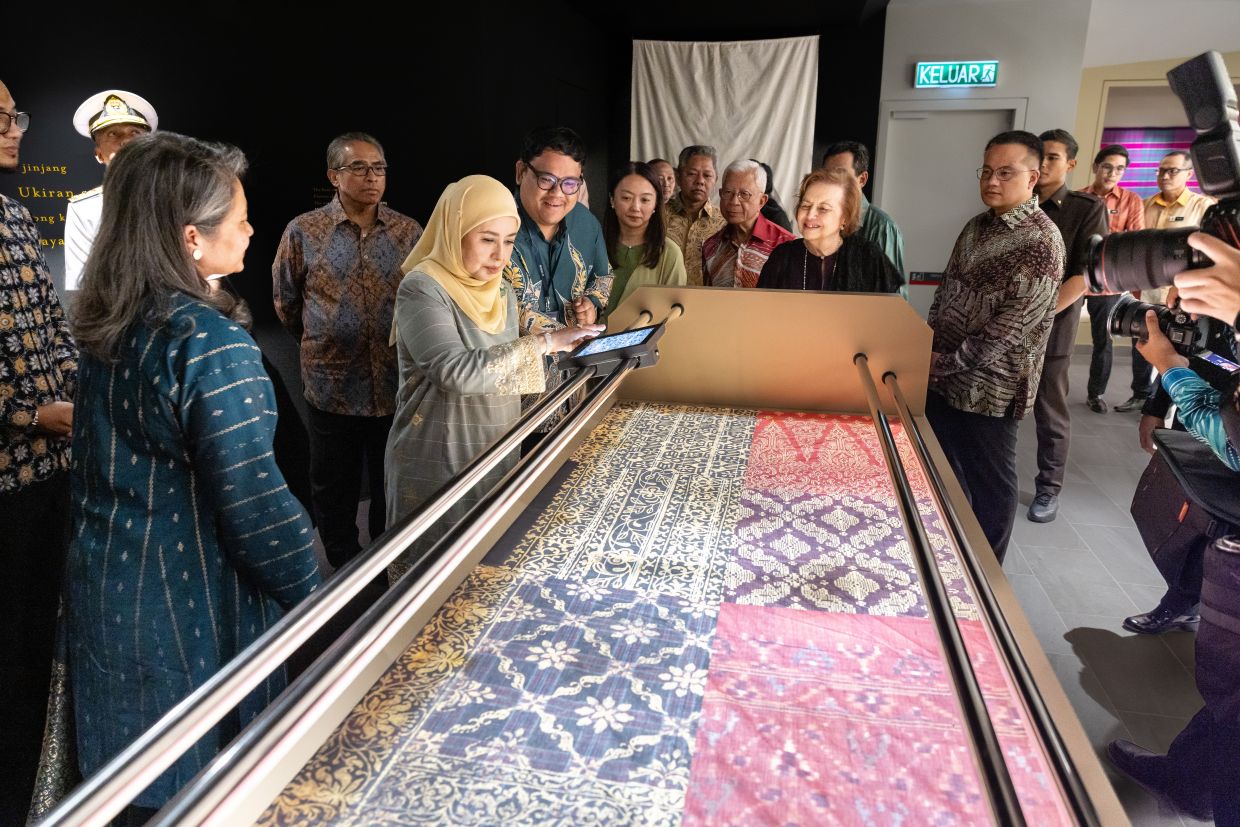
Her Majesty Raja Zarith Sofiah, Queen of Malaysia, formally inaugurated the Merdeka Textile Museum yesterday in the grounds of Menara Merdeka Maybank in Kuala Lumpur, marking a significant milestone in the nation's efforts to safeguard its rich textile heritage. The establishment of this cultural institution reflects a growing recognition among Malaysia's leadership that preserving traditional arts and crafts requires proactive institutional support and contemporary presentation methods to remain relevant to modern audiences.
Operating under the stewardship of PNB Merdeka Ventures Sdn Bhd, a subsidiary of the national investment fund Permodalan Nasional Berhad, the museum has been conceived as a dedicated space for celebrating Malay textile traditions through innovative storytelling approaches and immersive cultural programmes. This institutional framework allows the museum to combine scholarly rigour with public engagement, creating an environment where heritage preservation transcends static display and becomes an active learning experience. The involvement of PNB signals the national wealth fund's commitment to cultural stewardship alongside its core investment mandate, positioning Malaysia's strategic asset as a patron of heritage conservation.
In her remarks, Her Majesty articulated a vision of cultural continuity that resonates across Southeast Asia's diverse societies. She emphasised that every nation carries distinct heritage worth valuing, protecting, and transmitting intergenerationally, framing cultural preservation not as nostalgic exercise but as essential work for maintaining societal identity and values. Her Majesty specifically highlighted the museum's potential to inspire Malaysian women, recognising that textile work has historically centred on female artisanship and that contemporary female audiences could find models of cultural agency and creative expression within traditional practices.
The collection anchoring the museum derives from the personal acquisitions of the late Sharifah Azah Syed Mohammed Alsagoff, known professionally as Azah Aziz, whose family connections to Malaysian institutional leadership provided the foundational impetus for this project. Azah Aziz, widow of the late Prof Diraja Ungku Abdul Aziz Abdul Hamid and mother of former Bank Negara Malaysia governor Tan Sri Dr Ungku Zeti Akhtar Aziz, accumulated textiles and traditional jewellery throughout her lifetime. The family's subsequent donation of 240 garments and 69 pieces of traditional jewellery—including songket sarong, Limar Baju Kurung, and intricately embroidered Tekat Emas pieces—provided the core collection upon which the museum's curatorial framework has been constructed.
Beyond its exhibition galleries, the museum incorporates substantial infrastructure for serious textile scholarship and conservation work. The eight-gallery layout distributes content across thematic presentations while housing a dedicated study centre equipped with conservation laboratory facilities, a specialised fabric library, and a textile knowledge centre. This infrastructure positions the museum as both public cultural space and research institution, enabling scholars and conservators to conduct technical analysis while simultaneously welcoming general audiences seeking cultural connection. The addition of these support facilities distinguishes the Merdeka Textile Museum from conventional museum operations, suggesting an institutional commitment to generating new knowledge about Malaysian textile traditions rather than merely displaying historical artefacts.
The museum's establishment arrives at a critical juncture for traditional textile practitioners across Malaysia and the broader Southeast Asian region. Industrialisation and globalised fashion systems have substantially eroded apprenticeship pathways through which knowledge of traditional techniques has conventionally transferred across generations. The museum's educational and research mission potentially addresses this rupture by creating institutional structures that document, analyse, and celebrate textile knowledge systems that might otherwise disappear as elder practitioners retire without successors. For Malaysian cultural policy, the museum represents tacit acknowledgement that heritage preservation requires deliberate institutional intervention rather than assuming tradition will organically persist.
The involvement of high-level government figures in the inauguration ceremony—including Minister in the Prime Minister's Department Hannah Yeoh, Chief Secretary to the Government Tan Sri Shamsul Azri Abu Bakar, and PNB group chairman Raja Tan Sri Arshad Raja Tun Uda—underscores the political significance assigned to textile heritage within Malaysia's current cultural agenda. Such ceremonial participation signals that textile preservation ranks among national priorities deserving coordinated institutional attention across government and corporate sectors. For regional observers, the museum's opening reflects broader Southeast Asian patterns wherein textile heritage, historically associated with village-based production and female domestic labour, increasingly receives recognition as sophisticated cultural and economic asset worthy of national-level investment.
The museum's emphasis on contemporary storytelling methods and interactive experiences indicates a curatorial approach conscious of evolving audience expectations and pedagogical research demonstrating that passive viewing alone generates limited cultural engagement. Rather than presenting textiles as historical artefacts confined to display cases, the museum appears designed to facilitate active exploration of how traditional garments embody values, techniques, aesthetic principles, and social meanings. This interpretive strategy potentially attracts younger Malaysian audiences who might otherwise regard traditional textiles as culturally remote, simultaneously serving educational functions that might eventually inspire renewed interest in learning textile production techniques among students and craft enthusiasts.
For Malaysia's creative economy and cultural tourism sectors, the Merdeka Textile Museum constitutes fresh infrastructure through which traditional textile heritage can generate economic activity while maintaining cultural authenticity. Museums and cultural institutions increasingly function as tourism destinations attracting international visitors, generating revenue through admission fees, retail operations, and associated hospitality spending. The museum's location within Menara Merdeka Maybank, situated prominently in central Kuala Lumpur's commercial district, positions it accessibly for both domestic and international audiences, potentially establishing textile heritage as established element within the city's cultural tourism offerings.

