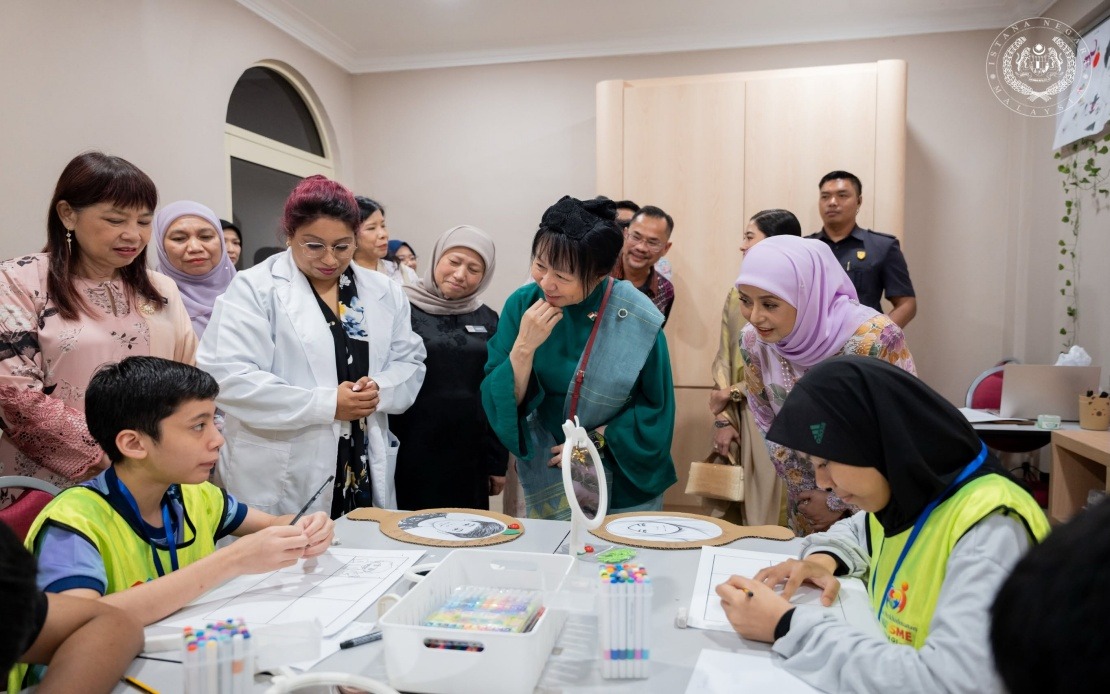
Her Majesty Raja Zarith Sofiah, Queen of Malaysia, hosted Singapore First Lady Jane Ittogi Shanmugaratnam at the Bangi Autism Service Centre today as part of the high-profile state visit by Singapore President Tharman Shanmugaratnam. The engagement underscores the diplomatic importance both nations attach to social welfare and demonstrates how official visits increasingly incorporate focus on healthcare and community development initiatives alongside traditional ceremonial protocols.
The outing formed part of President Shanmugaratnam's official visit to Malaysia, which commenced the previous day. Jane Ittogi arrived to a warm reception from Her Majesty and Tunku Tun Aminah Sultan Ibrahim, signalling the significance both royal households place on fostering bilateral ties. The carefully curated itinerary reflects a broader regional trend of using state visits to showcase best practices in social services and highlight commitments to vulnerable populations.
The delegation present at the centre included Prime Minister Datuk Seri Dr Anwar Ibrahim's wife Datuk Seri Dr Wan Azizah Wan Ismail, along with several high-ranking government officials from the social welfare apparatus. Women, Family and Community Development Minister Datuk Seri Nancy Shukri attended alongside Deputy Minister Lim Hui Ying, underscoring the government's prioritisation of the portfolio. The presence of the ministry's secretary-general Datuk Dr Maziah Che Yusoff and Social Welfare Department director-general Datuk Che Murad Sayang Ramjan ensured senior bureaucratic representation, facilitating potential discussion of policy frameworks and implementation strategies.
During their tour of the facility, Her Majesty and the Singapore First Lady examined several therapeutic and training environments operated at the centre. Their observations encompassed the Activities of Daily Living Room, where individuals with autism receive practical instruction in self-care and independence skills, as well as the Occupational Therapy Room where therapeutic interventions occur. A gymnasium tour completed their inspection, allowing both visitors to understand the holistic, multidisciplinary approach the centre employs to support individuals across physical, cognitive, and life skills dimensions.
Minister Nancy Shukri provided context through her remarks, noting that 93,199 individuals with autism had been formally registered with the Social Welfare Department as of June of the previous year. This substantial figure represents only a portion of Malaysia's actual autism population, as many individuals remain undiagnosed or unregistered. Shukri flagged the expectation that registered numbers would rise, driven by increasing public understanding of autism spectrum conditions and expanded access to screening and diagnostic pathways. This trajectory carries significant implications for service planning, funding requirements, and workforce development across Malaysia's social welfare ecosystem.
The rising prevalence of autism diagnoses reflects both genuine increases in identification and improved detection systems. Enhanced public education campaigns and integration of screening into routine healthcare encounters mean fewer cases slip through diagnostic gaps. For Malaysia, this awareness expansion mirrors trends across Southeast Asia, where rapid urbanisation and better healthcare access coincide with higher diagnosis rates. The challenge lies in translating awareness into adequate service provision, a gap that currently strains resources across the region.
The Bangi Autism Service Centre itself operates through a model increasingly adopted across Malaysia's social welfare landscape. Strategic partnerships between government agencies and non-governmental organisations enable more efficient resource deployment and leverage the specialist expertise both sectors contribute. The centre's operators—the National Autism Society of Malaysia (NASOM) and the Damansara Damai Community-Based Rehabilitation Centre (PDK)—bring decades of cumulative experience in autism support and community rehabilitation respectively. This hybrid governance structure demonstrates how public-private collaboration can expand service reach beyond what either sector could achieve independently.
For Malaysian and regional observers, the visit carries symbolic weight beyond its immediate optics. Singapore's sustained focus on autism support and early intervention reflects economic development patterns, where wealthier nations allocate greater health and social resources to developmental disabilities. The sharing of expertise and approaches between Malaysia and Singapore during such high-profile encounters creates opportunities for policy borrowing and operational learning. Singapore's experience in structured autism services provision, gained over decades, offers instructive models as Malaysia expands its own capacity.
The timing during a presidential state visit signals political commitment at the highest levels to social welfare advancement. When presidents and queens align themselves with autism services advocacy, it elevates the issue's national importance and can mobilise government resources more readily. For families living with autism across Malaysia and Singapore, such visibility reinforces that their needs command elite attention and resources. It also subtly pressures governments to maintain funding and policy momentum in this domain.
The visit concluded around mid-morning, affording participants limited but focused engagement with the centre's operations. However, even brief tours such as this generate diplomatic value and create opportunities for subsequent discussions among officials at various levels. Officials in attendance left with direct exposure to best-practice facilities and potential talking points for future inter-agency engagement. Such encounters frequently catalyse working groups or formal knowledge-sharing arrangements between health and welfare ministries.
Looking forward, Malaysia faces mounting pressure to expand and upgrade its autism services infrastructure. The registered population of 93,199 individuals requires ongoing support across education, employment, healthcare, and social integration domains. Singapore's success in creating integrated, high-quality services amid similar demographic and economic pressures offers a relevant template. Regional cooperation frameworks, potentially strengthened through exchanges like today's visit, could facilitate capacity building and standard harmonisation across Southeast Asian nations.
For policymakers in Malaysia, the visit reminds that autism support constitutes both a health imperative and a social development priority increasingly linked to national competitiveness. Nations that successfully integrate individuals with autism into productive adult lives realise economic benefits through reduced long-term care costs and expanded workforce participation. The royal endorsement of the Bangi centre and Jane Ittogi's engaged participation signal that such integration efforts deserve sustained high-level political backing and financial commitment.

