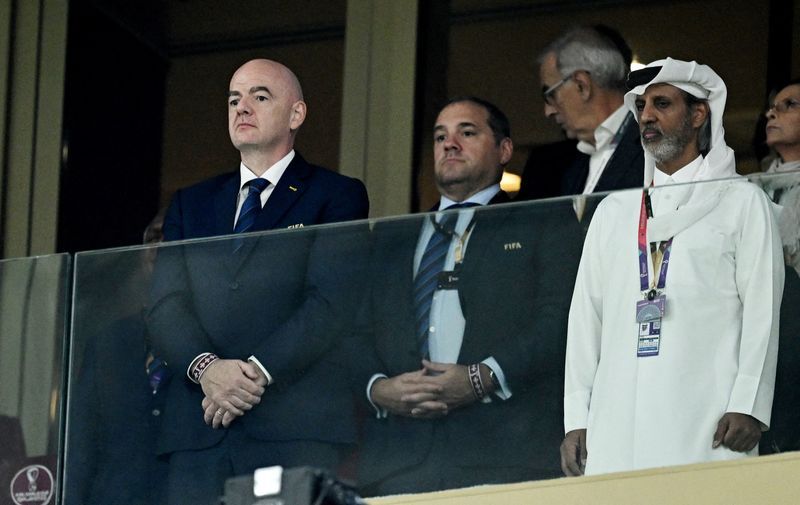
The dispute between Qatar's football authorities and the Asian Football Confederation has deepened over governance procedures and institutional accountability, marking an unusually public confrontation within a continental body that traditionally resolves disagreements behind closed doors. In a third letter in the escalating correspondence, Qatar Football Association President Hamad bin Khalifa Al-Thani has challenged the AFC's justification for signing a joint statement with UEFA and CONCACAF that attacked FIFA President Gianni Infantino's leadership and conduct regarding a failed privatisation proposal for the World Cup.
Al-Thani, widely regarded as a supporter of the FIFA chief ahead of his reelection campaign next year, contends that AFC President Sheikh Salman bin Ebrahim Al-Khalifa exceeded his constitutional authority by affixing the confederation's name to the letter without seeking approval from the AFC's membership or executive committee. The Qatari official argues that Sheikh Salman's response to his original complaint essentially admits that no consultation mechanism was activated before the statement was issued, whether with the executive committee or individual member associations.
The underlying dispute touches on fundamental questions about how continental football bodies should operate and whether executives hold unilateral power to issue policy statements on sensitive matters. Al-Thani insists that any rights Sheikh Salman possesses to act independently as president are defined and circumscribed by the AFC's executive committee framework, of which Al-Thani himself is a member in his capacity as a FIFA Council representative. The Qatari official distinguishes between substantive disagreements about FIFA's conduct and procedural violations of institutional governance.
Sheikh Salman responded on Tuesday with a forceful rebuttal, categorically denying that he overstepped his authority and asserting that he possessed "both the authority and the responsibility to act decisively" to protect Asian football's interests. The Bahraini administrator characterised Qatar's objections as fixating on technicalities while ignoring the broader interests of the game. He invoked precedent, pointing to previous occasions when the AFC had issued public statements on matters significant to Asian football, including backing Qatar's successful bid to host the 2022 World Cup despite intense international criticism.
Al-Thani's counter-response distinguishes between those historical statements and the Infantino letter on crucial grounds. He argues that earlier statements, including those supporting Qatar's World Cup candidacy, reflected the AFC's own institutional interests as an organisation seeking to advance football development across the continent. The privatisation letter, by contrast, involved a position on FIFA's internal governance and structural matters that went beyond Asian football's direct institutional interests and therefore required broader member consultation before the confederation could legitimately be bound by such a position.
The row has emerged from the broader crisis surrounding FIFA President Infantino's proposed FIFA Forward Enterprise scheme, which aimed to bring private investment into the World Cup. The proposal faced withering criticism from confederations and member associations for being developed without their input and then pitched directly to FIFA's 211 members, effectively circumventing the continental structures. This created an awkward irony: critics of Infantino's top-down approach have found themselves accused of employing similar methods when the AFC signed its critical letter.
Quatar, notably, positioned itself among six AFC members who declared support for Infantino during the crisis triggered by the failed proposal. This stance reflects both Qatar's historical alignment with the FIFA president and the small nation's strategic interest in maintaining strong relations with FIFA's leadership. As host of the 2022 World Cup, Qatar has had reason to cultivate favour with FIFA's upper echelons, though the relationship has been complex given the sustained controversy surrounding the tournament's award to the Gulf state.
The public nature of this exchange represents a significant departure from the AFC's customary practice of resolving internal disputes confidentially. That Sheikh Salman and Al-Thani have allowed their correspondence to become known suggests the conflict carries considerable significance for both men and reflects deeper tensions within Asian football regarding leadership authority and accountability. For Malaysian and Southeast Asian observers, the dispute illustrates how governance questions at FIFA's confederate level can become entangled with individual ambitions and factional alignments within the global game.
The implications extend beyond administrative procedure. The exchange raises questions about whether continental confederations should permit their executives to issue unilateral positions on FIFA's internal politics without member approval, or whether such matters demand broader consultation. The precedent established in this case could influence how Asian football addresses future disputes between FIFA and its member associations, potentially affecting how Malaysia and other Southeast Asian nations participate in or are bound by AFC positions on global football governance.
For now, the AFC has offered no immediate response to Al-Thani's latest letter, leaving the confrontation at an impasse. Sheikh Salman's silence may reflect confidence that his position has been adequately stated or a strategic calculation that further escalation serves no purpose. However, the unresolved nature of the dispute means it could resurface at forthcoming AFC meetings or FIFA congresses, where the question of executive authority and consultation procedures may force a formal reckoning within Asian football's governing structures.
The controversy ultimately reflects broader tensions about power, accountability, and representation within international sports governance. While the immediate subject concerns whether the AFC president required member approval for a policy statement, the deeper issue concerns whether continental bodies operate as genuine confederations accountable to their members or as hierarchical organisations where executives exercise substantial unilateral authority. How this dispute concludes may establish important precedents for Asian football governance for years to come.

