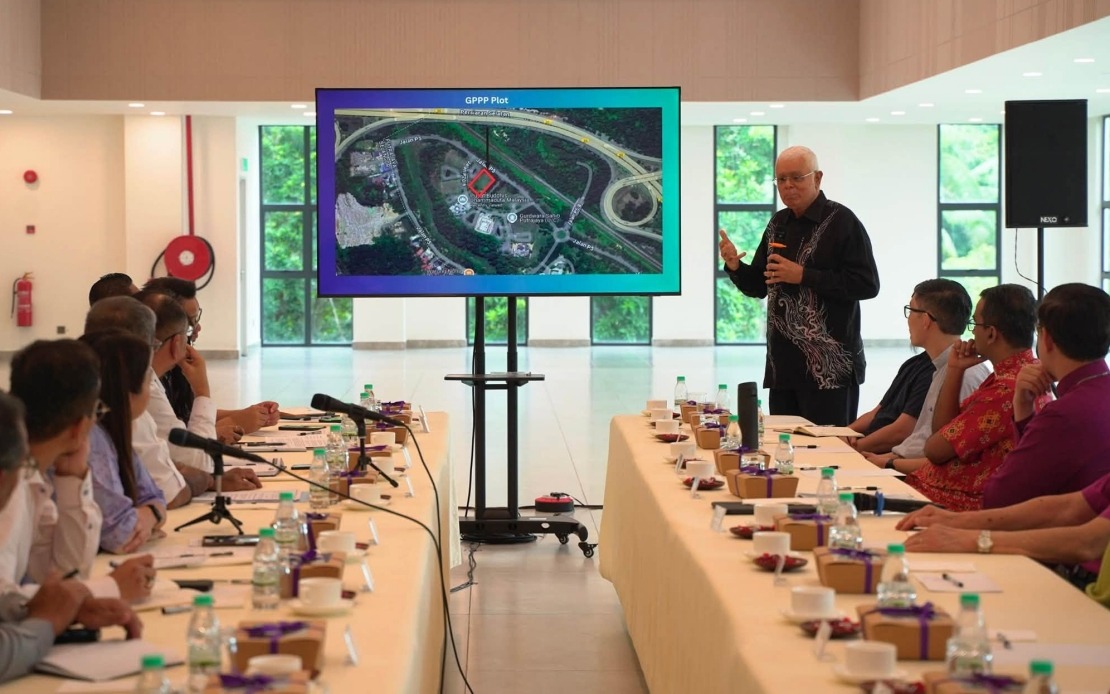
Malaysia's federal government has formalised Precinct 20 in Putrajaya as a dedicated interfaith district, with National Unity Minister Datuk Aaron Ago Dagang confirming that designated sites for non-Muslim places of worship have been part of the capital's development strategy since 2013. The initiative represents a deliberate approach to urban planning that prioritises religious accommodation and community coexistence within federal territory.
The government's vision for Precinct 20 extends beyond mere land allocation. Aaron explained that the project embodies systematic inclusive planning principles, ensuring that citizens of all faiths have access to appropriate spaces for worship while strengthening the fabric of multireligious society. This approach acknowledges Malaysia's pluralistic demographics and the practical challenges of managing religious facilities equitably across urban centres.
The Precinct 20 interfaith model aligns with Policy 17 of the Putrajaya Structure Plan 2050, which prioritises building an inclusive, mutually respectful community through harmonious coexistence. The framework explicitly recognises that successful urban development in a diverse democracy requires intentional provision for all communities, not merely reactive responses to religious facility demands. This strategic positioning reflects a shift towards proactive rather than ad hoc religious accommodation policies.
The initiative further connects to the broader Harmoni MADANI programme launched by the National Unity Ministry in 2024. This national framework promotes the concept of "Understand, Respect, Accept and Celebrate" across Malaysia's multireligious landscape, positioning Precinct 20 as a practical demonstration of these principles in action. The alignment between federal religious policy and specific urban development demonstrates institutional coordination on interfaith matters.
Currently, Precinct 20 hosts the Prince of Peace Church, recently established and visited by Aaron alongside Minister in the Prime Minister's Department (Federal Territories) Hannah Yeoh. The precinct also houses the Dhammaduta Malaysia Buddhist Centre, operational since 2023, indicating that the interfaith vision has moved beyond planning into tangible implementation. These operational facilities serve their respective communities while existing within a shared urban space designed around religious plurality.
Under development within Precinct 20 are several additional facilities that will substantially expand the district's religious diversity. Gurdwara Sahib Putrajaya will serve the Sikh community, while Dewi Sri Lalithaambigai Alayam and San Qing Taoist Temple cater to Hindu and Chinese religious traditions respectively. This deliberate mix represents conscious efforts to accommodate Malaysia's major faith communities beyond the Islamic majority, challenging traditional patterns of religious infrastructure concentration in older city centres.
A designated site has been reserved for a Roman Catholic church, though construction has not yet commenced. The allocation of specific plots for each religious tradition demonstrates that Precinct 20 operates according to a detailed master plan rather than ad hoc approvals. This predictability and transparency in site allocation addresses historical frustrations from minority religious communities regarding the availability and accessibility of worship spaces in developing urban areas.
The transformation of Precinct 20 into an interfaith hub carries significant implications for Southeast Asia's approach to religious diversity in urban planning. Malaysia's federal capital serves as a model for managing religious pluralism at scale, particularly relevant given demographic patterns in other regional nations. The project suggests that religious harmony requires deliberate infrastructure planning rather than reliance on informal community arrangements or restrictive regulations.
For Malaysian readers, Precinct 20 represents tangible progress on religious freedom and community accommodation within the federal territory framework. The visible development of multiple worship sites signals government commitment to interfaith principles beyond rhetorical endorsement. However, the project also raises questions about resource distribution, accessibility, and whether similar provisions will be extended to other federal territories or regional cities facing comparable religious diversity challenges.

