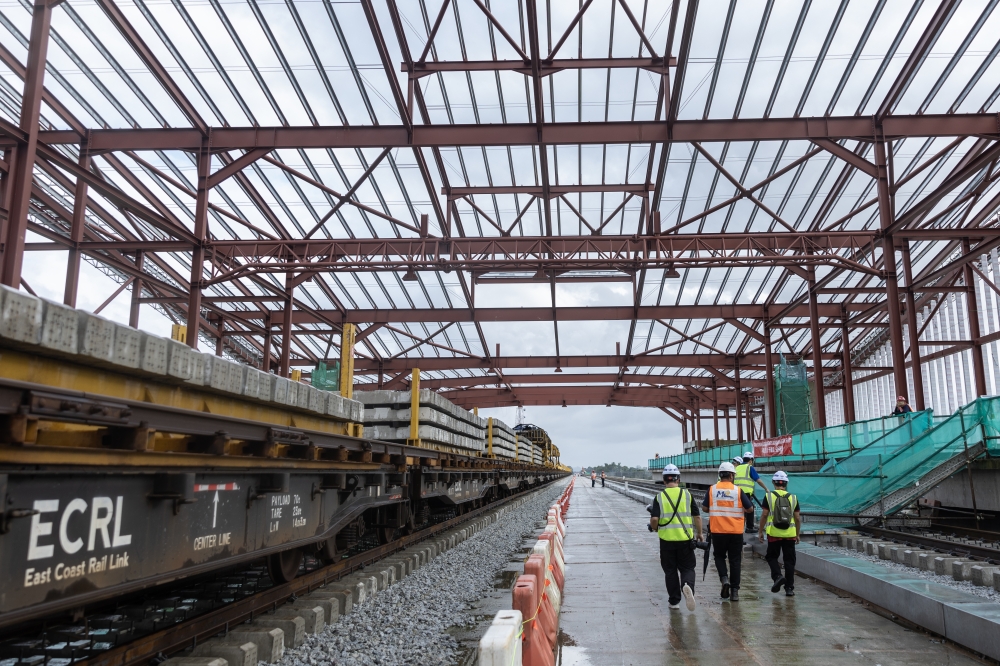
The Malaysian government has signalled its intention to catalyse economic transformation in the Pasir Puteh parliamentary constituency through a coordinated investment package valued at RM207 million. The approval of 46 distinct projects represents an effort to harness latent growth opportunities created by the East Coast Rail Link (ECRL) infrastructure, which has fundamentally altered connectivity patterns across Peninsular Malaysia's eastern seaboard.
Pasir Puteh, located in Kelantan, occupies a strategic position within the emerging ECRL ecosystem. The railway corridor, stretching from Port Klang in Selangor through Pahang and Terengganu before terminating in Kota Bharu, creates unprecedented logistics and passenger transport advantages for constituencies positioned along its trajectory. Government planners recognise that constituencies like Pasir Puteh require complementary terrestrial development to fully realise the wealth-creation potential that major infrastructure projects unlock. Without coordinated investment in supporting facilities, amenities, and economic enablers, railway infrastructure alone risks becoming underutilised.
The approved project slate encompasses diverse development categories, reflecting a comprehensive approach to constituency development. These initiatives span transportation links, commercial infrastructure, residential facilities, and public services. By orchestrating projects across multiple sectors rather than concentrating investment narrowly, authorities aim to create multiplier effects that benefit various demographic groups and economic segments. Local small and medium enterprises should encounter improved market access, while residents gain better amenities and service provision.
Kelantan has historically occupied a disadvantaged position within Malaysia's economic geography, with lower per capita incomes and limited industrial diversification compared to western corridor states. The ECRL represents a potential turning point, offering the state—and constituencies within it—genuine opportunities to participate in national economic networks previously dominated by locations with superior transport connections. Pasir Puteh's inclusion in this government-backed initiative underscores recognition that equitable development requires deliberate intervention in regions lacking natural competitive advantages.
The timing of this project approval reflects broader political considerations within the Malaysian electoral landscape. Kelantan has remained a stronghold of particular political movements, and government investment decisions inevitably intersect with electoral strategy. However, the substance of infrastructure development transcends immediate political calculations. Completed projects deliver tangible benefits to constituents regardless of which administration initiated them, making capital investment a durable form of political engagement with marginalised regions.
The RM207 million allocation requires contextualisation within Malaysia's broader public expenditure frameworks. While substantial in absolute terms, this figure must be measured against national development budgets and comparable investments in other constituencies. The per-project average of approximately RM4.5 million suggests a mixture of infrastructure scales, from modest community facilities to more significant commercial or transport assets. Implementation sequencing will prove critical; phased, coordinated rollout will yield superior results compared to fragmented, uncoordinated project execution.
Successful implementation depends on multiple factors extending beyond initial capital allocation. Local administrative capacity must be adequate to oversee project management, procurement, and handover processes. Community engagement mechanisms should ensure that development priorities genuinely reflect constituent needs rather than bureaucratic assumptions about local requirements. Private sector participation in appropriate projects can enhance efficiency and sustainability, though government oversight remains essential to prevent profit-seeking from undermining public interest objectives.
The ECRL itself continues evolving operationally and commercially. Passenger services have commenced, though network optimisation remains ongoing. Freight operations present longer-term potential, particularly given the corridor's routing through port cities and industrial zones. Constituencies positioned to capture this freight activity—through warehousing, logistics hubs, and distribution facilities—will experience disproportionate economic gains. Project selection for Pasir Puteh presumably reflects strategic positioning to capture such opportunities.
For Malaysian policymakers, the Pasir Puteh initiative offers valuable lessons about coordinating transport infrastructure investment with territorial development. Major railway or highway projects require supporting ecosystems of complementary facilities to generate intended economic impacts. Conversely, isolated infrastructure investments lacking territorial integration often underperform relative to their capital costs. The government's multi-project approach suggests recognition of this interdependence, though execution effectiveness will ultimately determine whether theory translates into tangible constituent benefits.
Regionally, Pasir Puteh's development trajectory warrants monitoring within broader Southeast Asian contexts. The ECRL serves as a model for how regional states can leverage infrastructure investment to rebalance economic geography. Similar projects across Southeast Asia—including planned high-speed rail networks and port developments—face comparable challenges in ensuring that major infrastructure unlocks genuine territorial transformation rather than becoming underutilised assets.
Local stakeholders, including Pasir Puteh's elected representatives and business communities, will bear primary responsibility for ensuring projects materialise as planned and deliver promised benefits. Government approval represents necessary but insufficient conditions for development success. Sustained commitment, transparent implementation, and adaptive management throughout project lifecycles determine whether RM207 million catalyses genuine constituency transformation or becomes dispersed across ineffective initiatives.

