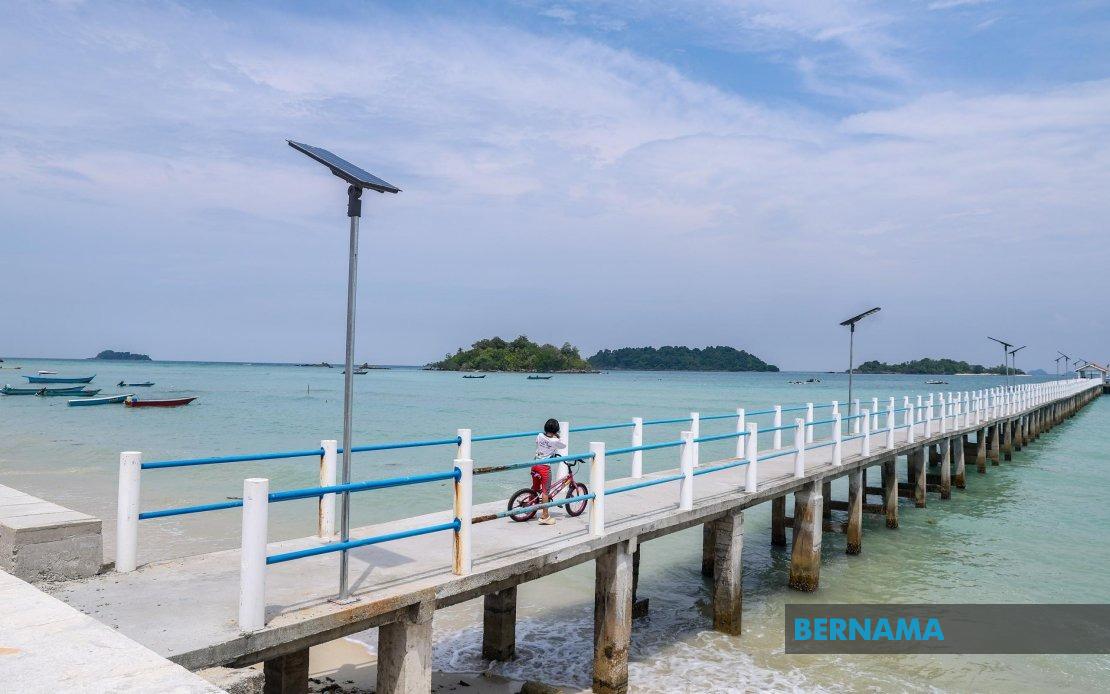
The approximately 150 residents scattered across two villages on Pulau Tinggi are approaching Saturday's Johor state election with a clear list of priorities. Chief among them: the rehabilitation of a crumbling jetty that has been in decline since 2017 and targeted housing assistance for the island's predominantly low-income fishing population. These twin issues underscore the challenges faced by small island communities in Johor that often struggle to secure government attention despite their isolation and economic vulnerability.
According to Rossana Hussin, head of Kampung Pulau Tinggi since 2024, the jetty deterioration has been a festering problem for residents and visiting tourists alike. The facility, essential for both commercial fishing operations and tourism activity, continues to deteriorate even as locals risk using it. Applications to upgrade the jetty infrastructure were formally submitted to the Mersing District Office in March, and Hussin indicated that initial feedback has been encouraging. However, encouragement from bureaucratic channels does not translate into immediate action, leaving residents in a state of limbo as they await the new state government to inject momentum into the stalled project.
The housing challenge mirrors the infrastructure deficit. Many fishermen in Kampung Tanjung Balang fall within the B40 lowest-income category, facing financial strain that makes home maintenance an impossible luxury. Some residents lack completed housing altogether, whilst others struggle with deteriorating structures that compromise their living conditions. Hussin has been advocating for a dedicated assistance programme to help these families repair and complete their homes, viewing such support as a crucial intervention to improve living standards and dignity. The fact that these requests have been lodged formally suggests a community willing to work through official channels, yet frustrated by slow progress.
The island's demographic trajectory presents an additional layer of concern that extends beyond immediate infrastructure needs. According to Mariam Mamat, an 85-year-old resident, Pulau Tinggi has experienced steady population decline as younger people relocate in search of economic opportunity. The exodus has been driven by limited employment prospects on the island and the attraction of federal land development schemes such as Felda settlements, which offer more structured economic pathways. This brain drain threatens the island's long-term viability, creating a self-reinforcing cycle where fewer opportunities drive out young people, which in turn makes economic revival harder to achieve.
Mariam's concerns touch on a broader development paradox affecting small island and remote communities across Malaysia. Without investment in basic infrastructure and livelihood opportunities, these areas become economically stagnant. Yet without a stable, growing population, justifying such investment becomes politically difficult. Tourism revitalisation has been mooted as a potential remedy, and Mariam hopes the incoming representative will prioritise efforts to breathe new life into this sector. The island's natural assets could theoretically support greater visitor numbers and associated hospitality employment, yet realising this potential requires sustained commitment and coordinated planning across multiple agencies.
The timing of these community concerns aligns with the 16th Johor state election, in which approximately 2.7 million eligible voters will cast ballots to elect 56 lawmakers. Pulau Tinggi falls within the Tenggaroh state constituency, and residents are clearly positioning their demands as matters that should feature prominently in the incoming representative's agenda. This grassroots articulation of needs represents the democratic process functioning at ground level, though the challenge remains whether island communities can generate sufficient political pressure to secure meaningful allocations from state government budgets that must stretch across multiple competing priorities.
The jetty issue carries particular significance for understanding resource distribution in coastal Johor. Fishing communities depend on port infrastructure to launch their operations and land their catch, yet maintenance budgets are often inadequate and geographically concentrated in larger ports that serve more economically significant populations. Pulau Tinggi's jetty serves both functional and symbolic purposes: it enables livelihood activities whilst connecting the island to the broader economy and society. Its deterioration sends a signal to residents about their relative importance in state development calculations, which may accelerate outmigration among those with options elsewhere.
The March submission of upgrade applications indicates that proper administrative procedures were followed, yet the absence of completion or funding allocation suggests either bottlenecks within the bureaucracy or insufficient political prioritisation. The new state government will inherit this backlog of pending requests, creating an immediate opportunity to demonstrate responsiveness to marginalised communities. Approving and funding these projects early in the new administration's tenure would signal genuine commitment to inclusive development across Johor's diverse geography.
Housing assistance for B40 fishermen intersects with broader national poverty reduction objectives whilst addressing the specific vulnerabilities of coastal workers whose income is subject to seasonal fluctuations and weather-dependent disruptions. Improving housing security can have multiplier effects on family stability, children's educational outcomes, and overall health and wellbeing. For residents like those in Kampung Tanjung Balang, such assistance represents not luxury but basic enablement of dignified living conditions.
The challenge facing Pulau Tinggi residents extends beyond the immediate concerns of jetty repair and housing support. The underlying development model that has worked for more densely populated and economically diversified areas may not be adequately serving small island communities with limited resources and constrained opportunities. Addressing this requires not just ad-hoc project approvals but strategic thinking about how island development can be sustained through a combination of infrastructure investment, livelihood diversification, and population stabilisation initiatives. The incoming Tenggaroh representative will inherit considerable goodwill from residents willing to engage constructively with government processes, but converting this engagement into tangible outcomes will require both political will and sustained coordination across multiple administrative levels.

