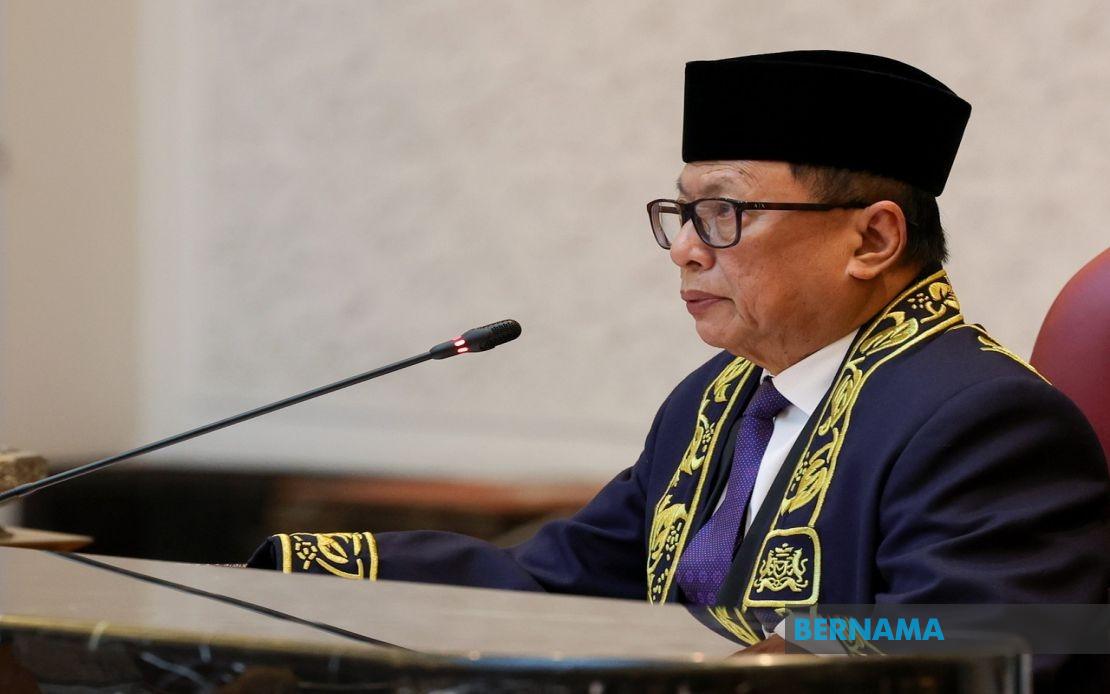
A prominent member of UMNO's Supreme Council has severed ties with the party, levelling serious allegations against Johor's political leadership. Datuk Dr Mohd Puad Zarkashi announced his immediate departure from UMNO on June 25, citing the need for unfettered freedom to express his opinions without risk of censure within party ranks. The resignation of the Rengit state assemblyman marks a significant rupture within Johor's UMNO establishment and signals mounting tensions beneath the surface of what has long been portrayed as a cohesive political unit.
Puad's departure comes after months of brewing discontent within UMNO's Johor machinery, particularly surrounding the party's candidate selection process for the upcoming state election. In his resignation statement distributed through social media, Puad declared that his exit would relieve the party of the burden of formally expelling him, whilst simultaneously liberating him to pursue critical commentary on UMNO's trajectory without accusations of disloyalty. He framed his decision as an expression of "political courage" designed to expose what he characterised as systemic failings before they became irreversibly entrenched in the party's institutional fabric.
The core thrust of Puad's critique centres on his portrayal of Johor Chief Minister Onn Hafiz Salleh as a mere puppet enacting decisions orchestrated from elsewhere within the party hierarchy. Using the Malay colloquialism "pak turut"—which denotes blind compliance and absence of independent agency—Puad suggested that the Johor UMNO leader lacks genuine autonomy in determining party direction. He alleged that multiple instances demonstrated Onn Hafiz's subordinate status, though his public statement did not enumerate these specific examples in detail. This characterisation strikes at the heart of perceptions regarding Onn Hafiz's authority, a critical consideration in Malaysian politics where a chief minister's perceived strength influences both internal party dynamics and electoral competitiveness.
Prior to his formal announcement, Puad had raised concerns about irregularities within the Barisan Nasional candidate selection mechanism for Johor's state elections, suggesting that the process did not reflect merit-based considerations or transparent procedures. Such allegations carry significant weight in Malaysian political discourse, as candidate selection often becomes a flashpoint for factional disputes and questions about meritocratic governance. Puad's decision to withdraw from contesting the Rengit seat—which he had won comfortably in the 2022 state election—further underscores his dissatisfaction with party management and processes, though he had earlier publicly advocated for younger candidates to receive opportunities.
Puad's political trajectory reveals a senior figure with considerable government experience and electoral credibility. He represented Batu Pahat at the federal parliamentary level, initially capturing that seat in the 12th General Election with a majority of 12,968 votes over his PAS rival Muhammad Abdullah. However, his parliamentary tenure proved temporary; he lost the seat in the subsequent 13th General Election to PKR's Datuk Mohd Idris Jusi by a narrower margin of 1,524 votes, indicating a volatile and contested electoral landscape. Beyond electoral competition, Puad held substantial executive positions in Malaysia's federal administration, serving as Deputy Education Minister from 2009 to 2013 and subsequently as Director-General of the Special Affairs Department (JASA) between March 2015 and April 2018—roles that positioned him within circles of significant policy influence.
His background as a former Speaker of the Johor State Legislative Assembly further demonstrates his standing within Johor's political establishment. Such experience confers knowledge of parliamentary procedures, state governance mechanics, and relationships across political factions. The convergence of these credentials makes his departure a credible challenge to UMNO's current direction, as Puad possesses both the institutional knowledge and political standing to articulate substantive criticisms rather than merely opportunistic complaints. His accusations therefore warrant serious consideration among UMNO members and observers evaluating the party's internal health.
The timing of Puad's resignation, occurring as Johor UMNO prepares for state elections, carries particular significance for the broader Barisan Nasional coalition and Malaysia's political landscape. Johor has historically represented a critical power base for UMNO, generating substantial parliamentary and state assembly representation that contributes materially to the coalition's overall strength. Any fracturing within Johor UMNO threatens to erode this advantage, potentially rendering the state more competitive than traditionally expected and complicating Barisan Nasional's electoral calculus at both state and federal levels.
Puad's assertion that his departure enables him to voice criticism without accusations of party disloyalty highlights a paradox inherent in Malaysian political party structures. Members operating within party discipline face constraints on public expression, yet exit from the party creates space for more candid commentary whilst potentially diminishing the speaker's institutional platform. For Puad, the trade-off apparently favours unrestricted expression over formal membership status, suggesting he prioritises airing grievances he believes the party has suppressed.
The characterisation of Johor UMNO as a "tethered puppet" implies hierarchical control and absence of institutional autonomy. If accurate, such an arrangement would suggest that decision-making authority resides outside the state party structure, potentially with federal-level UMNO leadership or powerful individual actors wielding influence beyond formal constitutional channels. This perception, whether empirically validated or not, undermines public confidence in Johor UMNO's governance integrity and the genuine agency of its elected representatives. Malaysian voters increasingly expect their elected leaders to demonstrate substantive decision-making power rather than merely executing predetermined instructions.
For observers tracking UMNO's internal dynamics, Puad's departure represents another data point in a longer narrative of factional tensions and questions regarding party cohesion. UMNO has historically managed diverse internal constituencies and competing power centres, yet recent years have witnessed more visible ruptures and public criticism from senior members. Whether Puad's exit portends broader organisational fragmentation or constitutes a contained incident will become clearer as Johor UMNO proceeds toward electoral contests. His subsequent political activity—whether he joins an alternative party, stands as an independent, or maintains distance from electoral competition—will further illuminate his long-term strategic calculations.
The implications extend beyond Johor's immediate political context, resonating throughout Southeast Asia's broader landscape of dominant party systems. Malaysia's UMNO exemplifies a widespread pattern in the region where ostensibly united parties often contain competing factions and restricted spaces for internal dissent. Puad's explicit choice to exit rather than remain and reform suggests pessimism regarding the party's capacity for internal democratisation or course correction. His departure thus contributes to contemporary debates about party institutionalisation, factional governance, and the mechanisms through which political actors pursue change within or beyond established organisational structures.

