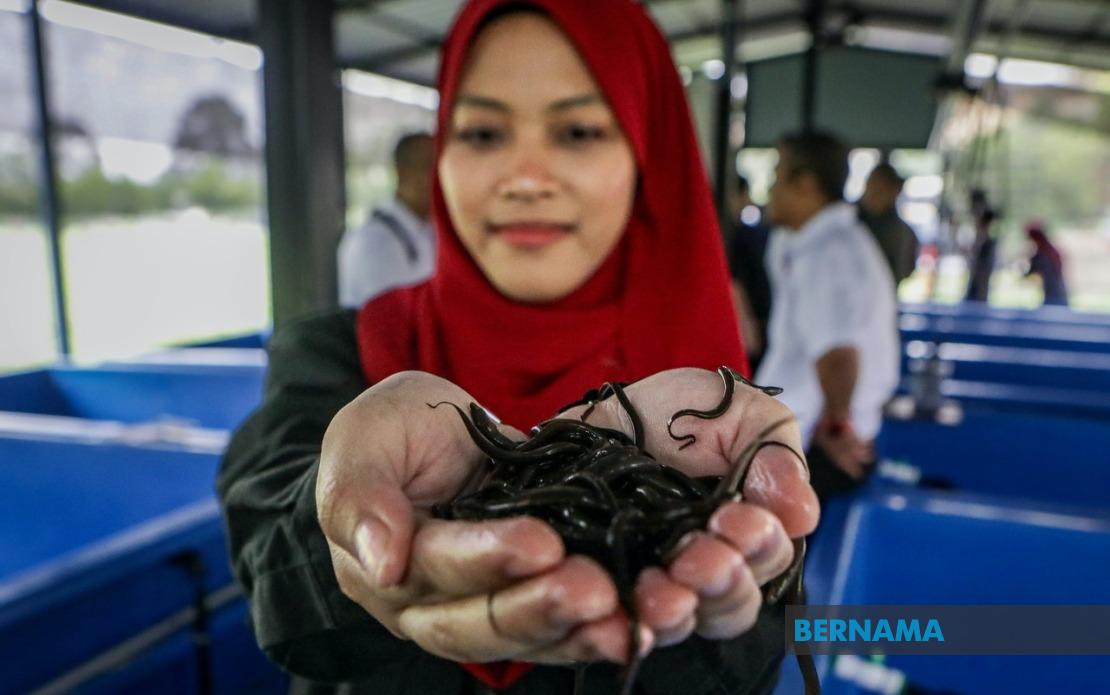
A significant initiative in Perlis underscores the expanding role of Malaysia's technical education sector beyond classroom instruction. Politeknik Tuanku Syed Sirajuddin (PTSS) in Arau has launched the Projek Penternakan Belut Komersial Geran Sejati MADANI, a demonstration of how vocational training institutions can actively participate in community development by transferring practical knowledge and agricultural technology.
The RM500,000 initiative involves five communities across Perlis, each receiving 15,000 eel seeds to establish commercial farming operations. Rather than simply providing funding or equipment, PTSS has positioned itself as the project manager and trainer, overseeing every stage from infrastructure setup through equipment procurement to financial management across a six-month implementation period. This hands-on involvement represents a departure from the traditional model where educational institutions remain separate from enterprise development, instead creating a direct pipeline between classroom learning and real-world agricultural practice.
Politeknik Tuanku Syed Sirajuddin director Khairul Anuar Ishak articulated the institution's philosophy during the project launch, emphasising that TVET facilities carry responsibility for more than producing graduates who enter the workforce. Instead, these polytechnics function as community assets capable of accelerating local economic development by sharing technical expertise, providing ongoing guidance, and introducing innovation that might otherwise remain inaccessible to rural residents. The eel farming project exemplifies this vision by enabling students to simultaneously develop practical competencies while contributing meaningfully to livelihood improvement in surrounding areas.
The economic projections attached to the initiative suggest substantial potential. Based on standard aquaculture timelines, each participating community expects to harvest approximately 5,000 kilograms of eels after five to six months of growth. This production timeline positions the enterprise for contract farming arrangements, creating a structured market pathway that distinguishes this effort from speculative agricultural ventures. For communities in Perlis, where agricultural diversification remains an ongoing challenge, eel farming presents an opportunity to develop a high-value commodity with established demand in Malaysian and regional markets.
Khairul Anuar stressed that the collaborative structure—bringing together educational institutions, government agencies, industry participants, and community stakeholders—strengthens the foundation for sustainable economic growth at the local level. The involvement of the Perlis Federal Development Office and the Prime Minister's Department's Implementation Coordination Unit reflects commitment from multiple levels of government to resource and legitimise the initiative. This multi-agency coordination, while administratively complex, provides communities with access to technical support, regulatory guidance, and market connections that individual farmers would struggle to secure independently.
The transition of the enterprise from institutional management to community ownership after six months represents a critical design feature. Rather than creating permanent dependency on the polytechnic's involvement, the project builds toward genuine community autonomy. During the initial phase, PTSS will establish operational systems, train designated community members in all technical and management aspects, and develop financial protocols for profitability and reinvestment. This capacity-building approach acknowledges that external support must be temporary and targeted toward developing local capability.
For Malaysia's broader vocational education strategy, the PTSS eel farming project indicates a possible template for deepening TVET's contribution to rural development. Malaysian polytechnics collectively possess facilities, expertise, and credibility that could be mobilised for community-based production ventures across aquaculture, horticulture, and value-added agriculture. Such integration of educational and economic functions requires institutional flexibility and resource allocation that many polytechnics have not traditionally prioritised, yet the model potentially addresses persistent rural-urban development disparities.
The experiential learning component also carries significance for students themselves. Rather than studying aquaculture in laboratory settings detached from market realities, PTSS students engage with commercial-scale operations, customer relationships, and financial management from the project's inception. This integration of vocational education with productive enterprise creates learning environments where theoretical knowledge immediately confronts practical challenges, potentially improving both skill acquisition and graduate employment readiness.
For Perlis specifically, the initiative arrives amid broader state-level efforts to diversify economic activity beyond traditional sectors. Eel farming represents a climate-appropriate agricultural enterprise suited to the state's freshwater resources and labour availability. If the five initial communities achieve projected yields and establish stable market relationships, the model could expand to additional locations, gradually building a eel farming sector with genuine competitive advantages and regional recognition.
The project also illustrates how grant mechanisms under Malaysia's MADANI framework are being deployed to stimulate economic activities at community level. Rather than directing funds toward infrastructure or subsidies with limited multiplier effects, channelling investment through capacity-building and technology transfer creates conditions for sustained income generation and skill development that extend beyond the initial funding period.
Looking forward, the success or challenges encountered by the Perlis eel farming communities will likely inform how other TVET institutions approach community engagement. Should the initiative demonstrate genuine income generation alongside successful knowledge transfer, pressure will mount on polytechnics nationally to replicate similar models. Conversely, if implementation difficulties emerge—whether in production management, market access, or community cooperation—such obstacles will need resolution to validate the approach as scalable policy.

