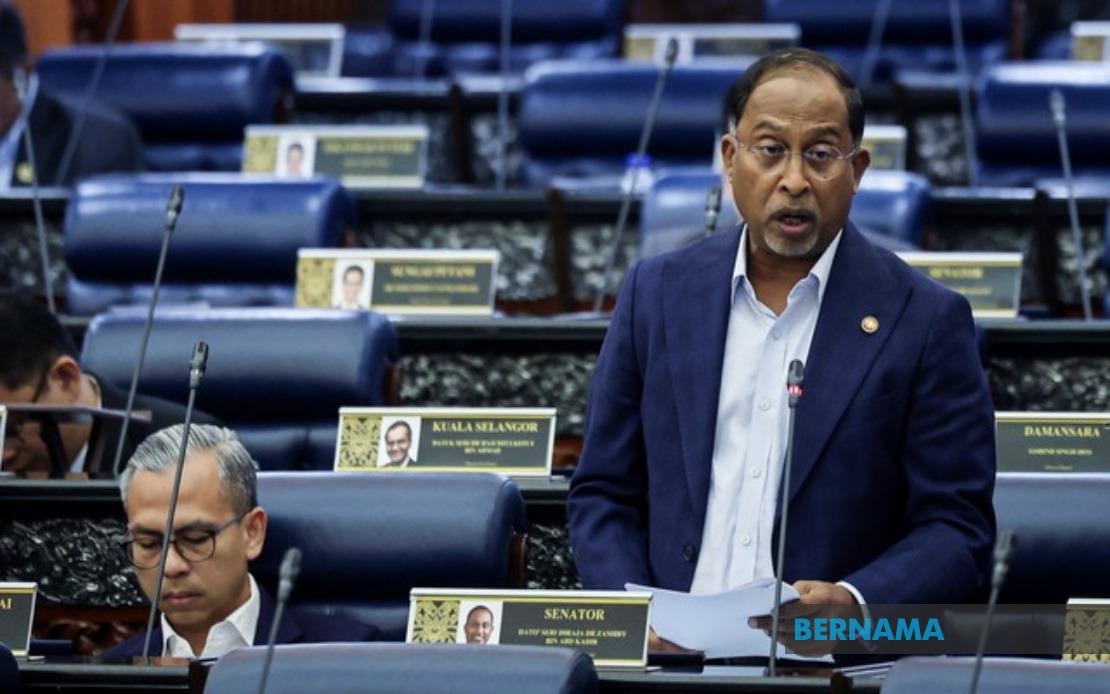
The National Higher Education Fund Corporation (PTPTN) has retrieved RM197 million in overdue loan payments through its partnership with debt negotiation agencies (APH) during the twelve-month period spanning July 2024 to May 2025, according to Higher Education Minister Datuk Seri Dr Zambry Abdul Kadir. This achievement represents a meaningful uptick of 6.4 per cent relative to collections during the equivalent timeframe in the previous financial year, suggesting that the specialised recovery methodology employed by these external agencies is gaining traction in persuading delinquent borrowers to fulfil their obligations.
The scale of the challenge confronting PTPTN remains substantial. As of May 2025, a cumulative total of 103,418 borrower accounts bearing outstanding arrears exceeding RM3 billion have been transferred to APH for intensive collection efforts. This concentration of problem accounts underscores the persistent difficulty that the fund faces in recovering loans from a significant subset of its borrower population, many of whom have been in default for extended periods. The numbers paint a picture of systemic strain within Malaysia's higher education financing architecture, where a minority of borrowers account for a disproportionately large share of unpaid debt.
Critically, PTPTN does not hand over every delinquent account to APH indiscriminately. The threshold for referral is deliberately high and reflects a graduated enforcement approach. Borrowers are only transferred to external collection agencies after their accounts have accumulated arrears spanning more than 120 months—a full decade—and after a judgment has been formally recorded against them through the legal system. This stringent criteria means that PTPTN exhausts its own internal collection mechanisms before deploying APH, reserving these agencies for the most intransigent cases where conventional outreach has failed. The minister emphasised that this escalation should not be construed as punitive in intent, but rather as a pragmatic last-resort mechanism targeting accounts demonstrating both extreme duration of non-payment and legal finality.
Zambry addressed concerns raised by Member of Parliament Lim Lip Eng from Kepong, who sought clarification on the regulatory framework governing APH operations and whether PTPTN maintains flexible repayment pathways for borrowers demonstrating genuine financial hardship. The minister's response indicated that negotiation remains possible even after accounts reach APH, reflecting an underlying commitment to accommodation over coercion. This stance carries significance for borrowers who may fear that transfer to an external agency represents a point of no return, when in reality dialogue between borrower and lender can theoretically persist throughout the collection process.
The minister outlined a framework wherein PTPTN continues to assess individual circumstances with attention to multiple dimensions of borrower circumstances. Income level, existing financial obligations, and wider socio-economic context all factor into the fund's evaluation of whether modified repayment terms are warranted. This holistic consideration aims to distinguish between borrowers who are unwilling to pay and those genuinely constrained by economic circumstances. For those facing demonstrable hardship, the option to lodge appeals and engage directly with PTPTN's legal personnel remains open, creating a mechanism through which borrowers can present evidence of their financial position and negotiate revised payment schedules calibrated to their actual capacity.
The philosophical underpinning of this approach reflects a recognition that blanket enforcement strategies risk driving borrowers further into the informal economy or precipitating personal bankruptcies that benefit no stakeholder. By maintaining negotiation channels and individualised assessment protocols, PTPTN attempts to balance its duty to recover public funds with acknowledgment that many borrowers face genuine constraints rather than deliberate defiance. The emphasis on ensuring that borrowers "who really need help are not left out of the loan repayment system" suggests an objective of inclusive recovery rather than punitive debt collection.
The 6.4 per cent year-on-year improvement in APH collections carries broader implications for Malaysia's education financing landscape. As PTPTN grapples with an ageing cohort of deeply delinquent accounts, success in extracting payment from this group—even if incremental—validates the deployment of external recovery expertise. The growth rate, while modest, indicates that APH's approach yields results beyond what PTPTN's internal mechanisms achieve, justifying the decision to outsource these challenging cases. For policymakers evaluating the efficacy of different collection strategies, the data provides concrete evidence that specialist agencies can enhance recovery rates in specific circumstances.
However, the underlying challenge remains formidable. A debt stock exceeding RM3 billion across 103,418 accounts translates to an average arrears burden of approximately RM29,000 per account—a sum that likely exceeds the annual income of many defaulting borrowers. This arithmetic underscores why collection, even with enhanced mechanisms, proceeds incrementally. Many borrowers simply lack the disposable income to remit meaningful payments, regardless of external pressure or internal flexibility. The modest improvement in recovery rates thus reflects success within constrained parameters rather than resolution of the fundamental structural problem.
For Malaysian higher education policy, the PTPTN situation illustrates the long-term consequences of lending to borrowers with limited earning capacity or uncertain employment prospects. The accumulation of accounts in arrears exceeding ten years suggests cohorts who graduated into weak labour markets or whose earning trajectories never materialised. As Malaysia transitions toward a knowledge-driven economy, the persistence of such large-scale default raises questions about whether the current loan-based financing model adequately serves students from economically vulnerable backgrounds, or whether complementary grant-based support might prevent such extensive arrears from accumulating in the first place.
The government's evident preference for maintaining negotiation pathways even within the APH framework reflects political sensitivity around education debt. Defaulting borrowers represent a constituency that extends across multiple demographic and geographic categories, and aggressive enforcement risks generating public dissatisfaction. The measured language deployed by the minister—emphasising fairness, prudent assessment, and continued dialogue—signals awareness that debt recovery must be balanced against social cohesion. As PTPTN continues managing its substantial arrears portfolio, the interplay between enforcement and accommodation will likely remain a defining characteristic of its approach.

