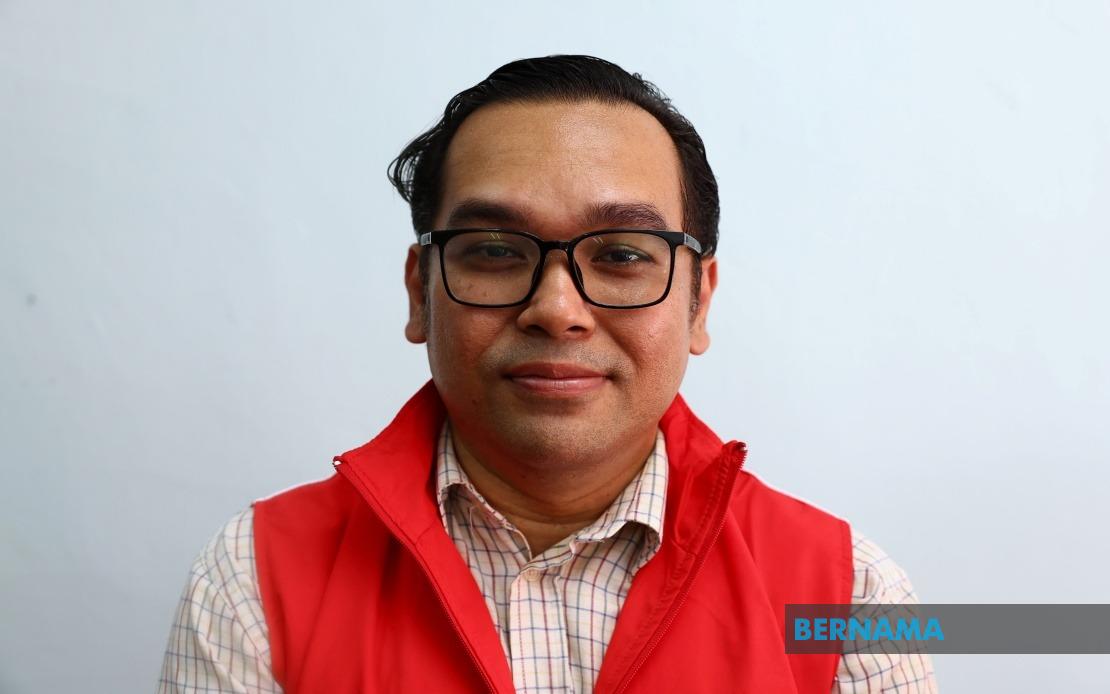
The Johor state election contest in Skudai has attracted its seventh candidate with the emergence of Parti Sosialis Malaysia's sole representative in the 16th electoral battle. Amir Syafiq Ameer Soekre, a 40-year-old private sector sales executive and PSM secretary, has mounted his campaign around the persistent economic struggles facing residents in the constituency, particularly the phenomenon of thousands commuting daily to Singapore for employment at significantly higher wages than available locally.
Amir Syafiq's entry into electoral politics represents a natural progression from two decades of grassroots activism that commenced during his teenage years. His long engagement with community organising, worker advocacy and assistance to vulnerable populations provides the foundation for what he describes as a people-centric approach to governance. Unlike candidates parachuted into constituencies from party hierarchies, his candidacy emerges from sustained presence and direct engagement with constituents' grievances across multiple economic cycles.
The Skudai seat presents particular challenges and contradictions that Amir Syafiq seeks to place centre stage in the campaign narrative. While the constituency forms part of relatively developed Johor Bahru, the phenomenon of residents rising at 3 or 4 am to cross into Singapore underscores a critical failure of local economic policy. This migration of labour across international borders signals that domestic wage structures and cost-of-living arrangements have become fundamentally misaligned, forcing families to absorb substantial commuting costs and time burdens to achieve basic financial sustainability.
His campaign slogan, "Skudai Saksama" or Equitable Skudai, attempts to reframe the election around principles of fair distribution and multiracial economic participation rather than the divisive identitarian politics that often dominate Malaysian electoral contests. The emphasis on harmony among diverse communities paired with commitment to equitable economic distribution suggests a vision in which prosperity reaches beyond concentrated pockets of wealth toward broader-based opportunity creation. This formulation directly challenges the assumption that development inevitably concentrates benefits among politically connected segments.
The education credentials that Amir Syafiq brings to candidacy—a Master's degree in International Business Management from Teesside University in the United Kingdom—situate him as a first-time candidate with formal qualifications in economic matters. This background potentially enables more sophisticated engagement with structural economic issues rather than reliance on slogans or platitudes. His engagement with the private sector provides ground-level understanding of how wage-setting, employment practices and cost pressures operate beyond government rhetoric.
Quality public amenities constitute another pillar of his platform, recognising that living standards extend beyond wages to encompass services that households depend upon. Transport infrastructure, healthcare facilities, educational institutions and recreational spaces all factor into whether residents can achieve decent living standards even with adequate income. The Skudai context, with its cross-border commuter population, highlights particular gaps in transport connectivity and timed coordination with Singapore working hours.
The four-candidate contest featuring Tan Hiang Kee from Barisan Nasional, Kartiyaini Jeyapalan from Pakatan Harapan, and Eugene Chua Meng Chong from Parti Bersama Malaysia creates a fragmented battlefield where messaging clarity becomes decisive. Amir Syafiq's acknowledgement that competing candidates possess their own strengths reflects realistic assessment of a crowded field, though his confidence in grassroots resonance suggests belief that sustained community engagement provides electoral advantage against more establishment-oriented opponents.
The broader Johor electoral context encompasses 172 candidates contesting 56 state seats, making the Skudai race one component of a statewide realignment. PSM's decision to field only a single candidate statewide, in contrast to larger opposition coalitions fielding numerous contenders, reflects both resource constraints and strategic focus. The concentration of socialist left resources on the Skudai seat suggests confidence in local conditions and recognition that Amir Syafiq represents a credible vehicle for advancing the party's socioeconomic agenda in this particular constituency.
For Malaysian readers and Southeast Asian observers, the Skudai campaign illustrates persistent tensions between formal economic growth metrics and household-level financial stress. That workers from a relatively developed state must regularly cross international borders to secure adequate compensation reflects structural economic disparities that transcend simple development indicators. The extent to which voters in Skudai respond to Amir Syafiq's emphasis on wage fairness and living standards will provide meaningful commentary on whether these practical economic grievances can mobilise electoral support or whether other factors—incumbency, party machinery, identity-based appeals—dominate voting behaviour.
The campaign unfolds against a backdrop of Malaysia's broader economic adjustment following pandemic disruptions, inflationary pressures globally, and particular vulnerabilities facing working and lower-middle class households. Skudai's position as a cross-border commuting hub makes it especially sensitive to these pressures, creating particular receptiveness to candidates willing to foreground economic fairness rather than obscure it beneath other political framings. Polling on July 11 will indicate whether grassroots activism and sustained community engagement provide sufficient foundation for electoral breakthrough in a contested field dominated by larger institutional players.

