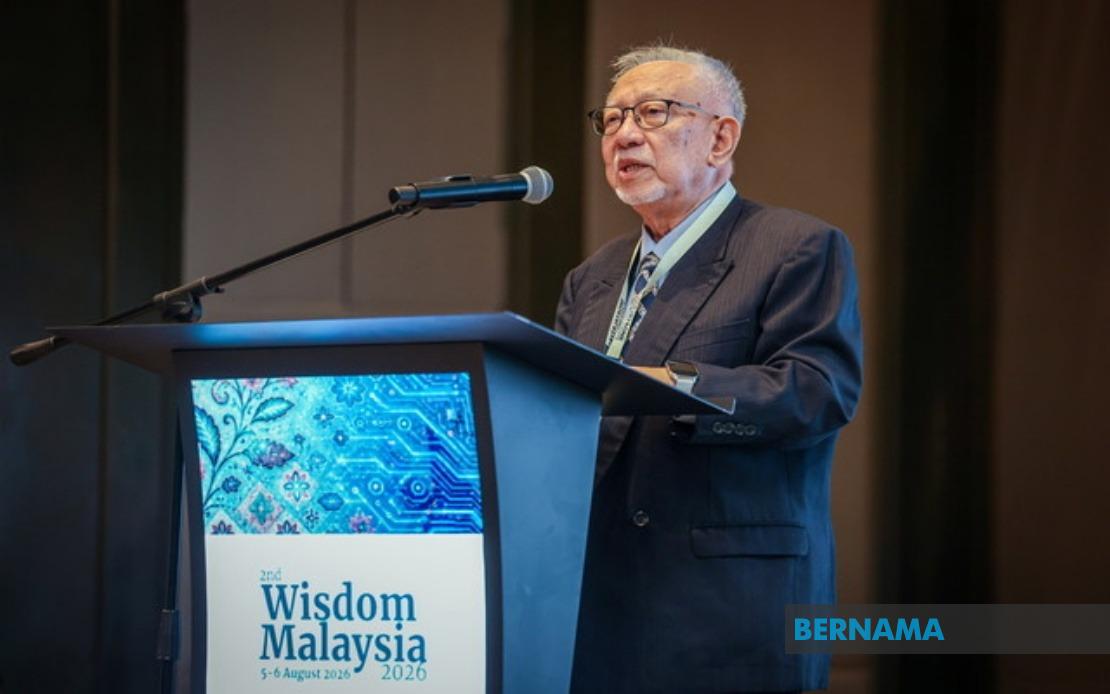
The courage to speak out against wrongdoing within government and corporate institutions remains one of the most critical defences against systemic corruption, but only if those who come forward are genuinely protected from retaliation and intimidation. Datuk Syed Ahmad Idid Syed Abdullah, a former High Court Judge of Malaya and Borneo, articulated this essential principle during his address at the 2nd Wisdom Malaysia Conference 2026 in Kuala Lumpur, cautioning that without robust safeguards for whistleblowers, Malaysia risks allowing a culture of silence to flourish within its institutions.
The former judge's warning strikes at the heart of a persistent challenge in anti-corruption efforts across Southeast Asia. When organisations—whether government agencies or private enterprises—respond to allegations of misconduct by targeting the individuals who expose it rather than investigating the underlying wrongdoing itself, they inadvertently signal to employees that speaking up carries unacceptable personal risk. This dynamic creates a perverse incentive structure wherein corrupt actors operate with impunity while honest officials retreat into cautious silence, knowing that principled action may invite professional ostracism or career destruction.
Syed Ahmad Idid emphasised that the distinction between legitimate whistleblowing and slander must be clearly understood by society at large. Whistleblowing, he argued, represents an act of justice—a deliberate effort to halt corrupt practices and remedy dangerous conditions that threaten organisational and national wellbeing. This framing is particularly relevant in Malaysia, where high-profile corruption cases have demonstrated how institutional silence allowed financial abuse to escalate unchecked for years. When officials or employees expose evidence of such misconduct, they perform a civic duty rather than commit an act of betrayal.
The suppression of whistleblowing carries consequences that extend far beyond the immediate discomfort of those exposed to accountability. By discouraging internal reporting mechanisms, organisations inadvertently guarantee that corruption will continue undetected until external investigators or journalists uncover it, typically resulting in far larger scandals than might have emerged had early warnings been heeded. For Malaysia's development trajectory, this represents a substantial opportunity cost—one that manifests not merely in moral terms but in concrete financial losses that drain resources from essential public goods.
Syed Ahmad Idid pointed to the potential fiscal benefits of successfully recovering illicit proceeds derived from corruption and systemic leakages. The quantum of funds lost annually through graft in Malaysia alone represents a staggering pool of capital that, if redirected toward public investment, could fundamentally transform the nation's infrastructure and human development landscape. He illustrated this possibility with specific examples: recovered corruption proceeds could finance the construction of at least two general hospitals in every Malaysian state, supplemented by twenty to fifty high-quality educational institutions distributed across the country. These are not abstract aspirations but concrete illustrations of how anti-corruption efforts translate into tangible improvements in citizens' lives.
The education system represents a particularly compelling investment case in this context. Malaysia's ambitions to secure sustained economic growth and regional competitiveness depend increasingly on the quality of human capital developed through its schools and tertiary institutions. Syed Ahmad Idid argued that properly resourced education—encompassing superior facilities, comprehensive equipment, and enhanced teacher training—could elevate Malaysia's educational outcomes to genuinely world-class standards. This enhancement would yield downstream benefits extending to national security through better-trained personnel and enhanced athletic performance on the international stage, demonstrating how anti-corruption efforts connect to broad national aspirations.
The former judge's remarks also constitute an implicit critique of institutional attitudes toward corruption that remain insufficiently resolute in Malaysia's governance landscape. By calling on society to reject skewed or lenient interpretations of corrupt practices, Syed Ahmad Idid signalled that cultural complacency regarding financial misconduct represents a significant barrier to progress. This observation carries particular weight given Malaysia's history of high-profile cases where powerful individuals have received sentences perceived as disproportionately light relative to the scale of harm caused. Public confidence in anti-corruption institutions depends substantially on the consistency and appropriateness of consequences imposed on those found guilty.
The venue for Syed Ahmad Idid's remarks—the 2nd Wisdom Malaysia Conference 2026—itself reflects growing recognition within Malaysian society of the need to elevate public discourse around governance and integrity. Organised by Kerjaya One PLT, the conference functions as a space where current and former industry leaders engage with emerging professionals and established decision-makers regarding substantive challenges facing the nation. This intergenerational dialogue proves essential, as younger leaders must understand the institutional and personal costs associated with both corruption and principled resistance to it.
For Malaysian policymakers, Syed Ahmad Idid's intervention underscores the urgent necessity of strengthening legislative and institutional frameworks protecting whistleblowers. Several jurisdictions have advanced considerably in this domain—establishing anonymous reporting channels, restricting retaliation, and providing financial and witness protection—yet Malaysia's frameworks remain comparatively underdeveloped. International experience demonstrates that robust whistleblower protections do not weaken institutions but rather strengthen them by enabling early detection and remediation of misconduct before it metastasises into systemic fraud.
The regional context amplifies these considerations. Across Southeast Asia, corruption remains a persistent drag on development, with the World Bank and other international institutions consistently identifying governance failures as critical obstacles to sustained prosperity. Malaysia's experience in grappling with these challenges—from the 1MDB scandal onwards—positions it to contribute valuable lessons to regional partners regarding both the dangers of institutional capture and the mechanisms through which societies can rebuild integrity and public trust. Syed Ahmad Idid's advocacy for whistleblower protection forms part of this broader reconvening around governance principles.
Ultimately, the question of whether Malaysian institutions will genuinely protect and empower those who expose misconduct will largely determine the nation's trajectory in anti-corruption efforts over the coming decade. Legislation alone proves insufficient; sustained cultural and institutional commitment must accompany legal frameworks. When officials, corporate leaders, and civil society consistently reinforce the principle that honest disclosure of wrongdoing deserves protection rather than punishment, an environment emerges in which corruption becomes increasingly difficult to conceal. This shift represents the difference between anti-corruption efforts that remain perpetually reactive and those that become genuinely preventive in character.

