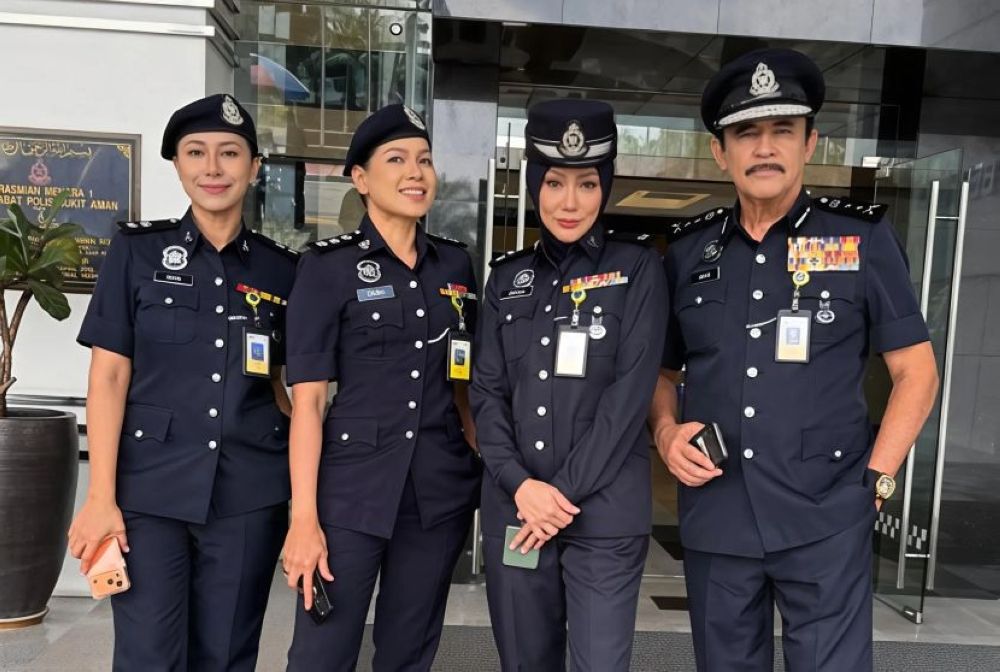
Datuk Yusof Haslam, the producer behind the highly anticipated Gerak Khas 2.0 series, has taken decisive action to excise an actress from the 26-episode police drama in the aftermath of her arrest on drug-related charges. The decision comes just days after the production's premiere, marking a significant setback for the long-running franchise revival that aims to recapture the legacy of the original Gerak Khas series. Yusof's swift response underscores the delicate balance between protecting a production's reputation and managing the practical challenges of post-production adjustments at an advanced stage of filming.
According to Yusof, the production team at Skop Production has already completed roughly 90 percent of the drama's scenes, leaving approximately two weeks of work remaining. The arrested actress was scheduled to appear in episodes 23 and 24 of the series, but all of her remaining scenes have now been cancelled and will not appear in the final product. This decision eliminates the need for significant reshoots or narrative restructuring, as most of her work was already in the can before the incident occurred. The timing of the arrest—occurring so soon after the drama's premiere—creates a particularly delicate situation for a production that has already begun building audience anticipation.
The actress in question was detained following a police raid conducted by officers from the Dang Wangi district police headquarters on July 7. During the operation, she tested positive for three types of drugs, a discovery that precipitated her removal from the project. For Yusof, the incident represents a breach of trust and a failure to maintain the professional standards he has consistently demanded from his cast and crew. He emphasized that prior to the arrest, there had been no previous issues with this actress during her earlier work with Skop Production, making the development particularly surprising and disappointing for the production team.
Yusof has been uncompromising in his stance, making clear that he rejected any appeals or mitigating circumstances from the actress once the decision to remove her had been made. In a notably stern statement, he told her directly that "it's too late," refusing to entertain excuses or pleas for reconsideration. His language reflects a zero-tolerance approach that sends a powerful signal not only to the actress involved but also to other members of the cast and production crew. Yusof views the situation as an educational moment for the entire ensemble, using the consequences as a cautionary tale about the repercussions of poor judgment and the permanence of career-damaging decisions.
The producer had previously issued two explicit warnings to the actress before her arrest, cautioning her against involvement in any activities that could undermine the reputation of the drama and the institution it portrays. These warnings suggest that concerns about her conduct may have existed prior to the July 7 incident, though no public details of those earlier issues have been disclosed. Yusof's repeated emphasis on maintaining integrity and avoiding situations that could tarnish the image of the Royal Malaysia Police indicates that this was not merely a production standard but a matter of institutional respect and professional responsibility.
Beyond the immediate practical implications, Yusof's broader commentary on the incident reveals his philosophy about personal accountability in the entertainment industry. He noted that the situation serves as a sobering reminder that "once you make a mistake, people will forget all the good things you've done before," a statement that underscores how a single serious transgression can erase accumulated professional goodwill. This perspective is particularly relevant in Malaysia's entertainment landscape, where public perception and moral standards remain closely intertwined with career prospects and industry opportunities.
Yusof also contextualized the situation within the challenges of managing large creative teams, acknowledging that even with the best intentions and consistent reminders about maintaining discipline, producers cannot entirely control the personal decisions of cast and crew members outside the production environment. He drew an analogy to parenting, suggesting that despite one's best efforts to instill values, individuals ultimately make their own choices. However, this acknowledgment of limited control did not deter him from implementing firm consequences, demonstrating that producers maintain the prerogative to establish and enforce standards within their own projects.
The Gerak Khas 2.0 revival has assembled a notable cast including Hans Isaac, Erra Fazira, C. Kumaresan, and Salina Saibi, alongside multiple actresses portraying police inspectors, including Tisha Shamsir, Nabiha Aimi, and Emily Elizabeth. The project represents a significant investment in reviving a franchise with deep roots in Malaysian television history and cultural memory. The removal of one cast member, while operationally manageable given the advanced production stage, could nonetheless impact narrative continuity or character dynamics if handled carelessly during post-production editing.
The incident raises broader questions about the intersection of personal conduct and professional responsibility in Malaysia's entertainment industry. As social media and digital platforms amplify public awareness of celebrity actions, producers face mounting pressure to maintain not only artistic quality but also moral alignment with public expectations. The decision to swiftly remove the actress reflects an understanding that in contemporary Malaysia, a production's credibility depends partly on the perceived character and judgment of its participants, particularly when the drama itself centers on law enforcement and institutional integrity.
For other Malaysian productions grappling with similar situations, Yusof's approach offers a clear template: act decisively, communicate the seriousness of the transgression, and refuse to offer rehabilitation or second chances once a line has been crossed. This stance contrasts with some international productions that have attempted to navigate scandals through delayed decision-making or negotiated settlements. The Malaysian context, shaped by stronger public expectations regarding entertainment industry moral standards, may justify this firmer approach. However, it also raises questions about rehabilitation and redemption in professional contexts, particularly for younger artists navigating their careers.
Looking forward, the completion of Gerak Khas 2.0 without the arrested actress will likely proceed smoothly from a technical standpoint, given that 90 percent of filming is finished and her scenes represent a relatively small portion of the total content. From a promotional perspective, however, Yusof and his team will need to carefully manage the narrative surrounding the drama's release, ensuring that public discourse focuses on the revival itself rather than the incident that prompted the cast change. The original Gerak Khas series holds considerable nostalgic value for Malaysian audiences, and the reboot's success will ultimately depend on whether it can honor that legacy while standing on its own merits.

