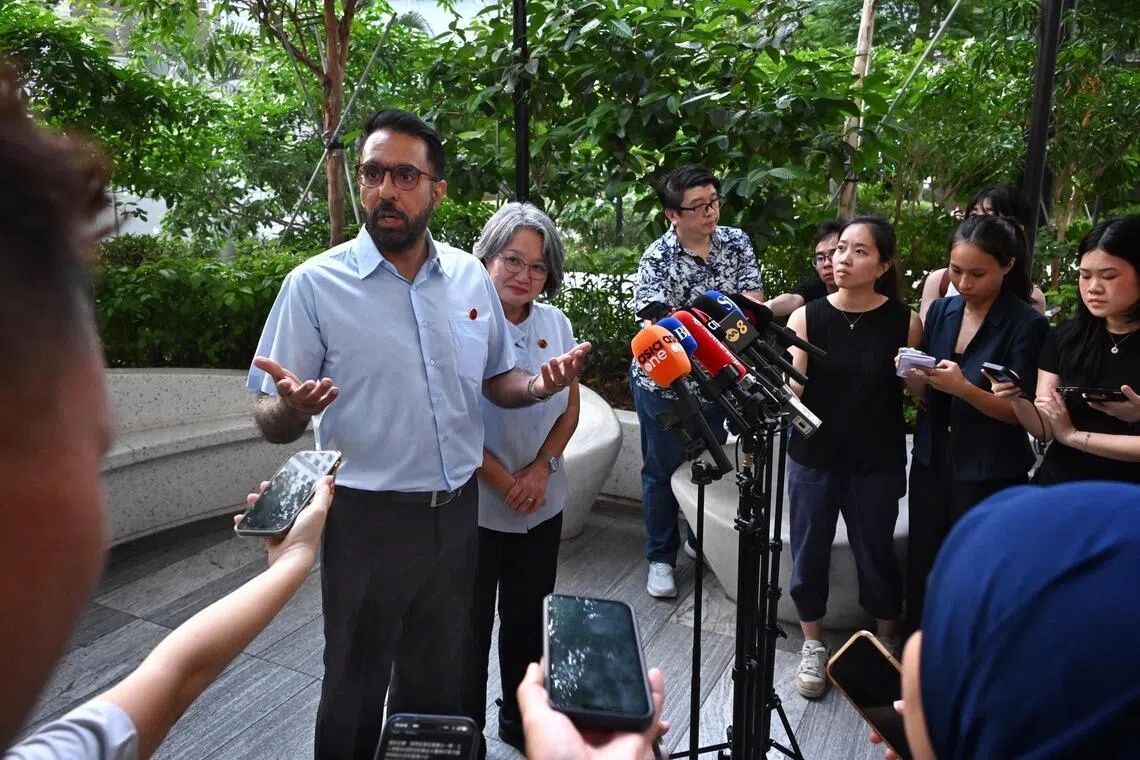
Pritam Singh's grip on the leadership of Singapore's Workers' Party has been substantially reinforced following his unopposed re-election at the party's internal elections held on June 28, an outcome that also marked the failure of a reform faction to dislodge him from power. The party chief faced down a coordinated challenge from unhappy cadres the same day, who had attempted to compel his resignation at a special conference, but their effort fell short when party members voted overwhelmingly to retain his leadership. This decisive result promises to provide Singh with renewed authority to guide the country's largest opposition party through a period of considerable turbulence.
The smooth passage of Singh's re-election represents a turning point for the Workers' Party, which has endured several years of reputational strain stemming from the parliamentary deception orchestrated by former Sengkang GRC MP Raeesah Khan in 2021. Political observers have indicated that Singh's survival of this internal challenge significantly strengthens his hand as leader and suggests the party membership has moved beyond the crisis that nearly toppled him. By demonstrating substantial backing from party members, Singh can now project unified leadership across the organisation as it seeks to rebuild public trust and prepare for future electoral contests.
Following his re-election, Singh addressed supporters and journalists, emphasising the importance of party cohesion and disciplined political conduct. He stressed that the Workers' Party must operate with rationality and responsibility while serving the interests of ordinary Singaporeans, framing the internal vote as evidence that the party had successfully navigated its internal divisions. When asked about the exact voting figures, Singh declined to provide precise numbers, instead characterising the result as demonstrating substantial party unity despite the preceding tensions. This measured response reflected the careful political messaging required to move past the conflict without reopening wounds.
The ballot determining Singh's fate was conducted in secret among the party's inner circle, comprising slightly more than 100 senior cadres and office-bearers. According to Aljunied GRC MP Gerald Giam, who chaired the special conference, Singh secured support exceeding a supermajority threshold, with party sources indicating the figure reached approximately 80 per cent. This substantial margin provided Singh with clear legitimacy to continue leading the party, though the existence of a significant minority opposing his continued tenure indicated lingering concerns among some quarters of the membership. Giam characterised the discussion preceding the ballot as both robust and civil, with cadres afforded the opportunity to voice concerns and Singh providing accountability on matters they raised.
The internal challenge had been precipitated by a December 2025 letter signed by 25 dissident cadres, who harboured concerns about Singh's legal difficulties and his handling of the Khan affair. The special conference agenda encompassed three substantive matters: requiring Singh to account for his conduct leading to his court conviction, demanding his resignation, and providing for a secret ballot on his leadership if he declined to step down voluntarily. This structured approach enabled the dissidents to make their case systematically, though their expectations for forcing a change proved overly optimistic given the eventual voting outcome. The fact that such challenges can be mounted within the party structure, albeit unsuccessfully, underscores the Workers' Party's internal democratic practices, even during periods of serious institutional stress.
Singh's legal troubles, which catalysed the internal rebellion, stem from his conviction for misleading a parliamentary committee regarding his handling of Khan's dishonest statements to Parliament. The High Court upheld this conviction in December 2025, and Singh was subsequently declared unsuitable as Leader of the Opposition by Parliament itself in January 2026, a designation that carried significant political consequences. Prime Minister Lawrence Wong then removed Singh from the position, though he invited the Workers' Party to nominate an alternative MP for the post—an offer the party rejected on the grounds that the role should belong to the opposition's largest party leader. This standoff between the government and the opposition continued to reverberate through the party as internal critics questioned whether Singh could effectively represent parliamentary interests under such circumstances.
In the weeks before the vote, considerable uncertainty surrounded the stance of Low Thia Khiah, Singh's predecessor as party chief, whose continued support would be crucial to Singh's survival. Rumours circulated within political circles that Low might withhold endorsement or even back a rival candidate, creating anxiety among Singh's supporters. However, on the morning of June 28, Low appeared before media representatives and explicitly reaffirmed his backing for Singh, effectively closing off any possibility of a viable alternative challenger emerging from within the party hierarchy. This public declaration of support from the party's elder statesman provided important psychological reinforcement at a critical juncture and signalled to broader party membership that the transition of leadership from Low to Singh retained legitimacy despite subsequent difficulties.
Following the special cadres conference, the party proceeded with its regular biennial internal elections that afternoon, selecting members of its central executive committee, the party's supreme decision-making body. Sylvia Lim was returned to her position as party chair, a post she has continuously occupied since 2003, demonstrating the stability and continuity maintained at the highest levels of party leadership. The committee elected 12 additional members to the CEC, with most drawn from the incumbent body, though four members—Low, former Aljunied GRC MP Faisal Manap, long-serving member Tan Kong Soon, and new addition Harpreet Singh—do not currently hold parliamentary seats. Harpreet Singh, a senior counsel who contested the May 2025 general election as part of the party's Punggol GRC team, represented the sole fresh appointment, suggesting the party opted for relative stability in its leadership composition.
Harpreet Singh's entry into the CEC marked a generational transition within party leadership, bringing legal expertise and fresh perspective to the committee's deliberations. In a social media statement released after the election, Singh characterised the party membership's decision to retain Pritam Singh as reflecting considered judgment rather than unthinking loyalty. He highlighted Singh's track record of tireless service, composure under political pressure, and measured decision-making that had advanced the party's parliamentary standing, arguing that such qualities justified confidence in his continued leadership. Singh explicitly acknowledged that the High Court's judgment regarding Pritam Singh's conviction remained valid and worthy of respect, but contended that assessing an individual's fitness for leadership requires evaluating their entire history and character trajectory.
The internal election process provided the Workers' Party with opportunity to demonstrate institutional resilience and democratic legitimacy at a moment when external critics questioned the party's capacity to govern itself responsibly. The comprehensive nature of the proceedings—encompassing both the special challenge conference and the regular elections—allowed party members to express concerns and render judgment on their leadership while maintaining procedural propriety. For Malaysian and broader Southeast Asian observers, the Workers' Party's handling of this episode offers insights into how opposition parties navigate crises of institutional credibility while maintaining internal cohesion. The Workers' Party's capacity to absorb internal dissent, permit legitimate challenges, and ultimately sustain its leadership structure demonstrates organisational maturity, though questions persist regarding Singh's ability to operate effectively as opposition leader given his parliamentary restrictions.
Looking forward, Singh's reinforced mandate provides him with political capital to chart a fresh course for the party beyond the Khan scandal. However, the substantial minority voting against his continued leadership—representing roughly 20 per cent of the inner circle—indicates ongoing reservations that cannot be entirely dismissed. The party's decision to decline the government's invitation to nominate an alternative Leader of the Opposition suggests the Workers' Party intends to maintain Singh's symbolic leadership while potentially managing his parliamentary role more carefully. Singh's statement about moving forward with rank-closing suggests awareness that internal divisions must be healed to present a unified opposition front in future electoral contests. The coming months will reveal whether this internal victory translates into renewed public confidence and enhanced parliamentary effectiveness for Singapore's largest opposition force.

