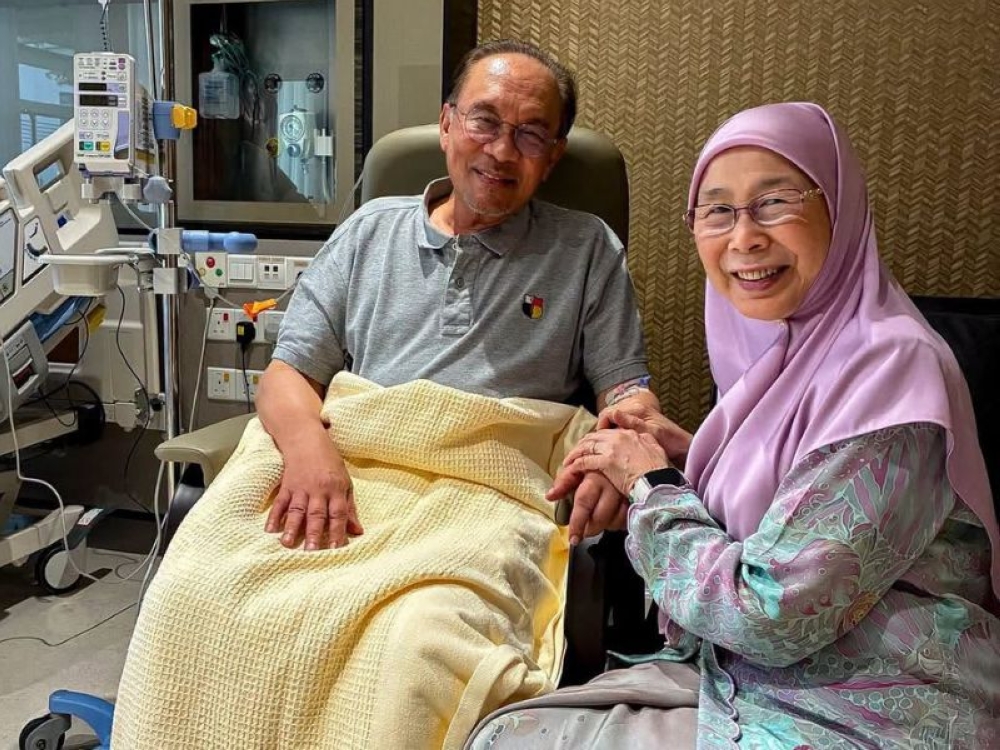
Prime Minister Datuk Seri Anwar Ibrahim is poised to return home today after undergoing a surgical procedure to address a hernia condition, according to a statement from his wife. The confirmation comes as the Prime Minister completes his recovery period following the operation, which was conducted at a hospital facility in the capital.
The timing of the Prime Minister's discharge marks an important milestone in his health management, allowing him to transition back to his residence while continuing his recuperation under medical supervision. His wife's announcement provides reassurance to the Malaysian public and the government administration regarding the head of state's health status and expected return to his regular responsibilities.
The hernia procedure represents a routine surgical intervention that many individuals undergo across Malaysia and the broader region. While such operations are generally considered standard medical practice, the public health considerations surrounding a sitting prime minister's medical leave highlight the importance of transparent communication with citizens about their nation's leadership.
The Prime Minister's recovery comes at a significant time for Malaysia's governance framework. During his absence, the government machinery has continued its functions, demonstrating the resilience of institutional structures in place to manage such circumstances. The Deputy Prime Minister and senior cabinet members have ensured continuity in critical decision-making processes throughout this period.
From a regional perspective, the recovery and discharge of a sitting head of government reflects the broader healthcare standards available within Malaysia's medical infrastructure. The successful management of the Prime Minister's condition underscores the capacity of local medical institutions to handle complex procedures with confidence and expertise comparable to international standards.
The public health dimension of the Prime Minister's hospitalization extends beyond his personal wellbeing to encompass broader considerations about leadership succession planning and institutional stability. Malaysia's governance structure has proven its capacity to function effectively during periods when the chief executive requires medical attention, a reassuring development for both domestic and international observers.
As the Prime Minister prepares for discharge, attention will inevitably turn toward the timeline for his return to full operational capacity at the Prime Minister's Office. Medical guidance will likely recommend a graduated resumption of duties, beginning with less demanding administrative tasks before transitioning to his full schedule of engagements, ministerial meetings, and international obligations.
The hernia condition, while requiring surgical intervention, represents a manageable health issue that does not typically result in prolonged complications or extended recovery periods when treated promptly. The Prime Minister's relatively swift progression toward discharge suggests that the surgical procedure proceeded as anticipated, with no complications reported during his hospitalization.
For Malaysian civil service officials and the broader bureaucratic apparatus, the Prime Minister's expected return to official duties signals a return to normal operational protocols. Government ministries and departments have been maintaining heightened coordination during his absence, ensuring that pending policy initiatives and administrative decisions remain on track for implementation upon his full resumption of authority.
The Prime Minister's wife has been instrumental in maintaining regular communication with the public regarding his medical situation, fulfilling an important social function by providing transparency during a period of potential uncertainty. Her updates have helped sustain public confidence in the institutional structures managing the nation's governance during this transitional phase.
Regionally, Malaysia's handling of this high-level medical situation contributes to perceptions of political stability within Southeast Asia. International investors and diplomatic observers often assess the resilience of governance frameworks during unexpected circumstances, and the smooth management of the Prime Minister's health issue demonstrates institutional maturity and preparedness.
Moving forward, the Prime Minister's discharge represents not merely a personal health milestone but also a vindication of Malaysia's healthcare system's capacity to provide world-class treatment to its senior leadership. The successful outcome reinforces public confidence in the institutions responsible for maintaining the health and wellbeing of those who guide the nation's trajectory during these complex geopolitical times.

