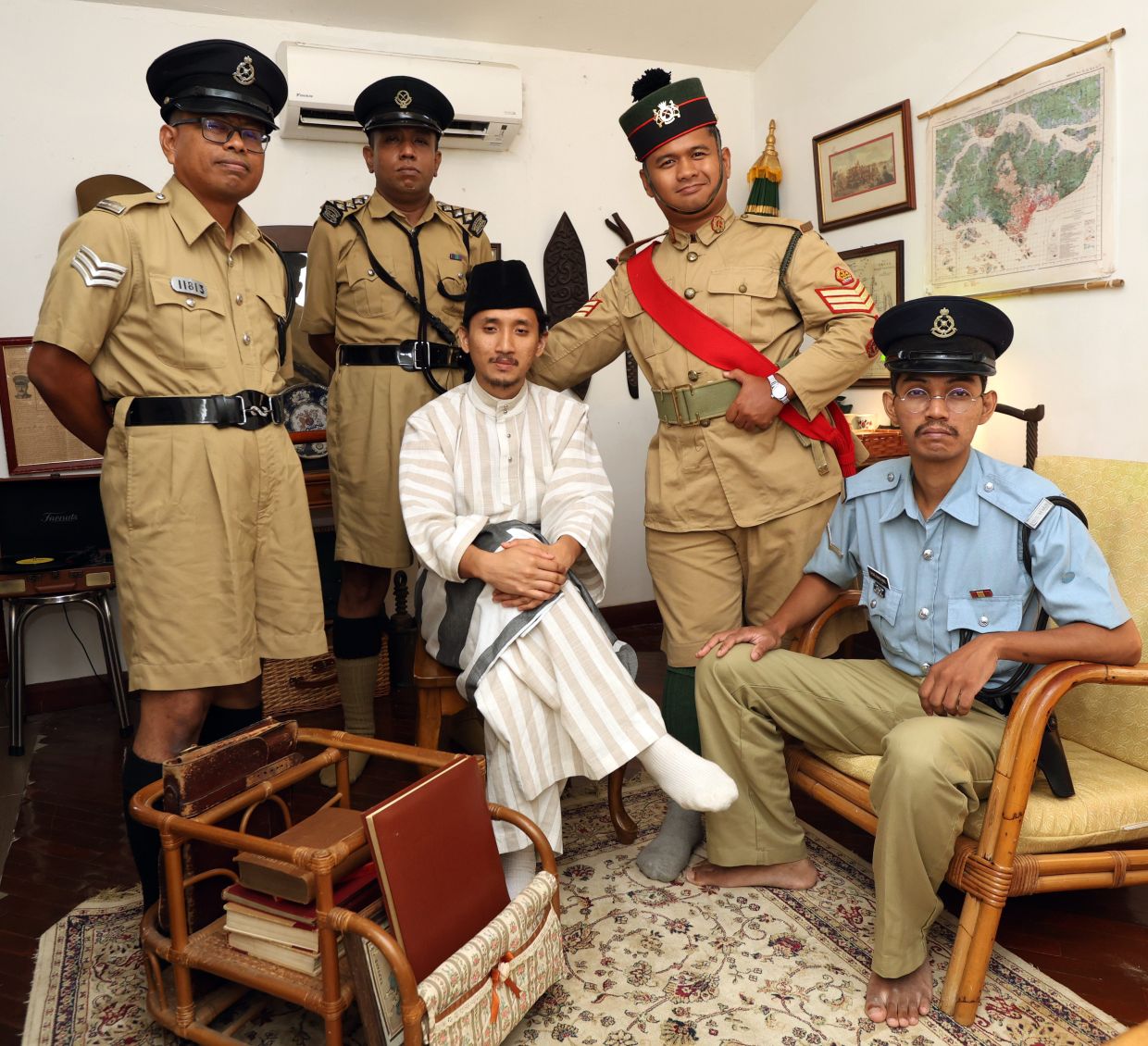
Weekends have taken on fresh meaning for members of Persatuan Reka Ulang Sejarah (PRUS), a Malaysian historical society where the past materialises not in lecture halls but in carefully curated gatherings filled with period instruments and the authentic trappings of bygone eras. Dressed in meticulously researched military uniforms spanning Malaysia's modern history, these enthusiasts have transformed what began as a casual hobby into a structured mission: to make history tangible and meaningful for Malaysians who might otherwise encounter their nation's past only through monochrome textbook illustrations and detached classroom narratives.
The organisation's journey reflects a broader shift in how heritage communities engage with national memory. What started in the early 2010s as an informal congregation of vintage uniform collectors at events hosted by the Port Dickson Army Museum—held at the decommissioned Royal Malaysian Air Force Base in Sungai Besi, Kuala Lumpur—evolved into something more substantial. Operating initially under the banner "We Are Re-enactors", the group formalised its structure by registering as PRUS in 2023, granting legitimacy to organise exhibitions at educational institutions and cultural venues across the country. This transition from hobbyist collectors to officially recognised historical educators marks a significant moment in Malaysia's approach to preserving and presenting military heritage to contemporary audiences.
Chairman Abdul Hakim Abdul Rani articulates the core motivation driving PRUS's work: addressing widespread confusion surrounding historical military uniforms, particularly from an era when photography existed only in black and white and various forces adopted superficially similar colour schemes. The solution, he recognised, lay not in producing more academic papers but in demonstrating history through visual and embodied experience. "We wanted to share the knowledge we have and spread awareness on this subject," he explains, describing how formal registration enabled the group to conduct structured educational programmes. His background as a tour guide informs this pedagogical approach—he understands that visitors and students absorb information differently when they can observe, question, and engage directly with knowledgeable practitioners dressed in authentic period attire.
What distinguishes PRUS from casual costume enthusiasts is their insistence on historical precision extending far beyond fabric and buttons. Members invest considerable effort understanding the social choreography of different military eras—the posture, gait, verbal protocols, and deportment that characterised soldiers during specific periods. This attention to embodied detail reflects a philosophy that historical accuracy matters not for pedantic reasons but because it shapes how audiences comprehend and retain information about the past. When a PRUS member moves, speaks, and carries themselves as a soldier from a particular decade would have done, that authenticity creates a cognitive bridge between observer and history that photographs or descriptions cannot replicate.
The commitment to rigorous preparation became evident during a two-day jamboree PRUS organised in July, where members underwent systematic training in period-appropriate marching techniques, map reading, navigation protocols, and basic combat manoeuvres drawn directly from pre-Independence military manuals. Abdul Hakim, leveraging his previous service in the Territorial Army (Askar Wataniah), personally directed these sessions, ensuring that reconstructed military practices remained historically faithful. Notably, the group adapted weapons protocols by substituting traditional implements with wooden sticks, prioritising safety compliance while maintaining the essential educational value of understanding how soldiers of that era physically operated within tactical frameworks. This pragmatic approach demonstrates PRUS's ability to balance authentic historical representation with contemporary practical and legal requirements.
Beyond grassroots educational initiatives, PRUS has discovered a secondary platform for its work through collaboration with film and television production companies. Vice chairman Mohd Fadzreeq Mokti emphasises that such work transcends conventional extras casting; PRUS members function as historical consultants ensuring visual fidelity across entire productions. This advisory capacity serves dual purposes: it safeguards period accuracy within media that reaches broad audiences, and it legitimises the group's expertise within professional creative industries. When audiences watching a locally produced historical drama encounter uniformed figures authentically dressed and positioned according to documented standards, they absorb information subliminally, reinforcing accurate historical imagery without formal instruction.
The timing of PRUS's most intensive public activities reflects strategic thinking about national engagement rhythms. During August and September, when National Month commemorations and Malaysia Day celebrations dominate the cultural calendar, PRUS amplifies its exhibition schedule and public appearances. This seasonal focus acknowledges that Malaysians demonstrate heightened receptiveness to heritage content during patriotic periods, creating optimal conditions for introducing younger people to historical material. By positioning themselves at these high-traffic cultural moments, PRUS maximises the likelihood of reaching students and families who might otherwise bypass museums or historical venues during ordinary months.
Mohd Fadzreeq, who combines his PRUS responsibilities with a teaching career, provides valuable insight into how embodied history affects student engagement. He has observed that when he appears at his own school in full historical uniform—an arrangement approved by school administration—his students respond with markedly elevated enthusiasm and curiosity. Children repeatedly ask when he will wear the uniform again, indicating that the visual and personal connection transforms abstract historical concepts into memorable experiences. His observation that many young Malaysians lack familiarity with significant historical figures and events suggests a genuine gap in conventional educational delivery, one that experiential engagement through re-enactment may partially address.
The accessibility argument that Mohd Fadzreeq articulates carries particular resonance in the Malaysian context, where not all students have regular access to museums or opportunities for hands-on historical learning. His characterisation of PRUS members as "walking museums" captures the democratising potential of their work—they transport history to schools and community spaces where young people already gather, eliminating barriers of distance, admission fees, and transportation logistics. When children encounter someone embodying a historical period, they transcend the passive absorption of textbook information and enter into reciprocal dialogue, asking questions that reflect their own curiosity and concerns.
The preparation underlying these public engagements remains largely invisible to audiences, yet it constitutes the foundation of PRUS's credibility. Members dedicate substantial personal time studying archival materials, period documents, and historical manuals, treating their uniforms not as costumes but as tools for scholarly communication. This intellectual labour distinguishes PRUS from entertainment-oriented re-enactment communities and positions them within Malaysia's broader heritage preservation ecosystem. Their work acknowledges a fundamental truth about historical literacy: knowing facts differs substantially from understanding how people actually lived, moved, and oriented themselves within historical moments.
As PRUS consolidates its institutional presence through exhibitions, school partnerships, and media collaborations, it raises important questions about how Malaysia cultivates historical consciousness among younger generations. The group's success suggests that conventional educational approaches—textbooks, classroom lectures, occasional museum visits—may leave young Malaysians insufficiently connected to their national heritage. By translating dusty archives and faded photographs into embodied, interactive experiences, PRUS demonstrates that historical engagement need not feel remote or irrelevant to contemporary life. Instead, history becomes something worn, inhabited, and continuously reinterpreted by people who believe their nation's past deserves to be understood with accuracy, respect, and genuine pedagogical intent.

