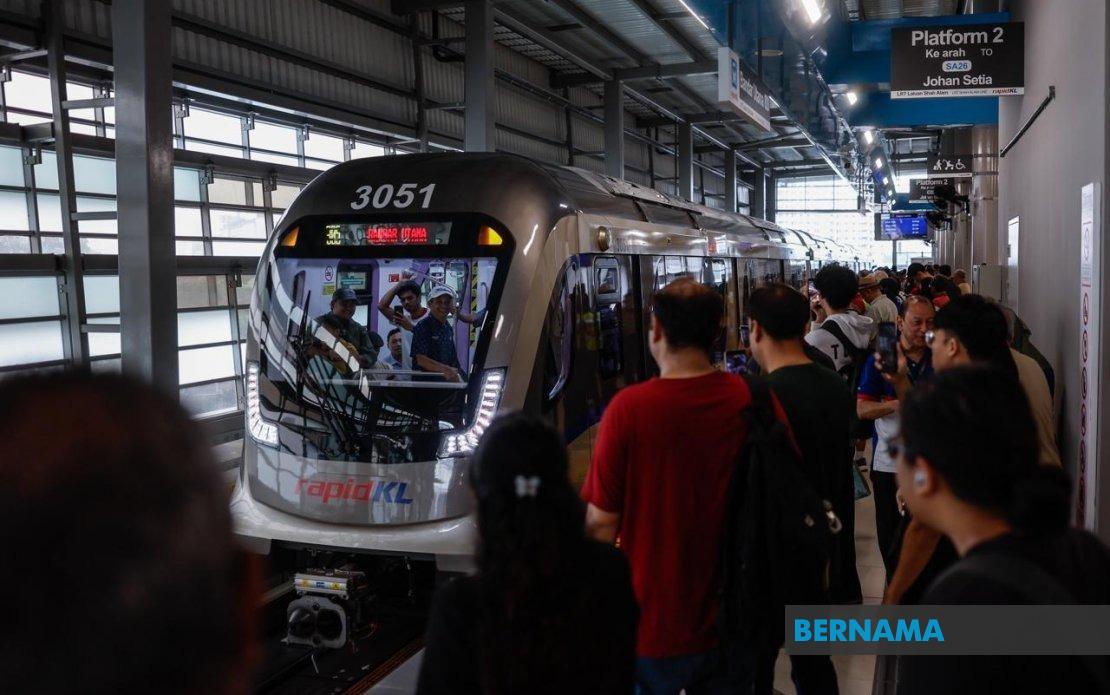
Prasarana Malaysia Berhad opened the Light Rail Transit 3 Shah Alam Line for public use today, with the operator projecting between 5,000 and 10,000 commuters will board trains on this inaugural day of service. The company anticipates this initial traffic will represent only the beginning of a gradual adoption curve, with the operator targeting 67,000 daily passengers within the first year as users integrate the new route into their regular commuting patterns. The growth trajectory will depend significantly on how quickly Kuala Lumpur's commuting public becomes familiar with the line's routing, station locations, and integration points with the existing rapid transit network.
Amir Hamdan, Prasarana's president and chief executive officer, confirmed that operations commenced at 6 am with largely positive reception from early adopters. Travellers at stations along the line shared enthusiastic feedback through social media and in-person interactions, with many highlighting the convenience of avoiding vehicle congestion and enjoying a more comfortable journey to work. This sentiment reflects a broader pattern in Southeast Asian cities where expanding public transport capacity directly addresses growing urban congestion and the aspiration for alternatives to private car dependency.
The Shah Alam Line represents a significant expansion of Malaysia's rapid transit infrastructure, particularly for the northern Klang Valley corridor. Unlike established lines that have matured over decades, new rail services typically experience a predictable ramp-up period where initial curiosity gives way to habitual usage. Amir acknowledged this reality, noting that Prasarana will carefully monitor how commuting patterns develop over coming weeks and months rather than expecting the line to immediately operate at full capacity from day one.
Operational performance on the opening day met expectations, with trains maintaining approximately eight-minute intervals during peak travel hours. All station facilities, including automated ticketing systems, entry gates, and passenger processing areas, functioned without reported disruptions. This smooth technical execution is particularly important for public confidence in a new transport corridor, as mechanical problems or service delays on opening day can create negative perceptions that persist long after the issues are resolved.
Key interchange stations will require particular attention as the line matures. Glenmarie 2 station provides connectivity with the Kelana Jaya Line, while Bandar Utama offers transfers to the Kajang Line, positioning these nodes as critical junctions within the wider metropolitan transit system. The seamless integration of the new Shah Alam Line with existing routes will substantially influence its ultimate success, as commuters value networks that facilitate convenient multi-line journeys rather than requiring lengthy walking connections or additional transfers.
Prasarana's immediate focus centres on user experience and comfort rather than maximising capacity. The operator is systematically assessing how passengers interact with automated systems, navigate stations, and manage fare payment and entry procedures. This measured approach allows operational teams to identify friction points that might deter regular usage, such as confusing wayfinding or bottlenecks at peak times. Continuous improvement based on real-world performance data often proves more effective than trying to anticipate all operational challenges before launch.
The operator has planned flexibility into its service structure to accommodate demand growth. Should ridership metrics indicate need, Prasarana can increase train frequency beyond the current eight-minute peak-hour intervals or position additional trains along specific segments during busy periods. This scalability is essential for a new line serving a developing corridor where demand may surge faster than initial projections if neighbouring developments or employment centres attract users more quickly than expected.
Prime Minister Datuk Seri Anwar Ibrahim's announcement of complimentary fares for one month represents a strategic incentive to accelerate adoption and generate initial ridership data. Running through July 31, the free-fare promotion extends to feeder bus services operated by Prasarana that connect to LRT3 stations, effectively providing integrated no-cost mobility for trial users. This approach simultaneously removes the financial barrier to initial adoption, generates substantial opening-month data on travel patterns, and builds public awareness of the new service across a broader demographic.
While some commentators questioned whether women-only coaches might be necessary given safety concerns in crowded transit environments, Prasarana indicated no immediate plans to introduce such dedicated facilities. The operator will instead base any future decisions regarding specialised coaches on analysis of passenger demographics, feedback, and actual ridership patterns once normal operations stabilise. This data-driven approach aligns with contemporary practice where infrastructure decisions follow evidence rather than assumptions about user needs.
The Shah Alam Line's success will have implications beyond Selangor's borders. Regional cities across Southeast Asia monitor developments in Malaysian urban transport, as countries like Thailand, Indonesia, and the Philippines expand their own rapid transit networks. A well-executed new line that efficiently integrates with existing infrastructure and achieves sustainable ridership growth provides a valuable model for how countries can develop transport-oriented development corridors that reduce urban congestion and improve air quality.
Looking ahead, Prasarana faces the common challenge facing all new transit lines: converting trial riders into habitual commuters. The free-fare month provides valuable operational insight, but sustainable success requires that commuters perceive genuine time and cost advantages compared to private vehicles. If neighbouring commercial and residential developments fail to materialise or employment concentration remains weak along the corridor, even a technically excellent service may struggle to achieve its 67,000-passenger daily target. The coming months will reveal whether the Shah Alam Line becomes a catalyst for urban development or remains underutilised despite its infrastructure quality.

