President Prabowo Subianto's signature free nutritious meals scheme has experienced yet another leadership crisis, this time with the recent appointment of National Nutrition Agency (BGN) chief Nanik Sudaryati Deyang stepping aside after just two months in the role. Her departure on Wednesday compounds an already lengthening list of operational and administrative headaches that have plagued what was meant to be a flagship policy achievement for Prabowo's administration, raising fresh questions about institutional readiness to deliver such an ambitious social programme.
Nanik's exit came with a candid personal revelation. In public statements on Facebook, she disclosed that medical examinations had revealed a blockage in one of her heart's arteries, a condition she attributed at least in part to the psychological strain of overseeing the agency's enormous budget envelope. The responsibility of managing such substantial public funds, she suggested, had become psychologically untenable, describing the experience as standing "on the edge of a steep cliff" where even minor administrative missteps could prove catastrophic. Her characterization of budget management as "acute trauma" offers an unusual window into the administrative burden that the programme's scale has imposed on senior officials tasked with its execution.
The timing of Nanik's departure is particularly significant given her recent appointment history. She had been promoted to the top BGN position less than two months earlier as part of an attempt to restore institutional credibility following a corruption scandal that engulfed her predecessor. Dadan Hindayana, the former agency head, was arrested in early June alongside two deputies as authorities launched an investigation into alleged procurement fraud and financial irregularities within the multitrillion-rupiah programme. Before her elevation to the chief position, Nanik had served as Dadan's deputy, positioning her as something of an insider tasked with cleaning up internal governance failures.
What makes Nanik's stress particularly telling is her accounts of the hypervigilance her role demanded. She disclosed that her anxiety around fiscal responsibility led her to refuse signing off on decisions independently, instead questioning policies repeatedly and insisting on extensive review processes. Such caution, though potentially prudent given the programme's chequered recent history, speaks to the lack of institutional confidence and established protocols that might normally buffer senior administrators from such psychological strain. The need for obsessive verification at senior levels suggests systemic gaps in documentation, delegation, and trust lower down the organizational hierarchy.
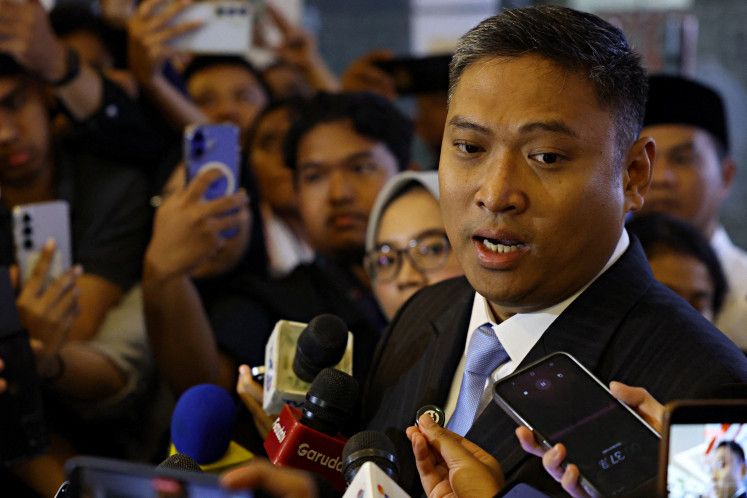
Within hours of accepting Nanik's resignation, Prabowo made his move, appointing Deputy Agriculture Minister Sudaryono as her successor. Sudaryono brings a different profile to the role: he is a politician from Prabowo's own Gerindra Party and previously served as an aide to the president during the 2010s. The appointment of a loyalist politician, rather than a technocrat or administrative specialist, signals a potential shift in approach. Sudaryono acknowledged the governance deficits plainly during his inauguration ceremony at the State Palace in Jakarta, pledging to move the agency toward greater transparency by digitalizing manual processes and eliminating "behind closed doors" decision-making that had apparently characterized earlier operations.
State Secretary Prasetyo Hadi contextualized Sudaryono's appointment by noting that comprehensive institutional reforms had been instructed by the president in response to the corruption investigation. According to official reasoning, Sudaryono was specifically chosen because of his involvement in developing the free meals programme during its initial design stages, giving him both historical knowledge of the initiative's intentions and, presumably, political backing to implement whatever changes prove necessary. This framing attempts to present the appointment as a continuation of institutional improvement rather than a retreat into patronage politics.
The troubles afflicting the free meals initiative extend well beyond leadership turnover and governance irregularities. Since its rollout in early 2025, the programme has struggled with persistent operational challenges that have generated public concern and media scrutiny. Most notably, the scheme has been beset by repeated mass poisoning incidents across the country, alongside broader complaints about food quality and safety standards. These practical failures have undermined public confidence in the programme even as officials struggle to establish proper administrative structures and accountability mechanisms.
In response to mounting quality concerns, Nanik had imposed a moratorium on opening new meal preparation kitchens, while directing that nearly 28,000 existing facilities nationwide undergo comprehensive review. Though administratively sensible, this move triggered significant blowback from thousands of prospective kitchen operators who had made substantial financial investments in anticipation of programme expansion. The pause effectively froze expansion plans that had formed part of the political narrative around the initiative's reach and impact.
The programme's financial trajectory has also shifted markedly. The BGN announced on Tuesday that the provisional 2026 budget allocation had been reduced significantly to Rp229 trillion (approximately US$12.8 billion) from the previously planned Rp268 trillion. More strikingly, beneficiary targets have been scaled back substantially: the agency now aims to serve 62.7 million people in 2026, down sharply from an initial allocation that had contemplated reaching 82.9 million beneficiaries including schoolchildren, toddlers, and pregnant women. BGN deputy chief Agustina Arumsari stated plainly that the administration was prioritizing service quality improvements over numerical expansion, acknowledging implicitly that the original scope had proven unmanageable.
The narrowing of ambitions, while perhaps prudent operationally, underscores a fundamental tension in the programme's conception and execution. Political analyst Wasisto Raharjo Jati has characterized the succession of crises as reflecting deeper "shortcomings in its planning," arguing that despite its elevated political status as a Prabowo campaign commitment, the free meals initiative has been "driven more by political ambition than technocratic preparation." This assessment cuts to the heart of the challenge: the programme was launched with considerable fanfare as a signature presidential commitment before institutional mechanisms for delivery had been adequately tested or refined.
For Southeast Asian observers, Indonesia's experience offers instructive lessons about the difficulties of scaling complex welfare programmes rapidly across a vast, geographically dispersed archipelago. The contrast between political intention and administrative capacity has proven stark. What began as an ambitious pledge to enhance nutrition security for tens of millions has collided repeatedly with the practical realities of procurement oversight, food safety management, and financial accountability across thousands of distributed food preparation sites. The ministerial reshuffles and budget recalibrations now underway represent an acknowledgment that ambition outpaced capability, though whether Sudaryono's appointment and promised reforms will prove sufficient to resolve the underlying institutional challenges remains an open question.

