President Prabowo Subianto entered office with a sweeping mandate to combat corruption, publicly exhorting government officials to reform themselves or face prosecution. Yet barely into his tenure, the anti-graft crusade confronts a defining challenge: whether Indonesia's law-enforcement institutions can credibly investigate one of their highest-ranking peers without succumbing to institutional self-protection.
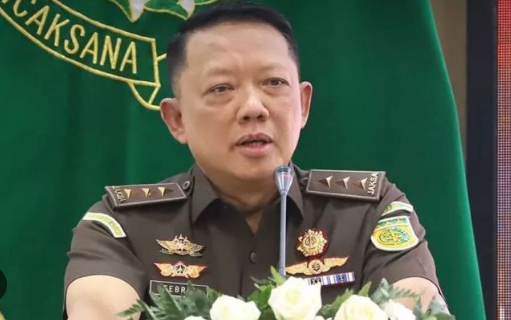
At the centre of this dilemma stands Febrie Adriansyah, until recently the deputy attorney general overseeing special crimes investigations. Police seized US$26 million in cash and gold bars from a residence he owns, formally naming him a suspect in cases involving suspected money laundering. Despite the magnitude of the seizure and subsequent arrest of another suspect in the case, Febrie has not been detained, sparking intense debate among legal scholars and lawmakers about whether procedural fairness and investigative integrity are being compromised.
The most contentious element is not Febrie's alleged conduct itself, but the police decision to transfer the investigation to the Attorney General's Office—the very institution where Febrie spent his career and where his influential allies remain embedded. This procedural choice has alarmed constitutional experts. Mahfud MD, the former Constitutional Court chief justice, has questioned whether any legal basis exists in Indonesia's criminal procedure code for such a transfer from an active police investigation. He warns the move creates vulnerability to pretrial challenges that could ultimately unravel the case entirely. Other jurists have echoed concerns that the transfer amounts to an unprecedented jurisdictional shift lacking proper statutory foundation.
Zaenur Rohman, an anti-corruption specialist at Gadjah Mada University, characterises the transfer as a "political settlement" designed to ease tensions between competing law-enforcement agencies rather than a decision grounded in constitutional principle. This observation cuts to the heart of Indonesia's institutional fragmentation. The country's criminal investigation apparatus remains balkanised among the National Police, the Attorney General's Office, and the Corruption Eradication Commission, each wielding overlapping mandates and competing for influence over high-profile cases. When an investigation involves one agency's senior official, the question of impartiality becomes virtually impossible to answer convincingly.
The sensitivity is amplified by Febrie's extraordinary influence. During his tenure as head of the Attorney General's Office's Special Crimes Division, he directed investigations into Indonesia's largest state enterprises, including Pertamina and Garuda Indonesia. He supervised probes into Prabowo's signature free-meals programme, a cornerstone of the president's anti-poverty agenda, as well as inquiries involving the former Education Minister Nadiem Makarim. Few prosecutors in modern Indonesia wielded comparable authority over politically consequential investigations. Allowing his peers in the same institution to lead his prosecution creates an inherent conflict of interest that no amount of procedural coordination can entirely resolve.
Parliamentary concern has crystallised into action. Lawmakers have formed a working group specifically to monitor the case's progression, and some have explicitly called on the Attorney General's Office to establish an independent investigative team insulated from routine institutional pressures. These calls reflect deep scepticism that a prosecutors' office can impartially investigate one of its own former leaders. Coordinating Minister Yusril Ihza Mahendra has acknowledged this anxiety, defending the transfer as procedurally efficient while conceding public fears about "oranges eating oranges"—a vernacular Indonesian expression capturing the fear that institutions protect their own. Yusril disclosed that Prabowo personally convened the police chief and attorney general to direct how the case transfer would proceed, suggesting high-level executive involvement in a matter ostensibly subject to independent law-enforcement discretion.
The broader context reveals deeper institutional fragmentation within Indonesia's law-enforcement architecture. Recent legal revisions in 2025 have redrawn lines of authority and protection. A revision to military law now permits active-duty military officers to serve in the Attorney General's Office without first retiring—a change that fundamentally alters civilian-military relations in prosecutorial work. Simultaneously, another 2025 amendment authorised the Attorney General's Office to independently seek military protection for prosecutors, a function previously monopolised by police. These changes suggest Prabowo's administration is actively recalibrating the balance of power among institutions that have historically competed fiercely for control over corruption investigations.
Scholar Jacqui Baker of Murdoch University notes that successive Indonesian presidents have sought to prevent any single law-enforcement institution from accumulating disproportionate influence, viewing institutional checks as a mechanism for maintaining presidential control. Prabowo has continued this tradition while introducing new complications. The military's expanded role in protecting prosecutors, combined with heightened coordination between police and prosecutors, creates fresh dependencies that could fundamentally reshape how Indonesia investigates corruption—potentially in ways that concentrate rather than diffuse power.
Febrie himself remains a figure shrouded in procedural ambiguity. Immigration authorities have prohibited him from leaving Indonesia for three weeks following police request, yet he has not been formally detained. In statements before his resignation, he acknowledged owning the raided residence but denied that the seized funds were his property. As of mid-July, his whereabouts had not been publicly disclosed, though armed soldiers had been deployed around his South Jakarta residence during initial raids. This liminal legal status—named suspect but not arrested, under investigation yet partially protected—epitomises the institutional uncertainty surrounding the case.
Prabowo's weekend call for institutional "introspection" and the public appearance of the National Police chief with the attorney general on Monday attempted to project unity, yet such symbolic gestures cannot obscure the fundamental structural problem. The Attorney General's Office's decision to halt regional collection of data relating to the US$15 billion free-meals programme, citing completion of the initial phase, came shortly after police named an active brigadier general as a suspect in that investigation. The timing and sequence, as political analyst Aditya Perdana observes, suggests institutional manoeuvring even if direct conflict remains below the surface.
For Malaysian observers, the Indonesian case illuminates vulnerabilities in anti-corruption architecture that transcend particular jurisdictions. Southeast Asia's anti-graft agencies, including Malaysia's own MACC, rest on the assumption that institutional insulation and technical expertise can overcome institutional self-interest. The Febrie investigation suggests that when law-enforcement institutions investigate their own senior officials, structural conflicts of interest may prove insurmountable through procedural means alone. This raises uncomfortable questions about whether anti-corruption efforts require truly independent bodies operating outside traditional institutional hierarchies—a conclusion that Indonesia's current institutional configuration appears reluctant to embrace. As Prabowo's anti-corruption campaign deepens, its credibility may ultimately depend less on the cases it prosecutes than on whether it can transcend the institutional logic that privileges internal harmony over external accountability.

