A sweeping investigation by Reuters has exposed the commercial nexus between a powerful Cambodian businessperson's gambling empire and what appeared to be one of Southeast Asia's most significant cyberfraud and human trafficking compounds. Lim Heng Group, which operates the Royal Hill casino adjacent to the Thai-Cambodian border, rented out buildings on its grounds to operators running fake police stations and banking facilities at rates substantially exceeding local market prices. A rental agreement dated March 2024 reveals that the properties were leased for US$200,000 monthly—a figure dramatically higher than comparable commercial real estate in Phnom Penh's upscale districts, where properties of similar size commanded only US$25,000 monthly.
The buildings housed meticulously constructed rooms designed to impersonate law enforcement and financial institutions from numerous countries, serving as elaborate sets for romance scams and police impersonation fraud operations targeting victims globally. Thai military personnel and individuals who had worked within the compound confirmed that these operations were conducted on an industrial scale, with victims coerced into perpetrating scams on unsuspecting targets. Reuters conducted two separate site visits in 2024 and reviewed court documents, lease agreements, and security agency reports to substantiate these findings. The news organisation found no direct evidence that Lim Heng Group itself participated in the trafficking or scamming activities, though the company's commercial relationship with the operators raises significant questions about landlord responsibility and knowledge.
Cambodia's legal framework potentially exposes property owners to criminal charges if investigations demonstrate that they were aware of criminal activities occurring on their premises and permitted such activities to continue. Legal experts, including Phnom Penh-based attorney Piseth Duch who specialises in business and human rights law, and the independent Cambodian Human Rights Action Coalition have outlined the threshold for such liability. The circumstances surrounding Lim Heng Group's conduct became particularly significant after September 2024, when the company filed legal complaints against two Cambodian media outlets that had published reports concerning foreign nationals allegedly detained at the Royal Hill compound. Court summonses dated September 16, 2024, charged the publishers with incitement to discrimination, though they did not delineate which specific claims in the reporting the company objected to. One of the affected publishers, Penn Nuon, subsequently removed his article and settled the matter based on legal counsel, though the status of the complaints remains unclear.
The strategic location of the Royal Hill compound—situated metres from the Thai border—created an operational advantage for criminal networks seeking to evade both Thai and Cambodian law enforcement. General Thatchai Pitaneelaboot of the Royal Thai Police, which has led investigations into alleged cyberfraud at the site, confirmed that Chinese criminal gangs perpetrated extensive scamming operations at the facility, though he declined to provide identifying details regarding specific individuals or organisations. Thai security agency reports reviewed by Reuters specifically identified Lim Heng as the proprietor of the location. The Royal Thai Police and Thai military subsequently occupied the compound following a December border conflict with Cambodia, presenting themselves as guardians of evidence demonstrating the site's function as a scam factory. During February and March 2024 visits, the Thai military displayed photographs and footage of the fake police stations and bank offices to international journalists, thereby confirming the operational reality of industrial-scale fraud at Royal Hill.
Southeast Asia has emerged as a global epicentre for cyberfraud manufacturing, with research from the Global Initiative against Transnational Organized Crime indicating that primarily Chinese-led criminal syndicates operate detention facilities where trafficking victims are coerced into conducting romance scams and impersonation fraud. The United States government has estimated that American victims alone lost approximately US$10 billion to fraudsters operating from the region during 2024 alone. Many Chinese-affiliated scam operators deliberately integrate with casino operations, which provide convenient mechanisms for laundering illicit proceeds and obscuring financial flows. Jason Tower, a specialist in transnational organised crime, has documented this pattern extensively. An Amnesty International investigation drawing on gambling regulator documentation and witness testimony concluded that casino proprietors in Cambodia directly controlled at least a dozen scam centres, though Reuters has not independently verified these specific figures.
Lim Heng's prominence within Cambodia's political and business elite intensifies scrutiny of his relationship with the illicit activities occurring on his property. He maintains documented social connections with senior military commanders, holds a royal title equivalent to ducal rank, and donated US$20,000 to Cambodia's military through a business association in which he holds membership. The concentration of casino ownership among politically connected businesspeople—identified by Arizona State University professor Sophal Ear, who studies Cambodian politics—reflects the fusion of commercial and political interests that characterises the Cambodian elite. This ecosystem creates structural obstacles to accountability, as enforcement actions against property owners implicate political relationships. The Royal Cambodian Government has made public commitments to eliminate scam centres, yet it has persistently characterised Royal Hill as simply a hotel facility, despite widespread international media coverage of the fake police stations and banks discovered within the compound.
Cambodia's response to the broader scamming phenomenon has included selective enforcement actions demonstrating apparent commitment to international cooperation. The government extradited Chen Zhi, identified as a casino owner and alleged kingpin of scamming operations, to China and enacted legislation specifically targeting scammers. Chhay Sinarith, a senior Cambodian minister responsible for combating online fraud, responded to Reuters' inquiries by affirming the government's commitment to international cooperation against cyberfraud and stating that authorities were investigating alleged fraud operations surrounding Royal Hill. However, Sinarith also suggested that Thai security forces should relinquish control of seized locations to facilitate Cambodian investigations—a statement that implicitly contests Thai military occupation of the site without clearly addressing the substantive allegations against Cambodian entities.
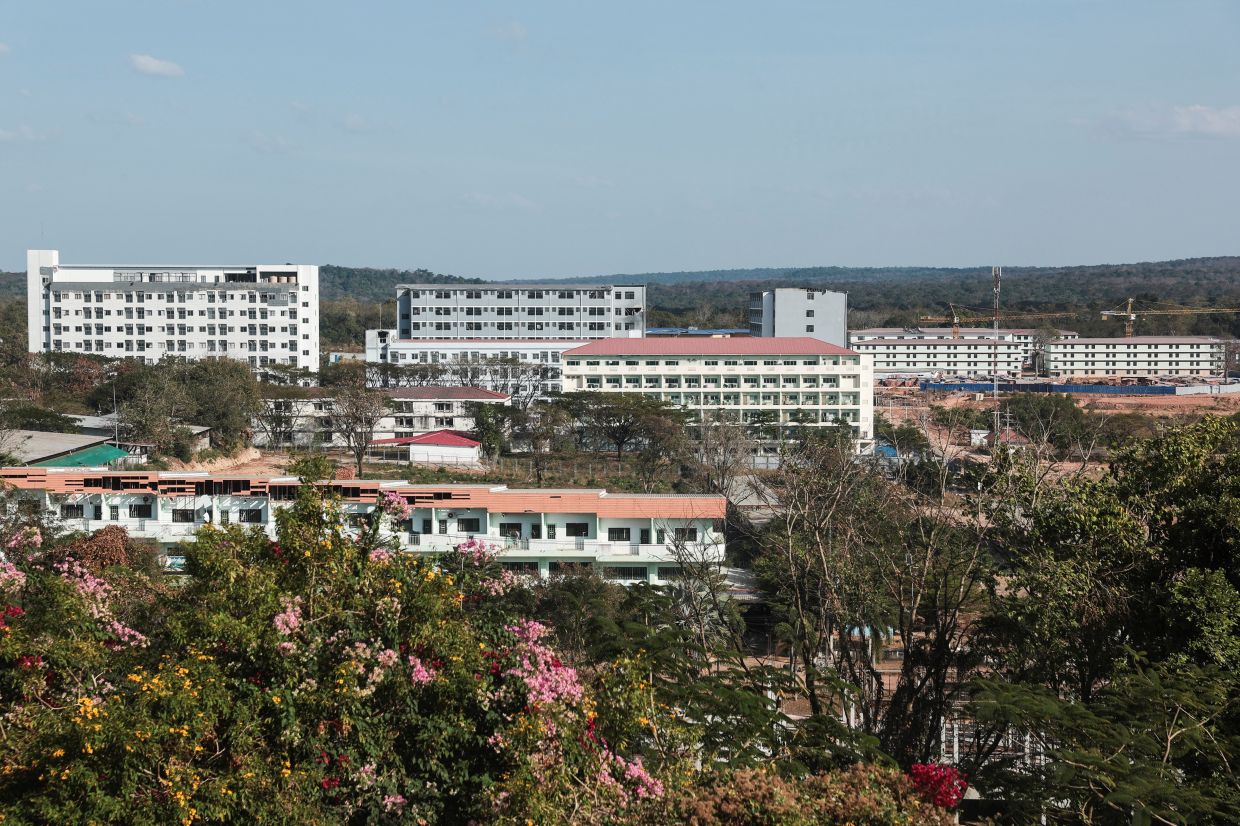
The architectural character of Royal Hill itself—a faded neoclassical structure featuring decorative columns and gold-rimmed spires—reflects the phenomenon of marginal border casinos serving as fronts for criminal enterprises. The compound encompassed multiple buildings enclosed by high fencing topped with razor wire, with at least four structures utilised for criminal purposes according to Thai security officials and Pornpen Aimhun, a Thai woman who identifies as a trafficking victim having worked at Royal Hill. The lease agreement specified three buildings within the compound, suggesting that the property's physical infrastructure was intentionally designed to accommodate segregated criminal operations while maintaining plausible deniability regarding the nature of activities conducted within.
The rental price of US$200,000 monthly for three modest border-town structures substantially exceeded any defensible commercial valuation, indicating that the arrangement functioned more as a direct financial relationship between Lim Heng Group and the scam operators rather than an arm's-length commercial transaction. This pricing structure suggests either extraordinary market conditions unique to border casinos or deliberate premium pricing that might have reflected additional services, security arrangements, or tacit understandings regarding operational protection. The absence of publicly available comparable transactions in border zone commercial real estate complicates assessment, yet the contrast with Phnom Penh pricing remains striking and analytically significant.
For Malaysian observers and policymakers, the Royal Hill investigation carries direct relevance regarding organised crime, human trafficking, and the integration of commercial gambling with transnational criminal syndicates. Malaysia itself has struggled with similar scam factory operations, particularly those targeting Malaysian residents and positioned within nearby jurisdictions. The Lim Heng Group case demonstrates how political connections and opaque business structures shield operators from accountability even when evidence of knowledge regarding criminal activities emerges. It illustrates the vulnerability of border regions to becoming platforms for transnational crime when domestic enforcement lacks regional coordination. The case further underscores the need for enhanced cross-border intelligence sharing, landlord liability frameworks, and mechanisms to penetrate the corporate structures shielding politically connected businesspeople from investigation.
The Thai military's occupation of Royal Hill and subsequent media disclosure strategy—displaying evidence of scamming operations to international journalists—represents an unusual intersection of military action and law enforcement transparency. Yet questions persist regarding the operational chain connecting Lim Heng Group's rental arrangement with the actual scamming activities, the extent of company knowledge regarding tenant activities, and whether documentation exists establishing deliberate facilitation versus passive landlord negligence. The Cambodian military's non-response to questions regarding its institutional relationships with Lim Heng further suggests that political and security sector ties may constrain domestic accountability mechanisms. The broader pattern indicates that Southeast Asian governments, despite rhetorical commitments to combating cybercrime, frequently encounter institutional barriers when accountability would implicate politically connected figures or security force relationships. For Malaysia and other regional nations, the Royal Hill case serves as a cautionary illustration of how international crime networks exploit political economy structures that privilege elite protection over transparent law enforcement.

