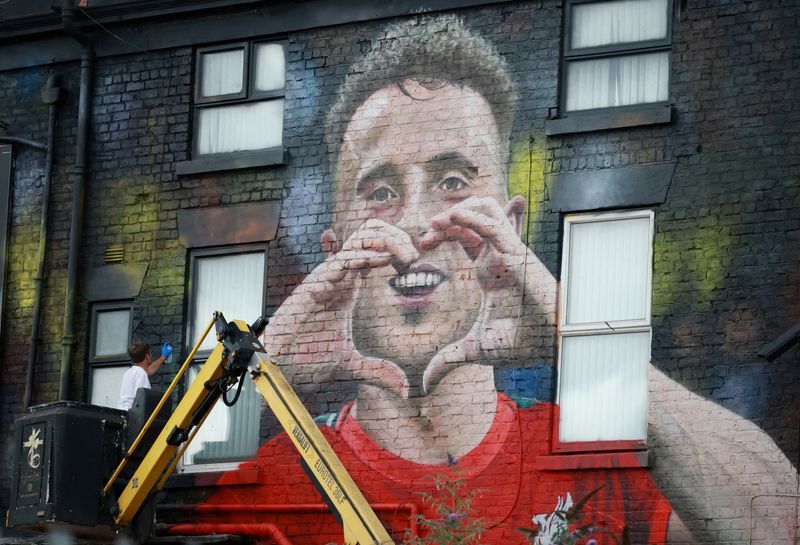
The Portugal national football team steps into a World Cup match that transcends sport when they face Croatia in Toronto on Thursday. While the fixture takes place on July 2 locally, clocks in Portugal will have already crossed into July 3—a date marking one year since the nation lost one of its finest attacking talents in devastating circumstances. The timing transforms what would ordinarily be a knockout-stage encounter into something far more profound for the squad, supporters back home, and the global football community mourning the loss of Diogo Jota.
Jota's death exactly twelve months earlier sent shockwaves through Portuguese football and beyond. The 28-year-old Liverpool forward, alongside his brother Andre Silva, perished in a car accident in northwestern Spain when their Lamborghini left the road and caught fire. The tragedy robbed Portugal not merely of a prolific international player but of someone widely regarded as integral to the country's footballing identity and future ambitions. His 14 goals across 49 appearances underscored his importance to the national project, having established himself as a cornerstone of Roberto Martinez's plans for this World Cup campaign.
Portugal's football authorities and the squad itself have made deliberate, thoughtful decisions to ensure Jota's presence remains visible throughout their tournament run. Manager Martinez has formally designated the deceased forward as an honorary member of the World Cup squad, a gesture laden with symbolic weight that extends his legacy beyond the physical pitch. Such actions reflect an understanding that Jota's contributions—his technical ability, his tactical intelligence, and his unwavering commitment to the Portuguese cause—deserve remembrance not as a distraction but as an inspiration propelling the team forward.
The personal tributes woven into the campaign offer windows into how deeply Jota was cherished within the dressing room. Ruben Neves, widely recognised as among Jota's closest friends within the squad, has made the poignant decision to wear the number 21 jersey in his honour. The gesture transforms a statistical identifier into an act of solidarity. Prime Minister Luís Montenegro distributed commemorative wristbands bearing Jota's name to all players, institutionalising the remembrance at the highest levels of Portuguese governance and demonstrating how the footballer's passing resonated across the nation's political and social fabric.
Emotional tributaries have already surfaced during Portugal's World Cup journey. Jota's parents, Isabel and Joaquim Silva, were present in the stands during an emotional ceremony preceding the team's opening match against the Democratic Republic of Congo in Houston, their presence a powerful reminder of the human cost underlying the sporting spectacle. Defender Vitinha articulated the psychological and emotional dimensions of carrying such memories into competition, describing how the anniversary adds layers of motivation beyond the conventional drive to win matches. For players like Vitinha, victory becomes about honouring fallen comrades, families, and an entire nation.
The tragedy's impact extended into rival squads as well, illustrating Jota's universal respect within professional football. Andy Robertson, the Liverpool captain and Scotland defender, considered Jota a cherished friend and teammate. When Scotland secured World Cup qualification in November, Robertson's immediate thoughts turned to his departed companion. Jota's widow, Rute Cardoso, wrote a moving message to Robertson as the tournament commenced, acknowledging how he and others were carrying Jota's spirit forward. Her words—expressing gratitude for not forgetting him and for transforming grief into strength—captured the profound ways football can channel loss into purpose.
The timing of Thursday's match carries additional emotional weight that extends beyond routine coincidence. As the opening whistle sounds in Toronto, the calendar will turn to July 3 in Portugal, the precise moment when an entire nation confronts the anniversary of a tragedy that shook football to its core. This synchronicity ensures that players on the pitch will be acutely aware of the moment's significance, unable to compartmentalise sport from remembrance. The match becomes a collective ceremony where grief, pride, and determination converge within ninety minutes of elite football.
Jota's trajectory in international football was marked by both promise and frustration. Having missed the 2018 World Cup through injury, he would almost certainly have featured prominently in this tournament had he lived to compete. His absence from the squad represents not merely the loss of a talented footballer but an unfulfilled chapter in a career that was gathering momentum and influence. Martinez recognised these unrealised potential, leading to the decision to include him as an honorary squad member—a position that grants him symbolic participation even as his physical presence remains impossible.
Within Portugal's football culture and broader society, Jota represented more than individual achievement. He embodied a generation of players instrumental in maintaining Portugal's position among Europe's footballing elite. His teammates valued him as a trusted figure in the dressing room, someone whose contributions during crucial moments had proven decisive. The emotional infrastructure around him—the testimonies from fellow players, the messages from family, the official recognitions—testifies to the esteem in which he was universally held.
In Toronto's Little Portugal neighbourhood, the match resonates differently among the diaspora community. Miguel De Silva, owner of Amigos da Dundas Sports Bar, articulated how Jota's memory has become woven into the emotional fabric of how Portuguese supporters experience this World Cup. For many watching far from home, Jota's remembered presence provides additional motivation and meaning to Portugal's performance. A victory would represent not merely advancement in the tournament but a triumphant affirmation of collective mourning transformed into sporting excellence.
The passage of time, predictably, has done little to diminish the pain surrounding Jota's loss. Yet football, with its inherent cyclical nature and capacity for renewal, continues its forward momentum. The squad must honour his memory while simultaneously concentrating on executing their tactical plans and delivering results. This balance—between commemoration and competition—defines Portugal's psychological challenge in the days ahead. As the match unfolds, players will carry the weight of remembrance onto the pitch, where grief and determination intersect in the pursuit of victory.

