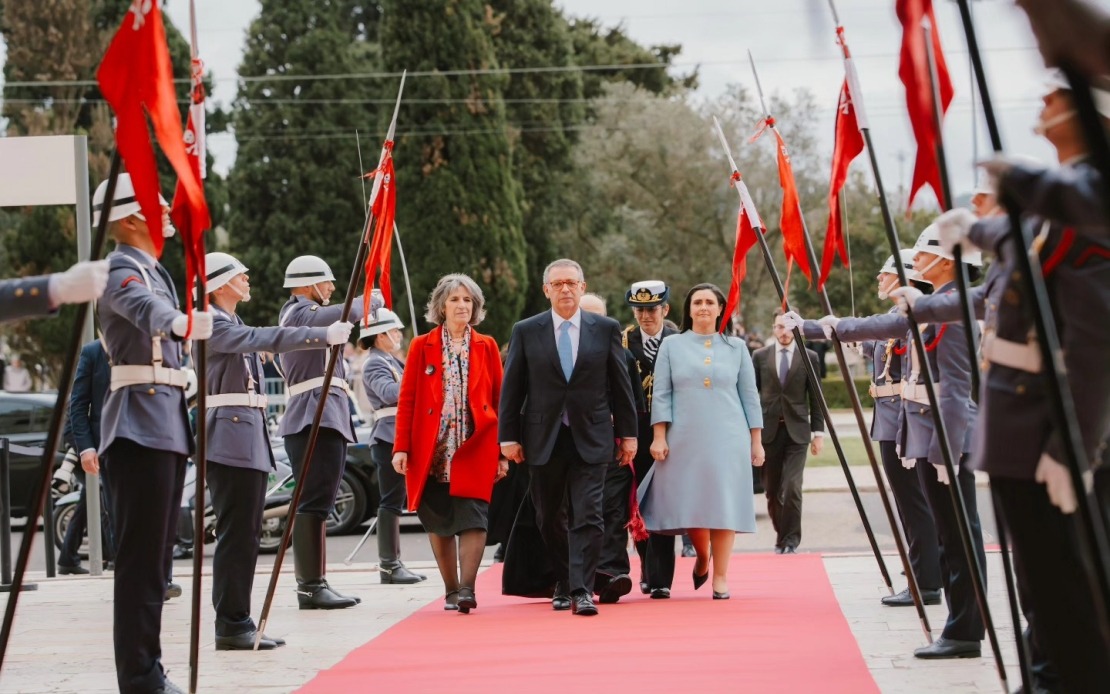
Portugal has joined the growing list of European nations implementing restrictions on face coverings in public following President Antonio Jose Seguro's signing of the controversial legislation on Tuesday. The law, which originated from a proposal by the right-wing Chega party, represents a significant policy shift in the country and reflects broader European debates over identity, religious expression, and social cohesion. The presidential office in Lisbon indicated that Seguro had determined the measure addressed matters of considerable social and cultural importance requiring legislative intervention.
In his rationale for approving the legislation, the Portuguese President emphasized that amendments introduced during parliamentary deliberation had addressed his initial concerns, ultimately persuading him to endorse the final version. Seguro's justification centred on three interconnected pillars: promoting social integration among Portuguese communities, upholding principles of non-discrimination, and strengthening public security measures. Additionally, he referenced established precedents from the European Court of Human Rights, which have previously examined cases concerning restrictions on facial coverings, lending legal weight to Portugal's policy decision.
The presidential statement articulated a philosophical position grounded in Portuguese social values, asserting that an uncovered face serves as a foundational element of interpersonal trust and social belonging within Portuguese society. According to this perspective, daily social interaction fundamentally depends on mutual recognition and the capacity for direct engagement between individuals based on visual identification. This framing positions the legislation not merely as a security measure but as a defence of what the government characterizes as core European democratic values.
Central to the Portuguese government's reasoning is a gender equality argument that has featured prominently in similar debates across Europe. Officials contend that requiring only women to obscure their entire faces creates an unacceptable asymmetry inconsistent with European principles of gender parity and equal human dignity. This reasoning suggests that the law targets specifically gendered practices rather than religious dress generally, though critics argue this distinction does not adequately protect religious minorities. The government maintains that within a genuinely free society, citizens must balance personal identity expression and religious conviction against shared civic norms that enable collective experience and social functionality.
However, the legislation has drawn sharp criticism from human rights advocates operating within Portugal. Amnesty International Portugal has articulated substantial concerns about the law's discriminatory implications, particularly emphasizing the threat it poses to Muslim women who exercise personal choice in wearing face coverings. The organization contends that the restrictions effectively curtail religious freedom and bodily autonomy, placing disproportionate burdens on religious minorities. This perspective highlights the tension between national security and integration objectives on one hand and individual liberty protections on the other, a debate that remains unresolved across European democracies.
Portugal's adoption of this policy positions it alongside multiple established European nations with comparable or more stringent face covering restrictions. France, Belgium, Austria, Denmark, and the Netherlands have all implemented full or partial prohibitions on facial coverings in public settings, creating a European regulatory landscape increasingly hostile to certain religious and cultural dress practices. These collective restrictions reflect a broader European political trend emphasizing civic integration and shared cultural norms over accommodation of religious diversity, particularly regarding Islamic religious dress practices. The cumulative effect creates significant barriers for Muslims across the continent seeking to observe their faith practices.
The Portuguese legislation emerges within a wider context of rising right-wing political influence in European governance. The Chega party's successful sponsorship of this measure demonstrates how far-right movements have effectively mobilized populist concerns regarding cultural identity and national cohesion. The fact that President Seguro, from a mainstream political background, ultimately endorsed the Chega-sponsored initiative suggests that face covering restrictions have achieved a degree of mainstream political acceptance, even among centrist political actors who might previously have resisted such measures as illiberal.
For Southeast Asian observers, particularly Malaysia's substantial Muslim population and multicultural society, the Portuguese example raises important questions about balancing security and integration concerns with religious freedom protections. Malaysia's constitutional framework provides stronger explicit protections for religious expression than many European nations, yet similar tensions between national identity construction and minority rights periodically surface in regional political discourse. The European experience demonstrates how security and integration arguments, however well-intentioned, can be mobilized to restrict religious practices affecting specific communities disproportionately.
The implementation of Portugal's face covering ban will likely generate continued legal challenges, potentially reaching European courts that must reconcile conflicting rights claims between religious freedom and state interests in security and social cohesion. Future jurisprudence will determine whether such restrictions represent legitimate responses to genuine security threats or constitute unjustified religious discrimination masked in neutral language about public order. This ongoing European legal struggle will influence how other democracies, including those in Southeast Asia, approach similar questions about the appropriate relationship between religious expression and state regulation in pluralistic societies.

