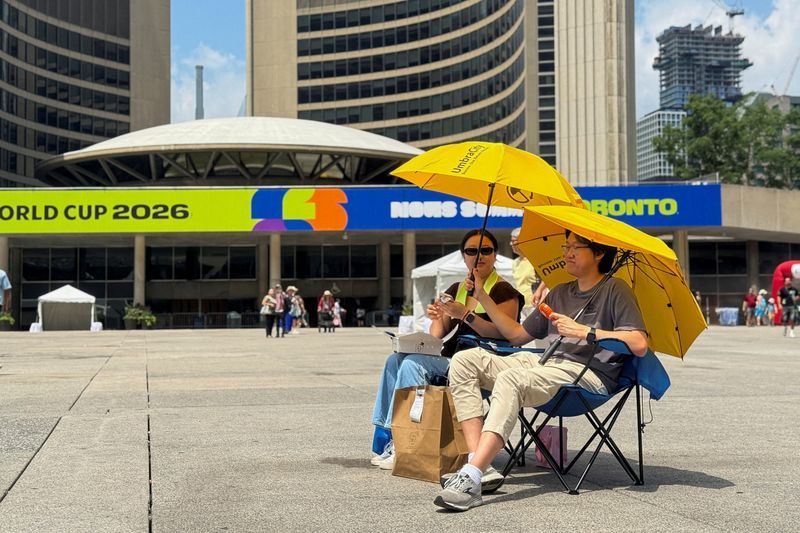
Thousands of soccer enthusiasts converging on Toronto for Thursday's World Cup round-of-32 encounter between Portugal and Croatia are being advised by public health officials to exercise caution as the city braces for potentially dangerous heat conditions. Environment Canada has issued a heat warning for the region, with meteorologists forecasting temperatures exceeding 35 degrees Celsius, while the combination of heat and humidity could push the perceived temperature to around 40 degrees Celsius—a level that poses genuine health risks for crowds gathering outdoors.
Michelle Murti, the City of Toronto's medical officer of health, has issued specific guidance to fans preparing to attend the match or participate in public viewing events throughout the city. Rather than waiting for thirst signals to prompt hydration, Murti emphasised the importance of continuous water consumption throughout the day to maintain adequate fluid levels. She also cautioned attendees to moderate their consumption of alcoholic beverages, which can accelerate dehydration and amplify the physiological stress imposed by extreme heat exposure.
The warning underscores a broader pattern of severe weather challenging Canada across multiple regions as the nation approaches its Canada Day holiday on Wednesday. From western provinces to the Atlantic coast, Canadians have contended with an unsettling combination of flooding and extreme heat, creating a challenging environment for outdoor activities and large public gatherings. Toronto's specific circumstances—hosting a major international sporting event during peak heat conditions—compound these concerns and have prompted city officials to implement comprehensive response measures.
Beyond standard hydration advice, Toronto's public health team is preparing contingency plans for potential thunderstorms that could accompany the heat event. The possibility of severe weather raises the prospect that some viewing parties and fan zones scheduled throughout the city might require cancellation or postponement, adding logistical complexity to event planning. Such disruptions could impact the thousands of residents and international visitors who have been following the tournament through these community-based viewing experiences.
Toronto Stadium, the smallest venue hosting matches during this World Cup tournament, will stage its final competition fixture on Thursday evening with the Portugal-Croatia encounter. The venue's selection for this concluding Toronto event makes the heat warning particularly significant, as the stadium's design and capacity constraints may limit cooling options and crowd management flexibility compared to larger facilities. This final match represents the culmination of Toronto's hosting responsibilities for the tournament, making it all the more critical that health and safety protocols function effectively.
Throughout the tournament, Toronto has hosted a series of public viewing events and fan zones that have allowed residents without stadium tickets to participate in the global sporting spectacle. These decentralised viewing spaces, including those in prominent locations such as Nathan Phillips Square near Toronto's iconic skyline, have proven popular with both local fans and international visitors. The square has become particularly crowded during major matches, with the city installing misting stations to provide some relief from the mounting heat.
Observations from fans already experiencing Toronto's current conditions illustrate the strain that Thursday's match day could impose. Megan Rennie, a Toronto resident, expressed concern not only about her own comfort while watching the game but also about the physical demands facing the players competing under such arduous conditions. Her uncertainty about remaining for the match's entirety reflects the genuine health challenges posed by prolonged outdoor exposure to these temperature levels. Such concerns are not merely matters of comfort; sustained heat exposure carries legitimate medical risks including heat exhaustion and heat stroke, particularly for crowds of people in close proximity with limited shade and ventilation.
International visitors to Toronto are also grappling with the unexpected intensity of the heat. Laura Albarez, visiting from Colombia, indicated that despite coming from a warm climate, she found the conditions overwhelming enough to retreat to her hotel rather than maintain a presence at outdoor viewing locations. The availability of drinking water and air-conditioned indoor spaces became essential resources for such visitors navigating the unexpected severity of the weather.
City officials have responded by enhancing infrastructure to support public health during the event. Beyond the misting stations deployed at Nathan Phillips Square, the broader public health apparatus, including Michelle Murti's office and related city services, has mobilised to monitor conditions and provide real-time guidance to residents and visitors. The emphasis on preventative education—encouraging proactive hydration and alcohol moderation—reflects a public health approach aimed at reducing emergency interventions rather than simply managing crises after they occur.
For Malaysian and Southeast Asian readers accustomed to tropical heat, Toronto's current conditions may seem superficially familiar. However, the critical difference lies in acclimatisation: populations in tropical regions have adapted physiologically to sustained heat exposure, whereas Canadian residents and infrastructure have evolved in response to far cooler climates. This mismatch between environmental conditions and population adaptation creates heightened vulnerability to heat-related illness. The international nature of World Cup events means crowds include individuals from diverse climatic backgrounds, all facing identical exposure risks despite varying degrees of heat acclimatisation.
The situation also reflects broader climate pattern shifts affecting North America, where heat waves increasingly accompany international events and major public gatherings. These episodes raise questions about event planning in an era of climate variability, where traditional seasonal assumptions about weather conditions may no longer provide reliable guidance. Toronto's experience serves as a cautionary example for other cities hosting major events, highlighting the necessity of integrating robust health protocols and infrastructure adaptations into event planning frameworks.

