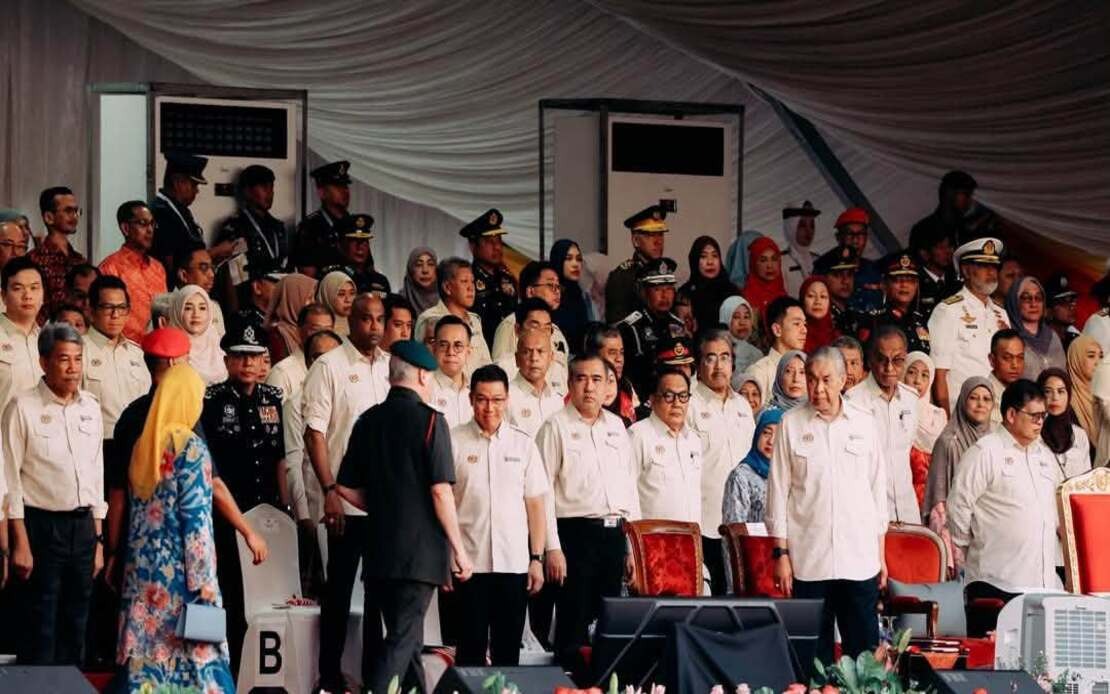
The stability of Malaysia's Unity Government depends fundamentally on the political maturity of its leaders and their willingness to subordinate partisan interests to the greater good of nation-building, according to Domestic Trade and Cost of Living Minister Datuk Armizan Mohd Ali. Speaking on National Day, Armizan highlighted the delicate balance required in the country's new political landscape, where multiple coalition partners must work in concert without compromising their individual party identities or electoral mandates.
The formation of the Unity Government following the 15th General Election represented a significant departure from Malaysia's post-independence political structure, which had been dominated for decades by a single party. This realignment has introduced complexities that demand a more sophisticated approach to governance than previously required. Armizan's remarks suggest that while party activists may engage in robust public debate and rhetoric, the leadership cadre in Cabinet must demonstrate restraint and professionalism to model the behaviour expected throughout the political system.
Cabinet meetings, Armizan observed, have maintained a tone of harmony and constructive engagement despite the visible friction between coalition partners at grassroots and party levels. This compartmentalisation—whereby public political discourse remains spirited while official deliberations remain measured—represents an implicit understanding among senior leaders about the costs of governmental dysfunction. The minister's comments reveal a conscious strategy to separate performative party politics from the mechanics of actual governance, a distinction that requires significant discipline from participants accustomed to viewing their political opponents as ideological adversaries.
The recent history of Malaysian politics has underscored why this approach matters. Between 2018 and 2022, the country experienced three changes of prime minister and corresponding reshuffles of the entire Cabinet within a single parliamentary term. This period of instability, despite marking a historic democratic transition, demonstrated the pitfalls of governance without clear consensus and shared commitment to continuity. Economic uncertainty, investor hesitation, and delayed policy implementation characterised those years, providing cautionary lessons that current leaders appear intent on learning.
Armizan's framing of political maturity encompasses a dual responsibility model: parties must exercise their democratic rights to organise, campaign, and advocate for their platforms, while simultaneously recognising obligations toward institutional stability and national prosperity. This framework implicitly rejects both the old majoritarian approach, where the ruling coalition could ignore concerns of political minorities, and the fragmentation model that has recently plagued Malaysian governance. Instead, it proposes a middle path where coalitional partners genuinely negotiate and compromise on policy while maintaining distinct identities.
The transition from single-party dominance to coalition governance has fundamentally altered the incentive structure facing Malaysian politicians. Previously, internal party management was the primary political skill required; today, inter-party negotiation and consensus-building have become equally critical. Leaders must navigate scenarios where granting concessions to coalition partners might alienate their own supporters, yet refusing such concessions destabilises the entire government. This complex calculus explains why Armizan emphasises that maturity involves understanding these trade-offs rather than pretending they do not exist.
For Malaysia's economic and social trajectory, the implications are substantial. Foreign investors and multilateral organisations have increasingly factored political stability into their assessments of Malaysia's risk profile. The turmoil of 2018-2022 coincided with ratings downgrades and capital outflows, deterring projects and employment creation. A more stable political framework, by contrast, enables long-term policy planning across multiple parliamentary terms, infrastructure development that extends beyond electoral cycles, and the kind of certainty that attracts sustained investment and international partnerships.
The National Day context of these remarks carries symbolic weight beyond the immediate political message. Armizan positioned political maturity not as a temporary accommodation but as an essential national value that all citizens—leaders, civil servants, business figures, and ordinary Malaysians—must embrace. By framing governmental stability as inseparable from national identity and aspirations, he elevated the discussion beyond coalition mechanics to a question of collective citizenship and shared destiny. This rhetorical move attempts to build social consensus around the principle that party loyalty, while legitimate, must operate within boundaries set by higher obligations to the nation.
The challenge facing Malaysia's political leadership remains formidable. Coalition governments inherently contain tensions between cooperation and competition, and maintaining the balance requires constant vigilance and genuine commitment from all participating parties. The success of the Unity Government will ultimately depend not on momentary rhetorical commitments but on whether these principles translate into substantive policy coherence and consistent decision-making. Should significant policy divergences emerge or should one coalition partner perceive sustained disadvantage, the fragile equilibrium could deteriorate rapidly.
Regionally, Malaysia's experience with coalition governance carries lessons for other Southeast Asian democracies navigating similar transitions toward more pluralistic politics. The tensions inherent in balancing political rights with national stability are not uniquely Malaysian; they reflect broader democratic challenges as countries move away from dominant-party systems. How effectively Malaysia manages this transition will influence perceptions of whether such governance models are sustainable alternatives or inherently unstable transitional phases.

