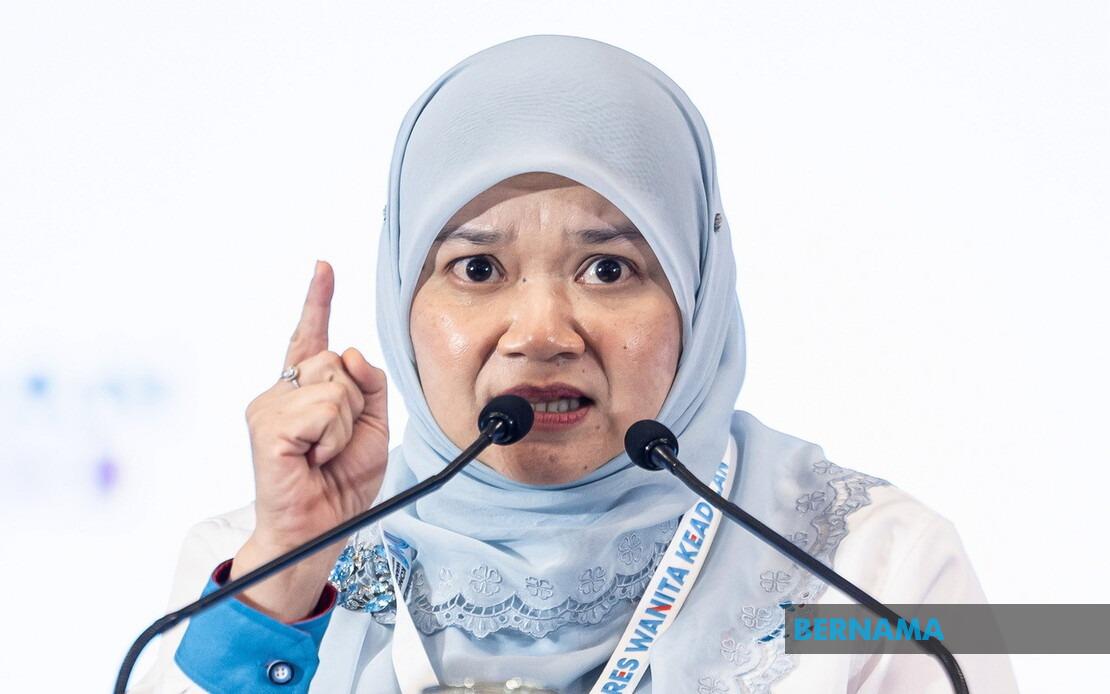
Wanita PKR chief Fadhlina Sidek has called for a fundamental shift in how Malaysian political parties engage in electoral competition, arguing that contests should centre on substantive policy differences and genuine problem-solving capabilities rather than deploying religious sensitivities as tactical weapons. Speaking at the 2026 Wanita PKR National Congress held at the Melaka International Trade Centre in Ayer Keroh, Fadhlina articulated a vision of politics grounded in pragmatism and respect, warning party members and the broader political establishment against what she characterised as the weaponisation of faith during campaign periods.
The PKR Women's leader's remarks arrive at a critical juncture in Malaysian politics, where religious identity has increasingly become intertwined with electoral strategy across multiple parties and coalitions. Her intervention suggests growing concern within reform-minded political circles that the instrumentalisation of faith undermines democratic discourse and diverts public attention from tangible governance issues affecting ordinary Malaysians. By emphasising that religious matters deserve respect and protection from political manipulation, Fadhlina implicitly critiqued tactics that have become commonplace in recent election cycles, where competing narratives about Islamic credentials and religious governance have dominated campaign messaging.
Fadhlina's framework positioning ideas and solutions as the legitimate basis for political competition reflects a broader aspiration within PKR to differentiate itself through substantive policy platforms. She stressed that the competitive space in electoral politics should be utilised to showcase which party or leader possesses superior concepts and can deliver more effective answers to the challenges facing communities. This approach contrasts sharply with zero-sum, identity-based campaigns that present voting choices as binary contests between rival visions of religious or ethnic primacy rather than as decisions between competing governance models.
Central to her message was a stern warning against what she termed the arbitrary exploitation of religion for political purposes. Fadhlina cautioned against inciting public sentiment through appeals to faith and against the disparagement of opponents based on their perceived religious standing. Such conduct, she suggested, pollutes the democratic process and distracts from substantive debate. Her comments implicitly acknowledge that religious sentiments run deep in Malaysian society and therefore carry particular power when weaponised, making it the responsibility of ethical leaders to exercise restraint and direct that energy toward constructive ends.
Beyond electoral tactics, Fadhlina articulated a vision of party leadership that prioritises direct engagement with grassroots communities and responsiveness to lived experience. She urged all PKR leaders and members across organisational tiers to rebuild and strengthen connections with ordinary people by demonstrating genuine understanding of their circumstances, needs, and aspirations. This grassroots-focused approach represents a different kind of competition—not one based on superior messaging or more effective polarisation, but rather on which leaders and party can most credibly claim to address genuine community concerns through consistent, visible action.
The Wanita PKR chief provided practical guidance to party members, exhorting them to examine the conditions of their neighbourhoods directly and identify ways to provide assistance to those experiencing hardship. By framing such community engagement as foundational to the party's ongoing relationship with voters, Fadhlina reframed the nature of political struggle itself—from abstract ideological or religious positioning to concrete acts of service and solidarity. This emphasis on material awareness of community conditions suggests that she views the party's strength as deriving not from clever messaging about who holds greater religious authority, but from demonstrated commitment to alleviating tangible suffering.
Fadhlina also addressed internal party cohesion, calling upon PKR members to remain loyal and steadfast despite the difficulties and setbacks the party has encountered. She characterised the party's strength as something that must be constructed through persistent labour and the readiness of the party machinery at all levels. This language of collective effort and institutional resilience underscores her belief that electoral success flows from organised, dedicated work rather than from successful deployment of polarising religious narratives. Her appeal for loyalty and commitment, framed around shared struggle with the people, seeks to bind the party together around purpose rather than grievance.
The implications of Fadhlina's remarks extend beyond PKR's immediate strategic positioning. Her argument that religious issues warrant respect and protection from political exploitation presents an implicit challenge to other parties and leaders who have relied heavily on religious framing. In the Malaysian context, where Islamic political identity has become increasingly salient in recent decades, and where competition between UMNO, PAS, and other parties has intensified partly through competing claims to Islamic authenticity, Fadhlina's call for ethical boundaries may resonate with voters fatigued by religious rhetoric divorced from policy substance.
For opposition parties like PKR seeking to broaden appeal beyond their traditional supporter bases, positioning themselves as committed to issue-based rather than identity-based politics offers strategic advantages. It allows them to appeal to swing voters across religious and ethnic lines who prioritise economic management, public services, and anti-corruption over religious positioning. Simultaneously, it attempts to occupy moral high ground, framing opponents as willing to exploit faith for short-term electoral advantage rather than as principled political actors.
Fadhlina's emphasis on reconnecting with communities and understanding their material conditions points toward a political philosophy centred on responsiveness and accountability. By highlighting the need for leaders to be sensitive to neighbourhood circumstances and to take direct action to assist those in need, she articulates a vision where political legitimacy flows from demonstrated capacity to improve lives. This approach, if genuinely implemented across PKR's structures, could create competitive advantages in local and state elections where government service delivery directly affects voter perceptions.
The speech also implicitly addresses generational concerns within PKR, encouraging younger members and leaders to view their participation in the party not primarily as involvement in ideological or religious struggle, but as commitment to building responsive governance institutions. This framing may prove important as PKR seeks to retain and attract members and supporters who increasingly demand that parties address climate change, economic inequality, education quality, and healthcare access with the same intensity previously reserved for constitutional and religious issues.
Ultimately, Fadhlina's message represents a deliberate choice to position PKR as committed to a particular vision of political ethics and practice—one centred on ideas, solutions, community engagement, and respect for religious boundaries. Whether this positioning succeeds in reshaping Malaysian political discourse depends partly on whether other parties adopt similar language and more importantly on whether PKR itself consistently demonstrates through action its commitment to the principles Fadhlina articulated. Her challenge to the broader political establishment to compete on substantive grounds rather than through religious exploitation touches on fundamental questions about the kind of democracy Malaysia can sustain.

